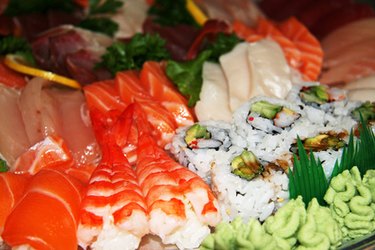
Japan has an extremely high stomach cancer rate, with Korea following close behind. On average, the Japanese prevalence is about 60 per 100,000 residents. Japan Cancer Society reports that in 2007, one in every three deaths were attributed to stomach cancer. Following World War II, as many as 50 to 60,000 Japanese died from some form of cancer each year. With prevalence so high for stomach cancer in Japan, researchers aimed to find the epidemiological cause noting similarities among Asian cuisines. Movements to provide nutritional education, screening and early detection are their primary sources of prevention.
H. Pylori
Video of the Day
Nearly 70 to 90 percent of all stomach cancers begin with the Helicobacter pylori, or H. pylori infection. The H. pylori bacteria spread by unwashed or undercooked foods or contaminated drinking water. According to the National Digestive Diseases Information Clearinghouse, infection occurs when an infected person comes into contact with an uninfected person via improper hand washing and exposure to infected fecal matter or vomit. H.pylori is also believed to be found in the saliva of an infected person transmitted through similar contact. Becoming infected can lead to a peptic ulcer and cause damage to the mucosal lining that can become cancerous if left untreated.
Video of the Day
Salt
The Japanese diet is characteristically high in salted foods. Salted food consumption is one of the leading causes of increased stomach cancer risk. In several clinical studies between the United States, Japan, Sweden and the Netherlands, Japan showed elevated risks in men and women in a 10-year cancer screening follow up. The "World Journal of Gastroenterology" suggests that the Japanese group had higher salt content overall and consumed fewer fresh fruits and vegetables. Researchers further posit that there could be additional predispositions for stomach cancer related to genetics, lifestyle and environmental factors.
Preservatives
Nitrates and pickling preservatives are commonly used in Japan. According to reports from the "British Journal of Cancer," the use of preservatives that pickle foods such as kimchee increase the prevalence for stomach cancers. Nitrates are used for curing and flavoring noodles and meat dishes. Fermentation and the pickling process are believed to interact, playing a significant role in lower vitamin C rates linked to poor immunity and higher cancer incidence.
Smoked Foods
At one time, the smoking process for foods was a method of preserving taste, and prevented spoiling before refrigeration came about. The process became a necessity in the Japanese diet during pre-refrigeration. Later generations have continued to prepare and consume smoked meat products. A diet higher in starchy noodles and lower in dietary fiber from eating fresh fruit and vegetables, likely contributed to stomach cancers in Japan, according to Mount Sinai Medical Center. On a positive note, stomach cancer cases after 2007 are on the decline.
- Japan Cancer Society: Cancer in Japan
- National Digestive Diseases Information Clearinghouse: H.pylori and Peptic Ulcers
- "World Journal of Gastroenterology"; Review of salt consumption and stomach cancer risk, Epidemiological and biological evidence
- "British Journal of Cancer"; Salt increases risk of stomach cancer
- Mount Sinai Medical Center: Stomach Cancer