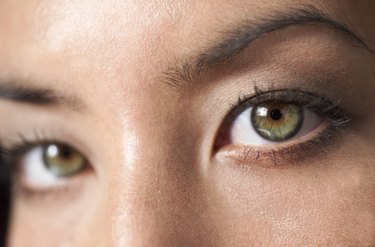
Retinal tissue at the back of your eye sends signals to your brain that allow you to see. Many blood vessels feed the retina. If a retinal vessel breaks, fluid can build up under the retina, a condition known as central serous retinopathy. For many people, the condition clears without treatment. Discuss whether you should avoid certain foods to prevent further bleeding with your eye doctor if you develop central serous retinopathy.
Effects
Video of the Day
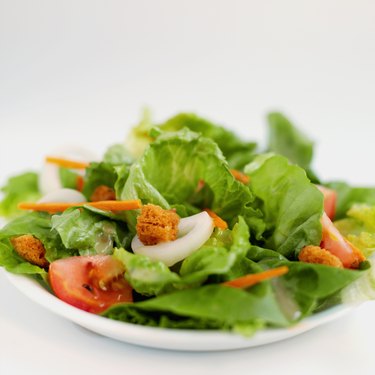
Foods and nutrients will not cause an episode of central serous retinopathy. A well-rounded diet that provides you with your daily recommended intake of nutrients should not increase your risk for bleeding. However, eating large amounts of certain foods or herbs could, potentially, affect your risk for bleeding, especially if you also have an underlying blood disorder or if you take anticoagulant medications.
Video of the Day
Ginger
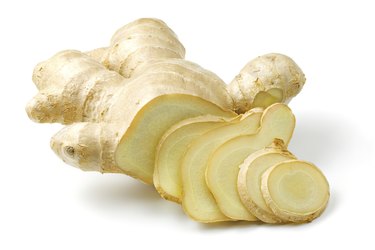
Ginger is a root commonly used in foods such as marinades, breads, cookies and ginger ale. In small amounts, ginger might not have any effect on your blood. However, particularly in significant doses through foods or using extract supplements, ginger might have a blood thinning effect. If you have a bleeding disorder, you should avoid ginger because this root might increase your risks for bleeding. Talk with your doctor to help you determine if ginger poses a threat that could increase retinal bleeding in your case.
Omega-3 Foods
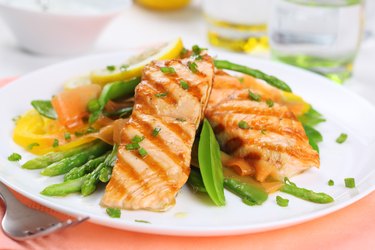
Omega-3 is a fatty acid that might aid in preventing or helping many different health conditions, including heart disease. As a result, many people use omega-3 supplements or eat foods rich in this nutrient. Omega-3 fatty acids might also thin your blood, explains the Cleveland Clinic. Your body requires omega-3 to function properly, but if you have central serous retinopathy, your doctor might recommend that you avoid consuming large amounts of foods that contain omega-3 until you do not have bleeding risks. Foods rich in this nutrient include many types of fish, such as salmon and mackerel, as well as ground flaxseed, walnuts and pumpkin seeds.
Considerations
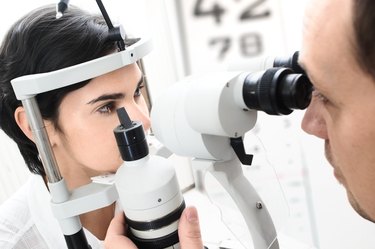
If you experience any symptoms of central serous retinopathy, contact your doctor immediately. Symptoms include blurry vision and dim or hazy vision. You might notice that objects with straight lines, such as light posts, might appear crooked. You might find that objects appear to be farther away or smaller than they actually are.