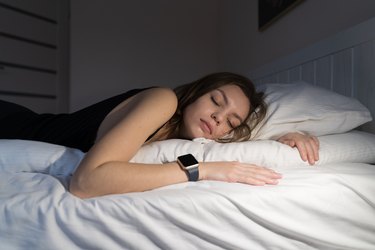
It's fairly well-known that your resting heart rate is often lower than your heart rate while exercising.
Turns out, your sleeping heart rate may be even lower than your resting heart rate, according to the Cleveland Clinic. It can drop below 60 beats per minute (bpm).
Video of the Day
Video of the Day
Here, learn the average sleeping heart rate, what influences that number and what it means if yours is higher or lower than normal.
What's Normal?
"Your heart rate slows down during sleep," says Peter Santucci, MD, professor of cardiology at Loyola University Medical Center in Maywood, Illinois.
While a normal resting heart rate for adults is between 60 to 100 bpm, he says, a normal heart rate while sleeping can be anywhere from 40 to 100 bpm. And a heart rate below 40 while sleeping could be normal for some adults who are young and fit.
Heart rates for children are typically higher than adults, both at rest and during exercise. However, children's heart rates will also dip slightly while sleeping, per the Cleveland Clinic.
Your heart rate can change quite a bit throughout the night, though, according to Harvard Health Publishing. Here's a quick look at the average heart rate during the different phases of sleep:
- Light sleep: Similar to resting heart rate
- Deep sleep: Heart rate drops to 20 to 30 percent below your resting heart rate
- REM sleep: Variable; your heart rate can change based on your response to your dreams
So, your average heart rate while sleeping is just that: The average of your heart rate during the different phases of sleep.
While you may be interested to see how your sleeping heart rate stacks up against the overall average, unfortunately, there is not enough reliable data to create a sleeping heart rate chart.
What Affects Your Sleeping Heart Rate?
In general, the things that affect your resting heart rate also affect your heart rate while sleeping.
The following can have a positive effect on your heart rate overall, per Harvard Health Publishing:
- Exercising regularly
- Reducing stress (with meditation or other relaxation techniques)
- Eating a heart-healthy diet
- Avoiding tobacco products
- Avoiding caffeine before sleep
- Maintaining a healthy weight for your body
- Following a regular sleep schedule
- Working with your doctor to manage any medical conditions you might have
What Is too Low of a Heart Rate While Sleeping?
A normal sleeping heart rate can dip below 60. In fact, fit young adults or trained athletes could have a heart rate in the 30s while sleeping without symptoms.
But if you don't fall into those categories and your sleeping heart rate is consistently below 40 bpm and your resting heart rate is also low (below 60), it may be a sign of a condition called bradycardia, per the Cleveland Clinic, or a possibly dangerous low heart rate.
This condition is most common in people over 65 or those with other underlying medical conditions, per the Cleveland Clinic. Symptoms will typically include:
- Fatigue
- Dizziness
- Chest pain
- Shortness of breath
- Heart palpitations
- Confusion
- Weakness
"Symptoms of bradycardia may only be felt during exercise. You could have a heart rate of 50 at rest without any symptoms, but if you get up and active, even a heart rate of 60 or 65 could be too slow and cause symptoms. If you have symptomatic bradycardia, you may need treatment," Dr. Santucci says.
The Mayo Clinic recommends letting your doctor know if you're not a trained athlete and your resting heart rate is under 60. This is even more important if you have symptoms of bradycardia.
When is heart rate dangerously low? The Cleveland Clinic warns that a heart rate that drops into the 30s might mean you're not getting enough oxygen to your brain. This may cause other symptoms such as fainting, lightheadedness or shortness of breath, or allow blood to back up in the heart.
Checking in with your doctor for evaluation is key, as there are treatments that can help.
What Causes a Low Sleeping Heart Rate?
The most common cause of symptomatic low heart rate (i.e., symptomatic bradycardia) is a problem that develops with the heart's natural pacemaker, called the sinus node, the Cleveland Clinic notes. There may also be a block of electrical signals between the upper and lower chambers of the heart, called an AV block.
There are also a few conditions that could cause a low sleeping heart rate and bradycardia. These include the following, per the Mayo Clinic:
- Heart tissue damage
- Heart disease
- Congenital heart defect
- Inflammation of the heart (myocarditis)
- Hypothyroidism
- Potassium or calcium imbalance
- Sleep apnea
- Rheumatic fever or lupus
- Certain medications (sedatives, opioids, high blood pressure medications and certain antidepressants)
What Is a Dangerously High Heart Rate? (Tachycardia)
According to the American Heart Association, the medical term for a heart rate above 100 is tachycardia, which is considered a dangerous heart rate. Symptoms may include:
- Passing out
- Dizziness
- Palpitations
- Pounding pulse
- Chest pain or pressure
- Fatigue
- Shortness of breath
"A resting heart rate that is frequently over 110 or occasionally over 140 can lead to heart damage or heart failure and may need to be treated," Dr. Santucci says.
Let your doctor know if your sleeping or resting heart rate is consistently above 100, especially if you have any symptoms of tachycardia.
In the meantime, you can try several techniques at home to lower your heart rate, such as deep breathing and meditation.
What Causes a High Sleeping Heart Rate?
There are several things that can cause a higher heart rate while sleeping, including the following, per the Cleveland Clinic:
- Stress and anxiety
- Dehydration
- Hormonal changes (pregnancy and/or menopause)
- Sleep disorders
- Obesity
- Medication side effects (like diet pills or nasal decongestants)
- Drinking caffeine or alcohol before bed
- Having a fever or infection
- Hypoxia (low oxygen volumes)
Of course, if you have any of the symptoms of tachycardia, or have been diagnosed with an underlying heart condition, you should talk to your doctor about your high sleeping heart rate.
When to See a Doctor About Your Sleeping Heart Rate
If you're tracking your heart rate while sleeping (with a smartwatch or other device) and it's consistently below 40 or above 100, talk to your doctor.
Brief spikes or dips due to stress or diagnosed illness can be normal, but a sleeping heart rate that is consistently high or low could indicate a more serious issue.
If you have an abnormal heart rate along with symptoms such as dizziness or chest pain, call your doctor as soon as possible or visit the nearest emergency room so you can get checked out. Tachycardia and bradycardia can be dangerous over time.



- Cleveland Clinic: “Is a Slow Heart Rate Good or Bad for You?”
- Peter Santucci, MD, professor of cardiology, Loyola University Medical Center, Maywood, Illinois
- Mayo Clinic: “What’s a Normal Resting Heart Rate?”
- American Heart Association: “Tachycardia: Fast Heart Rate”
- Centers for Disease Control and Prevention: “How Does Sleep Affect Your Heart Health?”
- CDC: "National Health Statistics Report: Resting Pulse Rate Reference Data for Children, Adolescents, and Adults: United States, 1999–2008 "
- Cleveland Clinic: "Heart Palpitations at Night"
- Mayo Clinic: "Bradycardia"
- Harvard Health Publishing: "How to lower your resting heart rate"
- Cleveland Clinic: "Heart Rate and Kids: How High Is Too High?"
- Harvard Health Publishing: "How does sleep affect your heart rate?"
Is this an emergency? If you are experiencing serious medical symptoms, please see the National Library of Medicine’s list of signs you need emergency medical attention or call 911.