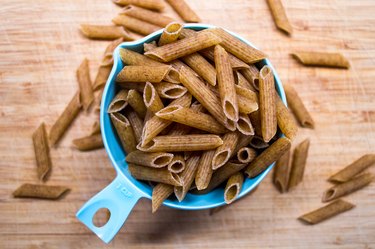
Whole-grain or whole-wheat pasta, such as spaghetti, is made from flour that contains the entire grain kernel, the germ, endosperm and bran, says Hillary Hart, RDN, LD, dietitian and certified diabetes care and education specialist at the Cleveland Clinic.
"This means that these grains are rich in fiber, B vitamins, vitamin E, phytochemicals and other minerals. All of these nutrients take longer for our body to break down, which can cause a slower, steadier rise in blood sugar."
Video of the Day
Video of the Day
Compared to processed white pasta, eating whole-wheat pasta is good for you if you're trying to add more nutrients to your diet, or maintain stable blood sugar levels.
Whole-Grain Pasta Nutrition
According to the USDA, 1 cup of cooked whole-grain pasta will give you:
- Calories: 207
- Total fat: 2.4 g
- Saturated fat: 0.3 g
- Trans fat: 0 g
- Cholesterol: 0 mg
- Sodium: 329 mg
- Total carbs: 41.8 g
- Dietary fiber: 5.5 g
- Sugar: 1 g
- Protein: 8.3 g
Benefits of Whole-Grain Pasta
A diet rich in whole grains has been associated with a lower risk of conditions like type 2 diabetes and heart disease, as well as a lower overall mortality risk, according to the Harvard T.H. Chan School of Public Health.
Whole-grain pasta is healthy becauses it is rich in several nutrients essential for human health. Keep scrolling for more on the benefits of whole-grain pasta.
1. It Provides Energy
Whole-grain pasta is a carbohydrate-rich food. A cup of whole-grain pasta, cooked, provides about 41.8 grams of carbs.
According to the 2020-2025 USDA Dietary Guidelines for Americans, 45 to 65 percent of the calories you eat should come from carbs, particularly complex carbs, such as whole grains, vegetables and legumes.
Carbs are considered macronutrients, which you need daily in large amounts. They are the preferred source of energy for your muscles, red blood cells and nervous system, according to the USDA.
2. It's Rich in Vitamins
Whole-grain pasta is high in B vitamins, like niacin (vitamin B3) and thiamin (vitamin B1), per the USDA. It also boasts high amounts of minerals such as selenium, copper, magnesium and phosphorus.
The B vitamins are important for a healthy nervous system and energy metabolism, according to the National Institutes of Health (NIH). Copper is used to form connective tissue, blood cells and promotes proper function of the nervous, immune and cardiovascular systems, per the NIH.
Selenium supports immune system and thyroid gland function. Magnesium is essential for regulating blood pressure and building strong, healthy bones.
3. It's High in Fiber
Whole grains are high in dietary fiber, which promotes digestive health. Eating more fiber has been associated with lower blood sugar and cholesterol levels, according to the Mayo Clinic. It may also encourage more regular bowel movements.
A diet rich in whole grains has been associated with a lower risk of conditions like type 2 diabetes and heart disease, as well as a lower overall mortality risk, according to the Harvard T.H. Chan School of Public Health.
Whole-Grain Pasta vs. White Pasta
Nutrient | Whole-Grain Pasta | White Pasta |
|---|---|---|
Calories | 207 | 196 |
Total Fat | 2.4 g | 1.2 g |
Cholesterol | 0 mg | 0 mg |
Sodium | 329 mg | 1.2 mg |
Total Carbs | 41.8 g | 38.3 g |
Fiber | 5.4 g | 2.2 g |
Sugar | 1 g | 0.7 g |
Protein | 8.3 g | 7.2 g |
Iron | 2.4 mg, 13% DV | 0.6 mg, 3% DV |
Phosphorus | 176.4 mg, 14% DV | 71.9 mg, 6% DV |
When whole grains go through the milling or refining process, the nutritious bran and germ are removed, leaving only the starchy endosperm, which is what regular white pasta is made from, according to the USDA.
While the carbohydrate and fat in both types of pasta are similar, whole-wheat noodles provide the most protein, while the iron and fiber content in whole-wheat pasta are double that of white pasta, per the USDA. Whole-wheat pasta also boasts more phosphorous than white pasta.
When white and brown pasta are cooked and then cooled, their starch changes form, making it more resistant to digestion. Resistant starch, which is a form of fiber, helps maintain good colon health and low blood cholesterol levels, according to Johns Hopkins University. Whole-grain pasta provides more resistant starch than white pasta.
Whole-Wheat Pasta and Diabetes
People with diabetes might avoid pasta because it's high in carbohydrates. But according to the American Diabetes Association (ADA), there are three types of carbs. Sugars are the type that you want to limit or avoid.
Then there are starches and fiber. Starches include whole grains. These are called complex carbs, which means they cause less of a rise in blood sugar.
The fiber in whole-grain pasta also slows down digestion, which ultimately leads to a slower, steadier rise in blood sugar, which is important for people with diabetes, notes the ADA.
Enjoying Whole-Grain Pasta When You Have Diabetes
The National Institute of Diabetes and Digestive and Kidney Diseases (NIDDK) says people with diabetes should balance proteins and carbs by using the "plate method:"
- Fill half of your plate with a healthy carb like a green vegetable.
- Fill one-fourth of your plate with a lean protein.
- Fill the last fourth of your plate with a whole grain or starchy carbohydrate, like whole-grain pasta.
Tip
The ADA says to check the food label on your whole-grain pasta to see how much fiber is in a serving. More than 2.5 grams of fiber is good. More than 5 grams of fiber is excellent.
- Linus Pauling Institute: Whole Grains
- U.S. Department of Agriculture: Dietary Guidelines for Americans--Carbohydrates
- National Institutes of Health: Thiamin
- National Institutes of Health: Copper
- Mayo Clinic: Dietary Fiber
- Harvard T.H. Chan School of Public Health: More whole grains linked with lower mortality
- Wheat: the Whole (Grain) Story
- Johns Hopkins University: What is Resistant Starch
- MyFoodData: Cooked Pasta (Unenriched)
- American Diabetes Association: Get to Know Carbs