
How to Get Hard Muscles
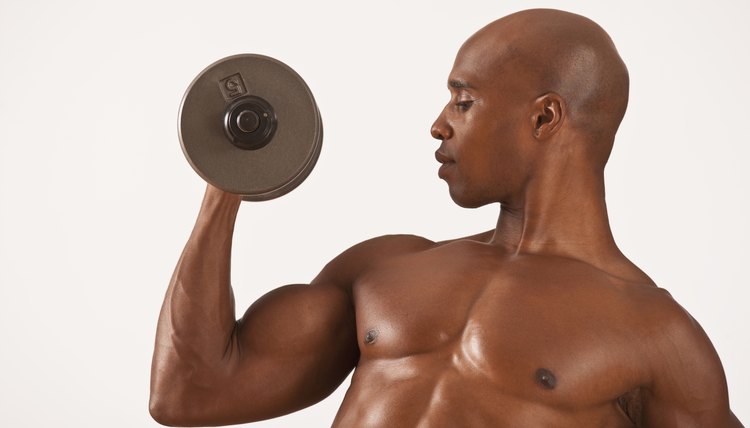
Hard muscles give your body a look that can boost your confidence. Hard muscle is strong muscle. Strong muscles are beneficial for daily life and for playing sports. Achieving hard muscles takes effort and a well-designed plan. Weight training is definitely part of the plan, but you also have to plan your diet and give attention to other lifestyle choices, such as sleeping habits.
Include protein, carbs and fat in your diet. All three of these macronutrients are important to build hard muscles, but for different reasons. Protein helps repair broken down muscle cells, carbs give you energy during workouts and fat helps boost testosterone, which is a muscle-building hormone. Choose healthy sources of these macronutrients such as lean beef, chicken breasts, fish, eggs, whole grains, beans, nuts, seeds, fruits, vegetables and low-fat dairy products.
Eat frequently throughout the course of the day. This will keep your muscles constantly supplied with nutrients, and it will also keep your energy levels high. Start your day with a meal and continue to eat every two to three hours thereafter. Make sure to include protein with each one of your meals. A salad with a chicken breast and whole-grain roll is a healthy option.
Base your workouts around compound exercises. Compound exercises work more than one muscle at a time, which enhances your size and strength gains. Perform exercises like bench presses, push presses, pullups, dips, squats and deadlifts.
Lift heavy enough weights to fully tax your muscles. Aim for a resistance that you can only lift eight to 12 times, and do four or five sets. Because compound exercises recruit multiple muscles, they enable you to lift heavier weights.
Execute proper form with your exercises. Do not use momentum, lift and lower the weights under control, and make sure to maintain proper bodily alignment. For squats, hold a weighted barbell across your upper shoulders and stand with your feet slightly wider than shoulder-width apart. Tighten your abs and keep your back straight as you bend your knees and lower your body down. Stop when your thighs parallel the floor, and stand back up in steady motion. Do not let your knees go past your toes when you lower yourself down.
Rest your muscles to allow them time to recover. Take at least one day off before working the same muscle groups. Although you want hard muscles, you do not want to push yourself too far, or you risk injury. Your muscles actually build while you are resting.
Follow good sleeping habits. If you deprive your body of sleep, your muscles will not have time to recover and you will be tired during your training sessions. Both of these occurrences will compromise your goal of achieving hard muscles. The U.S. Centers for Disease Control and Prevention recommends that adults get seven to nine hours of sleep nightly. Make sure to meet these guidelines.
Tips
Before you exercise, warm-up with 5 minutes of light aerobics, walking or cycling to increase circulation to your muscles. After you exercise, perform static stretches to remove lactic acid from your muscles to reduce soreness.
Warnings
Check with your medical provider before you begin an exercise regimen to be sure the exercises are right for you.
References
Writer Bio
I am very genuine and magnetic on camera, and have made numerous videos on my own for clients and other organizations that I'm affiliated with. I also have a degree in Sport Management, and multiple certifications to back up my validity. I've also been featured in three different exercise infomercials and had a speaking role in a National Lampoons movie.