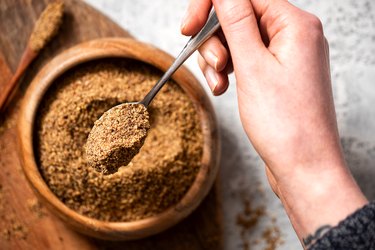
More than 100 million American adults have high blood pressure, according to the American Heart Association (AHA). But not everyone needs medication to lower it. The answer may be as simple as making certain lifestyle and diet changes, such as adding flaxseed meal to your diet.
Read more: Flax Seeds: How Much Per Day?
Video of the Day
Video of the Day
Flaxseed and Blood Pressure
Blood pressure is recorded as two numbers. Systolic is the top number and diastolic is the bottom number. Systolic pressure indicates how much pressure is on your artery walls when your heart is beating, the AHA notes. Diastolic blood pressure is the pressure of blood in the arteries when the heart is resting between beats.
- Normal blood pressure is less than 120 over 80 millimeters of mercury (mmHg), according to AHA.
- Stage 1 high blood pressure is a systolic pressure of 130 to 139 mmHg or a diastolic pressure of 80 to 89 mmHg.
- Stage 2 high blood pressure is a systolic pressure of 140 mmHg or higher or a diastolic pressure of 90 mmHg or higher.
High blood pressure, also known as hypertension, is dangerous because it's a risk factor for heart attack and stroke, so it needs to be controlled. Some people are able to lower it with lifestyle changes, including adding flaxseed to their diet. "It's not clear what the most effective dose or form is, but flaxseed has been shown to be effective at reducing blood pressure," says Kate Patton, MEd, RD, a nutritionist with the Cleveland Clinic.
An April 2015 research review published in the Journal of Nutrition found that flaxseed could slightly lower blood pressure, especially when consumed for more than 12 weeks. Flaxseed had its greatest effect on diastolic blood pressure, the review found.
Flaxseed’s Secret: Omega-3 Fatty Acids
What is it in flaxseed, or flaxseed meal, that can lower blood pressure? "Each tablespoon of ground flaxseed contains about 1.8 grams of plant omega-3s, which are essential fatty acids," says Maria Elena Fraga, RD, CDN, of the Diabetes Alliance at the Mount Sinai Health System in New York City. Flaxseed is particularly rich in alpha-linolenic acid (ALA), an omega-3 fatty acid you can get only through food — your body doesn't make it. ALA is believed to help lower blood pressure.
Flaxseed offers a bounty of nutrients, says Fraga. According to the USDA, every tablespoonful of ground flaxseed has:
- 37 calories.
- 1.3 grams of protein.
- 2 grams of carbs.
- 1.9 grams of fiber.
- 3 grams of total fat.
- 0.3 grams of saturated fat.
- 0.5 grams of monounsaturated fat.
- 2.0 grams of polyunsaturated fat.
Adding Flaxseed to Your Diet
While the exact amount of flaxseed needed to lower blood pressure isn't clear, there are heart health benefits from having just one ounce of the seeds every day, says Fraga. That's about 2 tablespoons.
The best way to get the most from flaxseeds is to grind them into flaxseed meal (a spice or coffee bean grinder works great). That's because their hard outer shell is difficult for the body to break down in order to absorb its beneficial nutrients, Patton says.
Getting flaxseed in your diet is easy. "You can add it to oatmeal, cream of wheat, yogurt and smoothies," Patton says. "You also can substitute a portion of ground flaxseed for flour in bread, muffin or cookie recipes."
Flaxseed oil is another option for getting omega-3s, though it's not as nutritious as flaxseed meal or, even better, fatty fish. Use the oil in your salad dressing, for instance, suggests Harvard Health Publishing.
Flaxseed Cautions
Before starting on flaxseed, talk to your doctor, especially if you're already taking medications for your blood pressure. "I always recommend discussing with your medical team before starting a new vitamin or over-the-counter supplement just to be certain there is no medication interaction," Fraga says. If you're on a blood pressure-lowering drug, it's always possible that adding flaxseed could lower your blood pressure too much, she says.
Also, flaxseed and flaxseed oil might decrease blood clotting. If you're on an anticoagulant or antiplatelet medication, definitely talk to your doctor before adding flaxseed to your diet, Fraga says.
Also, Fraga says, if you're taking oral medications, flaxseed might decrease their absorption, so she recommends taking oral meds and flaxseed an hour or two apart.
Read more: Bad Side Effects of Flaxseed
- American Heart Association: “More Than 100 Million Americans Have High Blood Pressure, AHA Says”
- Kate Patton, MEd, RD, CSSD, LD, registered dietitian, Cleveland Clinic
- Journal of Nutrition: “Flaxseed Consumption May Reduce Blood Pressure: A Systematic Review and Meta-Analysis of Controlled Trials”
- American Heart Association: “Understanding Blood Pressure Readings”
- Maria Elena Fraga, RD, CDN, CDE, certified diabetes educator, Diabetes Alliance, Mount Sinai Health System, New York City
- Harvard Health Publishing: “Why Not Flaxseed Oil?”
- USDA: "Flax Seeds"
Is this an emergency? If you are experiencing serious medical symptoms, please see the National Library of Medicine’s list of signs you need emergency medical attention or call 911.