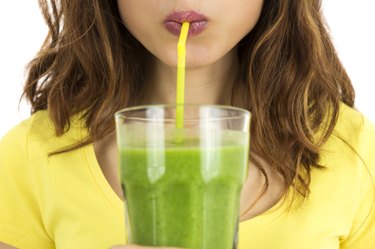
Juice fasting typically involves subsisting on just fruit and vegetable juices for the length of the fast, although in some versions people add some cashew or almond milk to slightly increase the protein content of their fasting diet. While drinking juice may help you fit in more servings of fruits and vegetables, trying to live on juice alone to lose weight isn't recommended and might actually backfire and lead to weight gain after you go back to eating normally.
Calorie Considerations on Your Juice Fast
Video of the Day
The number of calories you consume during a juice fast depends on how many glasses and what type of juice you choose to drink, but calories typically range from about 800 to 1,200 per day. Simply drinking fruit juices in unlimited quantities could actually lead to weight gain, as fruit juice concentrates all the calories and sugars in the fruit, with one 8-ounce glass of juice potentially having the same number of calories as two to four pieces of fruit. This is why many companies that sell ready-made juices for juice fasts include mainly vegetable juices or juices that contain both fruits and vegetables.
Video of the Day
While the low number of calories you typically consume during a juice fast can lead to weight loss, this isn't without a price. The low-calorie nature of a fast is typically below the minimum recommended calorie intake for women and men, which is 1,200 or 1,800 calories, respectively. This makes the fast unsustainable, so you're more likely to binge after you're finished, and it could theoretically put your body into "starvation mode" -- where it resists weight loss -- if you fast on a regular basis. Once you go back to eating regularly, you're more likely to gain weight.
Water Weight Loss Considerations
During the first week or so of weight loss due to fasting or very-low-calorie diets, such as juice fasts, much of the weight loss comes from water weight as your body releases stored water from its cells. So, while it may seem like you're losing a lot of weight quickly with a juice fast, once you go back to eating normally and your body starts to store a more normal amount of fluid in its cells, this weight will come right back. This can make it look like you're gaining weight after your fast even if you aren't gaining fat, but simply returning your fluid stores to normal.
Body Composition Implications From Regular Fasting
While a short juice fast may not cause significant changes in your body composition, regular juice fasting may have this effect. Fruits, vegetables and their juices have very little protein, which you need to repair any damage to your cells and muscles. The low number of calories and lack of protein in a juice fast can lead your body to break down muscle for the protein and fuel it needs. A study published in the Journal of the American Dietetic Association in 2013 found that not getting enough protein in weight-loss diets was associated with increased lean tissue loss. Decreased muscle means a slower metabolism, which makes it more likely you'll gain weight when you go back to eating normally. This weight gain will come as fat so you could wind up with a higher body fat percentage than before you went on the juice fast. It's possible to be a normal weight but have an unhealthy amount of body fat, which is called normal weight obesity. This condition increases your risk for heart disease and other health problems, according to a study published in the European Heart Journal in 2010.
A Better Way to Lose Weight
The best way to lose weight is through a combination of exercising and eating a balanced, reduced-calorie diet consisting mainly of whole foods. Fruits and vegetables tend to be low in calories and high in fiber, which makes them good foods to eat when you're trying to lose weight, but juicing takes away the fiber and makes them less filling. Add whole grains and lean proteins, such as low-fat dairy, legumes, seafood, eggs and skinless poultry, to round out your diet and provide some of the nutrients not found in sufficient quantities in fruits and vegetables. Should you want to use a drink to help with weight loss, consider using a smoothie made with a mix of nonfat plain Greek yogurt, vegetables such as spinach or carrots, fruit and perhaps some flaxseeds to provide essential omega-3 fats.
- Today: Move Over, Master Cleanse: Juice Fasting Hits the Get-Thin-Quick Stage
- Journal of the American Dietetic Association: Lean Mass Loss Is Associated With Low Protein Intake During Dietary-Induced Weight Loss in Postmenopausal Women
- CNN: Juicing: Healthy Detox or Diet Trap?
- American College of Sports Medicine: Metabolism Is Modifiable With the Right Lifestyle Changes
- DietsInReview.com: The Dangers of Juice Fasting for Quick Weight Loss Read more at http://www.dietsinreview.com/diet_column/04/the-dangers-of-juice-fasting-for-quick-weight-loss/#8eY8gbsqVcOCgsUz.99
- Nutrition.gov: Juicing 101: Nutrition Tips for Consumers
- CBS News: Read This Before You Begin That Juice Fast
- European Heart Journal: Normal Weight Obesity: A Risk Factor for Cardiometabolic Dysregulation and Cardiovascular Mortality
- Obesity Reviews: Voluntary Weight Loss: Systematic Review of Early Phase Body Composition Changes