
How to Prevent Losing Toenails From Exercising
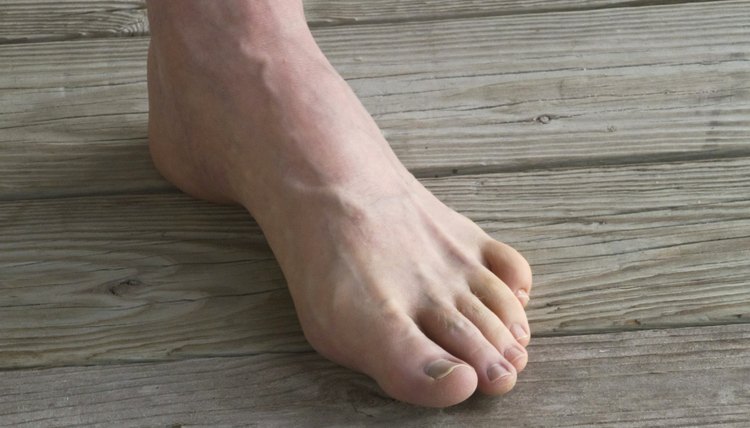
Pressure placed on the toes during exercise may cause irritation or damage to the nail that result in toenail loss. This condition is common in runners, who refer to it as runner’s toe. Some factors that cause toenail loss include toenail length, shoe fit and foot moisture. Be aware of the pain you are experiencing and adjust your shoes or socks to alleviate the problem. Consult with your doctor if you continue to lose toenails, have excessive pain in the toes or have a toe infection that does not heal.
Trim your toenails so the edge is straight across and just above the nail bed. Cutting your nails too short or with curved sides will increase the risk of infection or ingrown toenails. Perform regular toenail maintenance to keep them at the proper length.
Wear socks made from wick material to keep the feet dry during exercise and reduce the chance of blister formation around the toenail. Not all socks labeled as athletic have wicking properties. Look for socks made from merino wool or synthetic fabrics such as polyester or acrylic that have been specially designed to keep moisture away from your feet.
Verify your running or athletic shoes have enough room in the toe area. A shoe that is one-half to one size larger than your street shoes will provide room for the foot to expand when it strikes the ground during exercise. Have your foot measured and fitted at an athletic shoe store if you continue to have problems with toenail damage. These experts can ensure that your shoes are long enough and wide enough to protect your toenails.
Lace your shoes tighter than normal if your foot slides excessively back and forth in your shoe. Your foot should not slide enough for the toes to touch the front of the shoe.
References
Writer Bio
Jennifer Loucks has been writing since 1998. She previously worked as a technical writer for a software development company, creating software documentation, help documents and training curriculum. She now writes hobby-based articles on cooking, gardening, sewing and running. Loucks also trains for full marathons, half-marathons and shorter distance running. She holds a Bachelor of Science in animal science and business from University of Wisconsin-River Falls.