
The Five Best Biceps Exercises for Ripped Arms
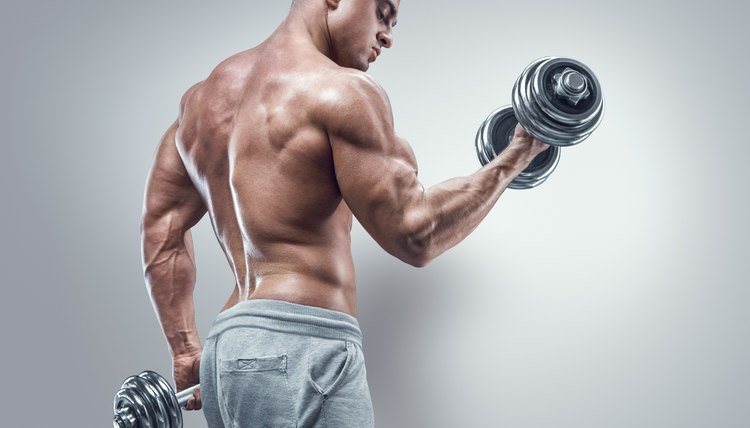
Your biceps are the muscles on the top part of your arm. There are three muscles that make up your biceps: the brachialis, biceps brachii long head and biceps brachii short head. The biceps are sometimes referred to as “mirror muscles” due to the muscles visibility on the arm. When you create a biceps program, targeting all three parts of the biceps decreases your risk of developing muscle imbalance.
Classic and Hammer
Dumbbell biceps curls not only work your entire biceps, but by changing your grip you are able to target specific areas of your biceps and forearms as well. Starting out with an underhand grip -- the classic curl -- works all three biceps muscles. Changing your grip to a neutral grip -- the hammer curl -- works the top portion of your forearm as well as your brachialis.
Time to Concentrate
Concentration curls allow you to work on developing your brachialis. Your brachialis is located underneath your biceps, making it harder to develop. Strengthening your brachialis results in the muscle pushing up your biceps, giving your muscles more of a “peak” look. To perform a concentration curl, sit on the edge of a bench with your feet apart. Bending slightly forward, place your elbow on the side of your knee. Grabbing the dumbbell, you'll curl the weight up; you may find you need to use a lighter weight for this exercise.
Now for the Cable
Cable systems are not only effective for working various parts of your body, they also allow you to save time by staying at one machine. Just by changing the height and hand grip you are able to perform a variety of exercises; for biceps this includes low and high cable curls. Low cable curls focus on both heads of the biceps and can be done either unilaterally or bilaterally. High cable curls use all three muscles in your biceps for the movement. When performing high cable curls, start with light weight due to the strain on your elbow.
Get it Done
In order for your biceps to grow in strength and size, you need to overload or fatigue your muscles. The amount of sets, repetitions and the weight you lift depends on your fitness level. If you are new to resistance training, start slowly with light weights. The American College of Sports Medicine recommends performing a total of five to 12 sets of two to five exercises for the biceps. If you are training your biceps more than once a week, the ACSM recommends performing fewer sets in order to allow your muscles adequate rest in between sets. The number of sets also varies based on individual goals -- if you want to gain strength you may perform fewer sets with heavier weight; if you want to boost endurance you'll perform more sets with lighter weight. Since your goal is to get ripped arms, the first option will be more effective. Start your workout with a five-minute warm up to properly warm your muscles before hitting the weights. Track your progress by writing down your program in a journal.
References
- Strength Training Anatomy; Frederic Delavier
- The ACSM's Foundation Of Strength Training And Conditioning; Nicholas Ratamess
- American Heart Association. Warm Up, Cool Down.
Writer Bio
Rebecca Wylie has more than 10 years experience in health and fitness. She has worked as a personal trainer, exercise instructor, competed in a fitness competition and has several half marathons under her belt. She also holds a master's degree in sport and health science.