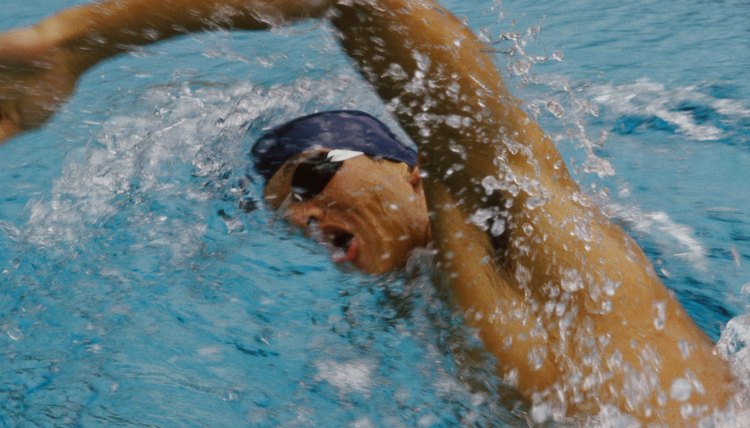
Swimming is a low-impact activity that can provides little stress on your joints as you reap the rewards of a cardiovascular exercise. Swimming is often recommended as a means of cross-training for injured athletes. Since there is little concern for injury as you swim, athletic tape is not commonly used for swimming. However if you are more comfortable taping your injured joint, there are methods of using athletic tape while swimming.
Athletic Tape
Athletic tape is used as an injury prevention and treatment method. It allows athletes to return to their sports quicker. Athletic tape stabilizes and restricts the range of motion of the taped joint. When taping a joint, a pre wrap is used as a soft foam buffer to prevent the adhesive of athletic tape from directly touching your skin. Then athletic tape is applied, which is normally a woven-cotton with a medical-grade acrylic adhesive on the back to secure the taping.
Swimming And Athletic Taping
If approved for swimming by a doctor or team trainer, chances are you do not need athletic tape while swimming. Swimming is a non-weight bearing activity that will place no stress on your affected joints. For example, if you have a sprained wrist you will not need stabilization in your wrist to swim. In addition, the water and chemicals in the pool can deteriorate your athletic tape. When athletic tape becomes wet and damaged, it is not effectively doing its job.
Triathlete Tip
If you are going to tape your ankle, use duck tape around the your athletic taping. This will help prevent your athletic taping from losing adhesive and falling off as you swim. However, you will still have the stability you need to participate in running and cycling.
Kinesio Tape
Kinesio Tape is an alternative to traditional athletic tape that will not come off in water. It is more expensive that athletic tape and can be worn for several days at a time. Kinesio taping helps to stabilize and provide support to your joints and muscles. However, kinesio tape does not affect your range of motion or circulation. Kinesio tape can also help to reduce pain and inflammation of overused or tired muscles. It can be used for knees, shoulders, hamstring, groins, elbows, ankles and feet.
References
- Tips for Triathletes: Injuries
- Kinesio Taping in Canada: What Kinesio Taping Does
- Podiatry Today: Keys Tips on Athletic Taping of the Foot and Ankle
- "NASM: Essentials of Personal Fitness Training"; 2008


Member Comments