
How to Run in Sprint Spikes
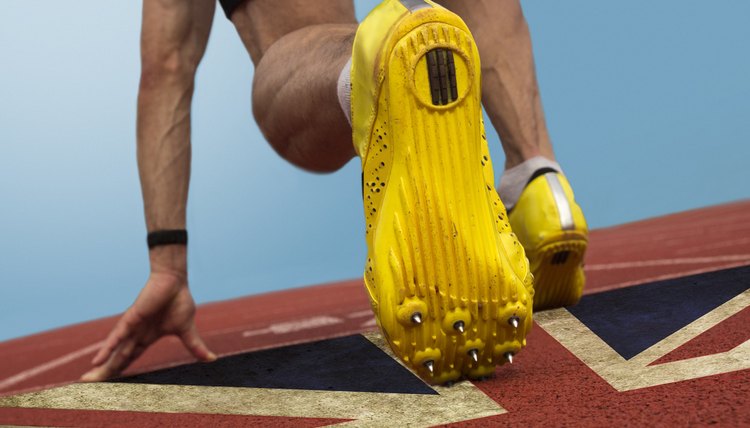
When you're ready to up your running game and try for faster running times, a pair of spiked running shoes can help you maintain traction on tracks that may be wet or muddy. With their flat heel area, spiked shoes may have a feel that is similar to a barefoot shoe. This can encourage you to land on the front of the feet instead of the heels. Running in spikes can take some getting used to -- and you should only use them on a running track -- but you'll never know how you're going to respond until you try them out.
Purchase the spikes that are meant for your type of running. Sprint spikes, typically used for 100-meter to 400-meter races, may have even less heel than other spikes, encouraging the runner to favor the toes over the heel. The depth of the spike is also different; sprint spikes tend to be shorter than cross country or other spikes. If you're not sure what you need or what your options are, get help at a store that specializes in gear for runners.
Wear a thin pair of socks with your spikes. This will prevent excess sweat from causing your foot to get slippery in the shoe.
Check the pins of your spikes before you start your run. Make sure each pin is securely in place and not loose or missing. This will ensure you have maximum traction when you're running. Another thing to keep in mind: Some races have a maximum spike length allowed, so make sure your spikes fit within the guidelines.
Practice landing on the midfoot throughout the duration of the run. If you find your heel striking the ground, correct it with the next step.
Pay special attention to running on your toes and forefoot when you're on the curved portion of the track. The curved area is where you'll need extra traction, since your body tends to lean in that position. If you're using spikes on a muddy or grassy cross-country course, it's also important to focus on running on your forefeet.
Keep a training log that tracks how long you've run with a certain pair of spikes. Spikes tend to last roughly 200 to 300 miles, according to the Running Shoes Guru website, so monitoring your distances can help you determine when it's time to get a new pair of spikes.
Tips
Running spikes can take some time to wear in and be comfortable -- not to mention that you'll be using your muscles in slightly different ways. Break yours in for at least a week or two before you try to use them in a competition. If you don't, you'll risk the blisters and sore muscles that can come with competing in a new pair of spikes.
References
Tips
- Running spikes can take some time to wear in and be comfortable -- not to mention that you'll be using your muscles in slightly different ways. Break yours in for at least a week or two before you try to use them in a competition. If you don't, you'll risk the blisters and sore muscles that can come with competing in a new pair of spikes.
Writer Bio
Nicole Vulcan has been a journalist since 1997, covering parenting and fitness for The Oregonian, careers for CareerAddict, and travel, gardening and fitness for Black Hills Woman and other publications. Vulcan holds a Bachelor of Arts in English and journalism from the University of Minnesota. She's also a lifelong athlete and is pursuing certification as a personal trainer.