
What does fact checked mean?
At SportsRec, we strive to deliver objective content that is accurate and up-to-date. Our team periodically reviews articles in order to ensure content quality. The sources cited below consist of evidence from peer-reviewed journals, prominent medical organizations, academic associations, and government data.
- AHA: Physical Activity
- ACSM: ACSM Position Stand on Physical Activity and Weight Loss Now Available
- ACSM: ACSM Position Stand on Physical Activity and Weight Loss Now Available
- Harvard Health Publications: Exercising to Relax
The information contained on this site is for informational purposes only, and should not be used as a substitute for the advice of a professional health care provider. Please check with the appropriate physician regarding health questions and concerns. Although we strive to deliver accurate and up-to-date information, no guarantee to that effect is made.
What Are the Benefits of Sport & Physical Activities?
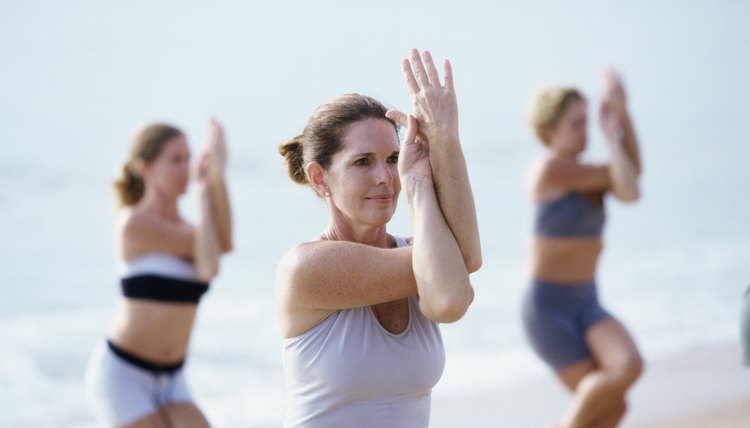
Sports and physical activities both fall under the category of exercise. Any time you move your body in a repetitive fashion for any length of time, you are performing physical activity. To gain the benefits of sport and activity, you should stick with something you enjoy. This will keep you motivated to continually participate.
Disease Risk Reduction
When you are inactive, you are highly susceptible to a number of chronic conditions, such as high blood pressure, high triglycerides, diabetes and high cholesterol. Aerobic physical activity can help eliminate or reduce all of these risk factors, according to the American Heart Association. Aerobic activity is the same as cardiovascular activity. Running, biking, elliptical training, swimming, rowing and walking are examples.
Weight Loss
Being overweight or obese is a contributor to chronic diseases as well as a lower self-esteem. Sport and physical activity can help you reduce your weight, because they burn calories efficiently. The key thing is to work out at a moderate or higher pace and to exercise long enough. The American College of Sports Medicine recommends 150 to 250 minutes of moderate-intensity physical activity weekly to achieve weight loss. As an added benefit, losing weight will take excess stress off your joints and enable you to move more efficiently.
Endurance
Cardio endurance and muscular endurance both play a role in sport activities. Elevated cardio endurance allows you to engage in a repetitive action for an extended period of time without being winded. Muscular endurance is the ability to perform numerous muscle contractions for an extended time frame. Sports such as soccer, basketball and football build these two fitness parameters. Improved cardio and muscular endurance can in turn enable you to perform daily tasks with more efficiency.
Stronger Bones
The bones are living structures in the body that constantly decompose and build back up. Osteoporosis is a condition in which bone mineral density diminishes and the bones become weak. Weight-bearing activity, such as running, walking, jogging, dancing, tennis and stair climbing, helps build bone mass and fights the onset of osteoporosis, according to the Spine-Health website.
Increased Muscle Mass
Strength training is a type of physical activity that builds muscle mass. This activity involves lifting free weights, using machines or using the resistance of your own body to do exercises specific to each muscle group. A bench press, for example, works the chest, shoulders and triceps. By doing strength training, you increase your joint range of motion, improve tendon and ligament strength and potentially decrease your resting blood pressure, according to Georgia State University. As an added bonus, muscle is active tissue that raises your resting metabolic rate.
Mood Enhancement
Sport and physical activity have more than just a physical impact on the body. During the course of a game or exercise session, your brain releases chemicals that can put you at ease and make you feel more relaxed. This is beneficial, especially if you have a stressful job or personal life and you need a distraction.
Flexibility
Yoga is a form of physical activity that involves holding your body in a fixed position for an extended period of time. This type of activity helps improve your flexibility. Having better flexibility will help you get around with more ease. Any type of stretching will also have this effect on the body.
References
Writer Bio
I am very genuine and magnetic on camera, and have made numerous videos on my own for clients and other organizations that I'm affiliated with. I also have a degree in Sport Management, and multiple certifications to back up my validity. I've also been featured in three different exercise infomercials and had a speaking role in a National Lampoons movie.