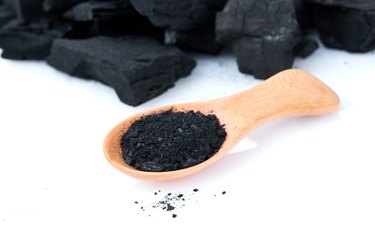
Beyond being eye-catching, is eating charcoal actually healthy for you? You may have seen black ice cream, cocktails, juices, lattes and more listed on menus and hitting your Instagram feeds.
These dark foods aren't just a result of a food coloring trick; their black color comes from activated charcoal, which is an ingredient that's claimed to have detoxifying effects.
Video of the Day
Video of the Day
What Is Activated Charcoal?
When you think of charcoal, you may automatically think of the black briquettes used in BBQing, which are not safe to ingest. Activated charcoal, on the other hand, is made out of non-toxic materials.
Activated charcoal is created by burning carbon-rich materials such as wood, coconut shells or peat at very high temperatures to create a black powder. The powder is then "activated," creating a very porous substance that can adsorb (or attach) to drugs and toxins, preventing them from going through your digestive tract.
Because activated charcoal passes through rather than being absorbed by the body, it's often used in hospitals to treat patients who have ingested poisonous substances. Many companies have marketed that eating activated charcoal in regular food and drinks can help remove everyday toxins from the body, but there is limited scientific evidence to support this.
Read More: Is Drinking Charcoal Healthy or a Hoax?
Benefits of Activated Charcoal
The most research surrounding the benefits of activated charcoal involves patients who ingested poisonous substances. According to a September 2015 study in the British Journal of Clinical Pharmacology, activated charcoal was shown to reduce drug absorption in real-word cases of patients who overdosed, with the greatest benefit when it was given within an hour of the overdose.
In a November 2018 paper written by University of Tennessee researchers and published on StatPearls, they found that activated charcoal was effective in absorbing substances like acetaminophen, aspirin and a majority of inorganic and organic materials but not as effective at absorbing alcohols or metals such as iron and lithium.
The recommended dosage is about 10 times the amount of the toxin, or 25-100 milligrams of activated charcoal for an adult.
As activated charcoal has mainly been used in emergency rooms to treat patients after the fact, there is not much research about its preventative use for detox or long-term health benefits. There are a few older studies from the 1980s that have shown activated charcoal could reduce cholesterol, but there has been no recent research to substantiate those results.
According to UCLA Heath, there are limited studies that show activated charcoal supplements could help relieve bloating and short-term gas, but they advise consulting a dietitian before trying it at home.
In addition, since activated charcoal tends to bind to many materials, both good and bad, it's possible that it could bind to important nutrients and vitamins, preventing your body from getting the benefits of those healthy substances.
The timeliness of activated charcoal consumption is also important, as it can only bind to materials shortly after ingestion, before they hit your bloodstream. So if you are trying to reverse a weekend's worth of bad eating and drinking choices on Monday morning, chances are, you've already missed your window.
The idea that your body needs additional help detoxing is also not supported: Your liver naturally acts as the body's filtration system by converting toxins into waste and regulating the body.
According to both the National Center for Complementary and Integrative Health and Mayo Clinic, detox cleanses and diets, in addition to being unregulated by the FDA, have not conclusively proved to actually eliminate toxins from your body. Thus eating activated charcoal may not be any more beneficial to your body than proactively maintaining your liver health.
Possible Side Effects
Activated charcoal is fairly safe to consume, and though the risks are low, there are still possible side effects such as pulmonary aspiration (i.e., inhaling the activated charcoal into the windpipe and lungs, which could lead to choking) or gastrointestinal complications. The National Capital Poison Center also lists adverse reactions such as nausea and vomiting after eating it, in response to its gritty texture.
Because of its absorptive properties, activated charcoal could also interfere with any other prescribed medications, so it's best to consult a doctor before introducing it to your diet.
The takeaway: Activated charcoal benefits have only been proven in poison/overdose cases in the hospital. If you don't mind the possibility of some uncomfortable side effects, activated charcoal is not usually harmful to eat, but don't count on it as a healthy supplement or a quick fix for detoxing your body.
- University of Michigan: "Charcoal"
- National Capital Poison Center: "Activated Charcoal"
- British Journal of Clinical Pharmacology: "Activated Charcoal for Acute Overdose: A Reappraisal"
- StatPearls Publishing LLC: "Activated Charcoal"
- UCLA Health: "Does Activated Charcoal Help with Gas and Bloating?"
- John Hopkins Medicine: "Detoxing Your Liver: Fact Versus Fiction"
- National Center for Complementary and Integrative Health: "'Detoxes' and 'Cleanses'"
- Mayo Clinic: "Do Detox Diets Offer Any Health Benefits?"