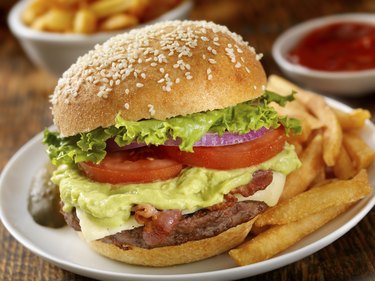
Some types of body fat -- such as the visceral fat that lies deep in your abdomen and surrounds your internal organs -- are more harmful to your health than others. Visceral fat increases your risk for certain health conditions, including breast cancer, heart disease and type 2 diabetes. Having a large waist indicates you may have excess visceral fat, but cutting calories, limiting certain foods and exercising can help minimize it.
Limit Refined Carbohydrates
Video of the Day
Swap foods made with refined grains for whole-grain options to limit visceral fat. In a study published in The American Journal of Clinical Nutrition in 2010, the participants who increased their whole grain consumption had less visceral fat, while eating more refined grains was associated with increases in this dangerous type of fat. Whole grains contain all three parts of the grain -- the bran, endosperm and germ -- while refined grains have had the bran and germ removed during processing, along with much of the fiber. Trade white bread for 100-percent whole-wheat bread; opt for brown rice instead of white rice, and have oatmeal for breakfast instead of corn flakes.
Video of the Day
You may also want to limit your carbohydrate intake in general. Lower-carb weight-loss diets may be better for losing visceral fat than higher-carb weight-loss diets, notes another study published in Diabetes Research and Clinical Practice in 2004. The lower-carb diet used in the study contained 40 percent of calories from carbohydrates, while the higher-carb version contained 65 percent of calories as carbs.
Fatty Foods May Increase Visceral Fat
Eating a lot of high-fat, high-calorie foods can lead to weight gain and increased visceral fat, especially if you tend to gain weight in your stomach. The types of fat you eat may be important as well as the amount. For example, eating trans fats may be associated with increases in visceral fat, according to a review article published in Prostaglandins, Leukotrienes and Essential Fatty Acids in 2008. Limit processed foods, store-bought baked goods and fried foods to avoid trans fats.
Try replacing foods containing saturated and trans fats with those containing polyunsaturated fats, the type in vegetable oils and fish. Have salmon for dinner instead of prime rib, use vegetable oil for cooking instead of butter, and snack on walnuts or sunflower seeds instead of packaged snack foods like chips and crackers.
Avoid Fructose-Sweetened Beverages
Many sugar-sweetened beverages are made with high-fructose corn syrup instead of sugar. Drinking beverages sweetened with fructose may increase visceral fat, notes an article published in The Journal of Clinical Investigation in 2009. The study involved people with overweight and obesity, so further research is necessary to determine whether fructose has the same effect in normal weight individuals.
Try replacing these beverages with naturally calorie-free options such as water, tea or black coffee. Skip the diet soda, as a study published in 2015 in the Journal of the American Geriatrics Society noted that this type of soda may be associated with increases in waist circumference, and thus potentially visceral fat as well.
Exercise Helps Burn Visceral Fat
Dieting by itself won't get rid of significant amounts of visceral fat; you'll get the most benefits if you exercise, too. Harvard Medical School recommends getting 30 to 60 minutes of cardio per day, such as brisk walking, swimming, running or aerobics, and notes that exercising with weights may also be helpful.
Postmenopausal women with type 2 diabetes lost subcutaneous abdominal fat -- the kind of fat just under the skin -- through diet alone in a study published in The Journal of Clinical Endocrinology & Metabolism in 2004. However, the women only lost the deep visceral fat when they added exercise to their weight-loss efforts.
- The American Journal of Clinical Nutrition: Whole- and Refined-Grain Intakes Are Differentially Associated With Abdominal Visceral and Subcutaneous Adiposity in Healthy Adults: The Framingham Heart Study
- Diabetes Research and Clinical Practice: Beneficial Effect of Low Carbohydrate in Low Calorie Diets on Visceral Fat Reduction in Type 2 Diabetic Patients With Obesity
- Prostaglandins, Leukotrienes and Essential Fatty Acids: Trans Fatty Acids: Effects on Cardiometabolic Health and Implications for Policy
- The Journal of Clinical Investigation: Consuming Fructose-Sweetened, Not Glucose-Sweetened, Beverages Increases Visceral Adiposity and Lipids and Decreases Insulin Sensitivity in Overweight/Obese Humans
- Johns Hopkins Medicine: The Skinny on Visceral Fat
- The Journal of Clinical Endocrinology & Metabolism: Exercise Is Required for Visceral Fat Loss in Postmenopausal Women With Type 2 Diabetes
- Journal of the American Geriatrics Society: Diet Soda Intake Is Associated With Long-Term Increases in Waist Circumference in a Biethnic Cohort of Older Adults: The San Antonio Longitudinal Study of Aging