While no one food or nutrient can rev up your metabolism so much that any excess weight will just "fall off," there are certain foods that can support a healthy metabolism because they require more energy to digest.
These foods typically include one or more of these specific nutrients:
Video of the Day
Video of the Day
Protein: Protein is satiating, meaning it leaves you feeling fuller longer but it also has a higher diet-induced thermogenesis value compared to the other two macronutrients, carbohydrates and fat, according to an often-cited April 2004 study in Nutrition & Metabolism. In other words, the energy needed (and burned) to fully process your meal is highest when you're eating foods rich in protein.
There's another way protein supports your metabolism: muscle mass. Eating adequate protein helps maintain your lean muscle, according to a March 2020 paper in the Journal of Nutrition. Muscle is more metabolically active than fat, so keeping more muscle on your body helps keep your metabolism up.
Healthy Fats: Monounsaturated fat may increase your overall calorie burn. A February 2013 study in The American Journal of Clinical Nutrition found that increasing monounsaturated fats (found in avocados and olive oil) and decreasing saturated fat (in red meat and dairy) resulted in a small increase in resting energy expenditure.
Fiber: Foods rich in fiber like whole grains, legumes, fruit and vegetables take longer to digest, which supports your metabolism and keeps you feeling fuller longer. In fact, our bodies aren't able to absorb fiber — instead, gut bacteria break it down, releasing anti-inflammatory short-chain fatty acids.
Because we don't absorb fiber, we don't retain the calories or energy from it either, according to the Mayo Clinic.
Adding foods rich in these three nutrients into your lunch routine will help support your weight-loss efforts.
4 Lunch Foods That Stoke Your Metabolism
Whether you're bringing lunch from home or grabbing something on-the-go, try adding these delicious foods to your next afternoon meal.
1. Tuna
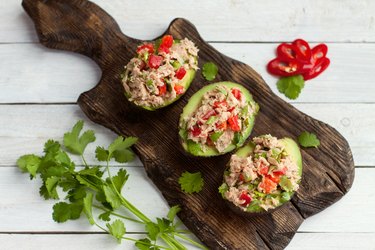
Enjoy grilled tuna when picking the protein for your lunchtime tacos, or keep it simple by using canned tuna for a tuna salad sandwich, or flaked atop a big bowl of salad.
Tuna is an excellent source of protein; half a can has almost 25 grams, according to the United States Department of Agriculture.
Plus, like salmon and other fatty fish, it contains omega-3 fatty acids. While omega-3s may not help you lose weight specifically, an August 2018 review in the Journal of Nutritional Biochemistry notes that they may help you maintain your weight.
2. Chickpeas
Use hummus as a spread on a sandwich or add chickpeas to your grain bowl or salad. Why? Because like other legumes (including peas and beans), chickpeas are high in protein and fiber — a double-win for weight loss.
An older 2009 clinical study in the Journal of Medicinal Food compared the effect of different treatment diets: control diet, legume diet, fish diet and high-protein diet. The researchers found that after eight weeks, people on the legume- and high-protein diets lost the most weight. They noted a change in mitochondrial oxidation, which may have a positive affect on metabolism.
3. Avocado
Whether it's a little guacamole on your burrito bowl or chopped avocado in your salad, eating the fatty fruit will support your metabolism.
Avocados are a rich source of monounsaturated fats, which we know may increase our metabolism when substituted for sources of saturated fat. A serving of avocado (a third of the fruit), has about 7 grams of monounsaturated fat, per the USDA.
In fact, an April 2017 review in Phytotherapy Research reported that adding avocado to the diet may lead to a decrease in body weight and body fat.
4. Bulgur
Bulgur salads are an easy and nutritious lunch to whip together. Plus, you can make it once and enjoy it for a few days. Another option is using bulgur as your grain in your next grain bowl creation.
Bulgur is a top-notch whole grain because it's especially high in fiber. A cup of cooked bulgur has just 150 calories but contains 8 grams of fiber along with 6 grams of protein, per the USDA. This serving provides about a third of women's fiber needs for the day.
Try These Recipes
2 Lunch Foods to Limit

Even if you're in a pinch, try to avoid indulging in these lunch foods, especially if you're trying to lose weight.
1. White Bread
If you're bringing a sandwich from home or grabbing a sub from the deli, make the bread whole-grain instead of one made with refined (white) grains. Refined grains are lower in fiber so they don't have staying power — they're more quickly processed and digested. This will leave you feeling hungry sooner than you may like.
Tip
Don't fall for healthy-sounding bread, like "multigrain" or "wheat" — it should be described as "whole-grain" or "whole-wheat" instead.
2. Fried Foods
OK, this isn't one specific food, but really any fried food, whether it's french fries or chicken tenders. When food is deep-fried, it means it's usually been tossed in some kind of coating (usually made of refined grains) and then soaked in oil, which is typically not one of the healthier oils high in monounsaturated fat. Both of these add calories without much (or any) nutritional benefit.
Plus, you're typically dipping fried foods in sugary condiments like ketchup or a barbecue or honey mustard sauce, which won't do your waistline any favors, either.
Ready to Lose Weight?
Set yourself up for success with LIVESTRONG.com's Weight-Loss Kickstart program.
- Nutrition & Metabolism: "Diet Induced Thermogenesis"
- The Journal of Nutrition: "High Compared with Moderate Protein Intake Reduces Adaptive Thermogenesis and Induces a Negative Energy Balance during Long-term Weight-Loss Maintenance in Participants with Prediabetes in the Postobese State: A PREVIEW Study"
- The American Journal of Clinical Nutrition: "Substituting Dietary Monounsaturated Fat for Saturated Fat is Associated With Increased Daily Physical Activity and Resting Energy Expenditure and With Changes in Mood"
- Mayo Clinic: "Dietary Fiber: Essential for a Healthy Diet"
- MyFoodData: "Canned White Tuna (Oil Packed)"
- The Journal of Nutritional Biochemistry: "Omega-3 Fatty Acids in Obesity and Metabolic Syndrome: A Mechanistic Update"
- Journal of Medicinal Food: "Legume-, Fish-, or High-Protein-Based Hypocaloric Diets: Effects on Weight Loss and Mitochondrial Oxidation in Obese Men"
- MyFoodData: "Avocados"
- Phytotherapy Research: "Effects of Avocado (Persea americana) on Metabolic Syndrome: A Comprehensive Systematic Review"
- MyFoodData: "Cooked Bulgur"