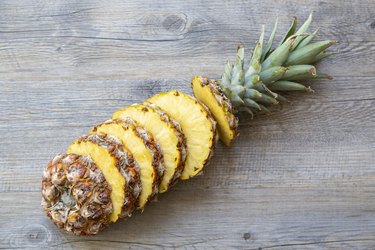
Diuretics can help you excrete water and sodium. Diuretics can be taken as medications, but they also occur naturally in a variety of plant-based products. You may not be aware of it, but you probably already consume several diuretic foods and drinks as part of your normal diet.
Diuretic Foods and Drinks
Video of the Day
A variety of different diuretic drinks and foods are part of a normal diet. Consuming them can be helpful in reducing symptoms of edema like swollen ankles and legs, stretched out skin and bloating. Diuretic foods have also been known to lower lipid levels. You may even be able to use natural diuretics to help normalize blood pressure.
Video of the Day
Commonly consumed diuretic foods include:
- Pineapple
- Dill
- Oats
- Barberry
- Lemon
- Cucumber
- Pumpkin seeds
- Carrot
- Quince
- Fig
- Barley
- Alfalfa
- Mulberry
- Watercress
- Parsley
- Cherry
- Green beans
- Pomegranate
- Pistachio
- Tomato
- Eggplant
- Onion
- Garlic
In addition, commonly consumed diuretic beverages (or herbs used in beverages) include:
- Chicory (usually blended with coffee)
- Coffee
- Tea
- Nettle root and leaf
- Lemon verbena
- Marigold
- Laurel (Bay leaf)
- Pennyroyal
Coffee and tea are considered potent diuretics because of their caffeine content. In fact, according to the Mayo Clinic, caffeinated products are all likely to have a mild diuretic effect.
A March 2018 study in the International Journal of Sport Nutrition and Exercise Metabolism and an October 2014 study in the Trends in Endocrinology and Metabolism journal reported that other commonly consumed caffeinated products include guarana seed, carbonated beverages like sodas, and foods and beverages containing chocolate. This means caffeine can be found in a variety of processed foods.
In contrast, chicory and the listed herbs are caffeine-free and are simply natural diuretics. However, chicory can often be found blended into instant coffee-based drinks, while the other plants are sometimes incorporated into specific teas.
Diuretic Foods and Their Restrictions
Most diuretic foods and drinks may need to be consumed in large amounts to actually produce any effect. For instance, according to an April 2012 study in the Pharma Science Monitor, parsley is a well-known diuretic. This herb is usually used as a garnish to add flavor to foods. However, it's unlikely that consuming parsley in such normally small amounts will produce much of a diuretic effect.
That being said, some diuretics are more potent than others. The potency of a diuretic can even change based on the part of the plant you're consuming. For example, a March 2017 study published in the Institute of Integrative Omics and Applied Biotechnology Journal reported that cherries are diuretic foods. However, cherry stems are much more potent diuretics compared to cherry fruits.
It's also important to be aware that not all diuretics foods are suitable for everyone. The same study reported that carrot seeds (but not the vegetable itself) are considered to be unsuitable for people with high blood pressure. Eggplant is not recommended for people with severe asthma, and green beans may be unsuitable for people who have gout.
Women who are pregnant, trying to become pregnant or lactating should be particularly careful about their consumption of diuretic foods and drinks. Many herbal products used to make diuretic drinks — like nettle, laurel, St. John's wort and marigold — are unsafe for pregnant and lactating women.
Diuretic Medications Versus Diuretic Foods
According to Harvard Health, there are three main types of diuretics: loop, thiazide and potassium-sparing diuretics. These all work by reducing the amount of fluid in your bloodstream, which can help lower your blood pressure and improve your cardiovascular health.
Loop and thiazide diuretics increase the amount of salt and water excreted by your kidneys when you urinate. These diuretics have the potential to lower your potassium levels. In contrast, potassium-sparing diuretics also remove salt and water from your body, but leave the potassium. Unfortunately, potassium-sparing diuretics are more likely to cause negative side effects.
The most common side effect caused by diuretics is frequent urination. However, other side effects associated with diuretics include:
- Weakness
- Confusion
- Fatigue
- Lightheadedness
- Muscle cramps
- Gastrointestinal issues —
like upset stomach, constipation, diarrhea and vomiting
- Erectile dysfunction
- Menstrual irregularities
- Breast enlargement
Given these varied side effects, you may be tempted to replace your medications with natural diuretics for blood pressure reduction, instead. Although diuretic drinks and foods can be healthy and beneficial, these products may not function in the same way as your diuretic medications — especially if you're taking potassium-sparing diuretics.
Don't stop taking your medication without your doctor's approval. You should also keep in mind that dietary changes can affect the functionality of your medications. Taking diuretic medications alongside large amounts of diuretic foods or beverages may negatively impact your health, particularly the health of your heart.
Dietary Changes and Diuretics
If your doctor has already prescribed diuretics, you'll know that improperly balanced sodium and potassium levels can be dangerous for your health. Your doctor may have already recommended making dietary changes tailored to the way your body responds to your diuretics.
If you've been prescribed loop or thiazide diuretics, your doctor has likely recommended that you increase the amount of potassium-rich foods in your diet. Potassium-rich foods include tomatoes, oranges, bananas, grapefruit, grapes, raisins, apricots, lentils, prunes, squash and other plant-based products. These fruits and vegetables may contain as much as 31 percent of the daily value (DV) per serving.
Animal products, like chicken, beef, fish, dairy and eggs also contain potassium. However, the amounts of potassium in these foods is much lower than the amounts in plant-based products. A large egg only has 2 percent of the DV for potassium, while 3 ounces of chicken breast has just 9 percent of the DV.
If you're taking potassium-sparing diuretics, the opposite type of diet is likely required. You may need to avoid consuming large amounts of potassium-rich products, like legumes and dried fruits. You should also avoid salt substitutes if you're taking this type of diuretic. These products are typically extremely rich in potassium.
- Journal of Alternative and Complementary Medicine: "Accuracy of Dioscorides,' De Materia Medica (First Century C.E.), Regarding Diuretic Activity of Plants"
- Mayo Clinic: "Can Natural Diuretics Reduce Fluid Retention and Help With Weight Loss?"
- Pharma Science Monitor: "Herbal Drugs Used as Diuretics"
- Institute of Integrative Omics and Applied Biotechnology Journal: "Hypolipidemic Herbals With Diuretic Effects: A Systematic Review"
- Medicine Sciences: "Mechanisms of Caffeine-Induced Diuresis"
- Mayo Clinic: "Edema"
- Mayo Clinic: "I've Been Seeing Ads That Say Caffeinated Drinks Hydrate You as Well as Water Does. Is This True?"
- International Journal of Sport Nutrition and Exercise Metabolism: "Nutritional Supplements and the Brain"
- Trends in Endocrinology and Metabolism: "Impact of Caffeine and Coffee on Our Health."
- Harvard Health Publishing: "What You Need to Know About: Diuretics"
- Harvard Health Publishing: "Adding a Diuretic to Your Blood Pressure Drug"
- National Institutes of Health: "Potassium Fact Sheet for Health Professionals"
- Harvard Health Publishing: "Low Potassium Levels from Diuretics"