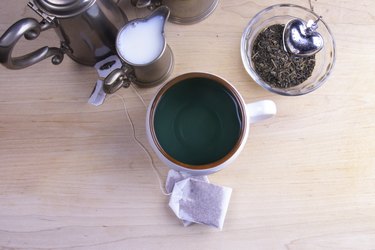
Caffeine-free tea is available at nearly any large grocery store. Instead of looking for black or green tea varieties, truly caffeine-free teas are herbal teas that, ironically, don't typically have tea leaves in their blends. They reduce your caffeine intake effectively.
Tip
If you need to cut back or completely cut out caffeine, herbal teas may offer a good solution. Herbal teas, when they are made without actual tea leaves, are naturally caffeine free — just make sure you read the label. Some teas may have added caffeine.
Video of the Day
Peppermint Tea Caffeine
Peppermint tea contains no caffeine. Peppermint tea contains leaves from the Mentha piperita plant. Peppermint has a distinct flavor and aroma, one that is often used in drinks, candies and other foods, particularly during the holidays.
Video of the Day
Peppermint and peppermint tea may also confer additional health benefits that make it worth drinking. Peppermint contains menthol, which gives the leaves their minty flavor and cooling effect. Menthol may also help with your overall health and vitality.
For example, according to the National Center for Complementary and Integrative Health peppermint oil has shown some promise in alleviating the symptoms of irritable bowel syndrome. Limited but promising research indicates it may also be effective in treating tension headaches and indigestion. However, the department warns that there is still not enough evidence to fully conclude that peppermint oil or peppermint tea would have any effect on these conditions, for most people.
Still, for people who want a hot, caffeine-free beverage, peppermint tea is an excellent option. In many recipes, all that is required is boiling water, some peppermint leaves and possibly a sweetener. Or you can purchase packaged bags of peppermint tea that you steep, as you would regular black tea.
Read more: How Herbal Slimming Tea Works
Chamomile Tea Caffeine
Chamomile tea is made from leaves of the Asteraceae/Compositae plant family. Like other herbal teas, there is no caffeine in chamomile tea, and there are other potential health benefits that accrue from drinking chamomile tea.
According to research published in March 2019 in Biomolecules, chamomile tea contains phytochemicals that give the plant potential medicinal properties. The research shows that chamomile tea has several benefits, including:
- Antioxidant properties
- Antimicrobial properties
- Oral mucus protector
- Anti-cancer agents
In fact, most studies on chamomile are several years old. Though promising, they do not guarantee that you will get anything more than a caffeine-free tea from chamomile. Several companies sell chamomile tea, and it is available at most retail stores that sell tea.
Read more: Herbal Teas for Diarrhea
Other Caffeine-Free Teas
If you are looking to avoid caffeine, you should avoid black, green, white and oolong teas, even if they state they are decaffeinated. Similar to decaffeinated coffee, decaffeinated teas still have small amounts of caffeine from the tea leaves used.
So if you are very sensitive to the effects of caffeine, you should avoid decaf teas and coffees too. According to the U.S. National Library of Medicine, some negative effects of caffeine can include symptoms such as jitters, increased blood pressure, reduced calcium absorption and trouble sleeping.
If peppermint tea or chamomile tea are not for you, you could try ginger tea. Ginger tea is made from the ginger root and contains no caffeine. According the National Center for Complementary and Integrative Health limited studies have shown that ginger has some effect on nausea and vomiting symptoms. The University of Rochester reports similar findings, indicating that ginger is often used to treat or help alleviate various stomach discomfort.
A list of herbal teas includes:
Chamomile tea
Echinacea tea
Ginger tea
Hibiscus tea
Lemon balm tea
Maca tea
Passionflower tea
Peppermint tea
Rooibos tea
Rose hip tea
Sage tea
- U.S. National Library of Medicine: "Caffeine"
- National Center for Complementary and Integrative Health: "Peppermint Oil"
- Biomolecules: "Plant-Derived Bioactives in Oral Mucosal Lesions: A Key Emphasis to Curcumin, Lycopene, Chamomile, Aloe Vera, Green Tea and Coffee Properties"
- University of Rochester: "Ginger"
- National Center for Complementary and Integrative Health: "Ginger"