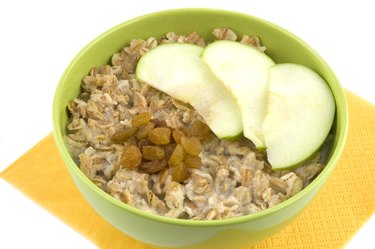
Multiple food allergies and intolerances can make meal selections a challenge. Following a gluten-free, wheat-free and dairy-free diet means avoiding all wheat, rye, barley and dairy products and foods made from them. At the beginning of this new diet, you may find yourself eating the same foods you know are safe daily. However, with time, you'll feel more confident branching out to new, safe breakfast options.
Egg Dishes
Video of the Day

You can safely eat many egg breakfast dishes when following a wheat-, gluten- and dairy-free diet. Make scrambles or omelets at home with vegetables and herbs, such as peppers, onions, mushrooms, spinach, basil and parsley. If you usually add a small amount of milk to your eggs before whisking, substitute a nondairy alternative, such as soy milk, almond milk or rice milk. Use a small amount of olive oil or coconut oil in your pan instead of butter. Avoid egg dishes with cheese, and opt for a side of fresh fruit instead of toast to eliminate wheat and gluten. Be sure to clearly communicate your food intolerances with waitstaff when eating out.
Video of the Day
Oatmeal

Oatmeal is another hot breakfast option for your gluten-, wheat- and dairy-free diet. According to the Whole Grains Council, oats themselves do not contain gluten; however, they are often harvested and processed using the same equipment as wheat. Be sure to purchase oats that are labeled as gluten-free to ensure no cross-contamination with wheat- or gluten-containing grains has occurred. Cook your oats with water or nondairy milk. You can can top it with fresh fruit, nuts and seeds, such as berries, bananas, walnuts and flaxseeds, to get more nutrition and flavor in your meal.
Cold Cereal Options
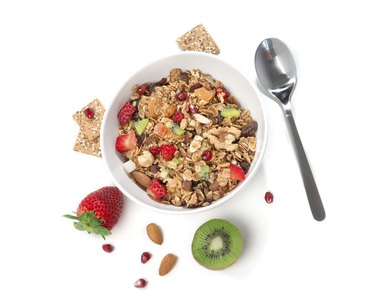
If you prefer to eat cold cereal in the morning, there are many gluten-, wheat- and dairy-free options for you. Look for cereals made from corn, rice, quinoa, millet and other gluten-free grains. Check the label and ingredient list to be sure the cereal states it is gluten-free and does not contain any dairy ingredients. The U.S. Food and Drug Administration requires companies to label both wheat and dairy. There will be a statement saying "Contains: Wheat and Dairy" at the end of the ingredient list or the words "wheat" or "dairy" in parentheses following an ingredient. Be sure to eat your cereal with a dairy-free milk.
Gluten-Free Bread Products

You can also choose bread products made from gluten-free flours and without dairy. Look for gluten-free bagels, which are usually available in the natural, frozen food section of your grocery store. You could eat a gluten-free bagel with peanut butter or a scrambled egg for breakfast. Gluten-free waffles and pancakes are also sold frozen in many stores, or look for baking mixes to make these breakfast foods at home. Most recipes call for milk, but you can easily substitute a dairy-free milk alternative. Be sure not to use real butter on your waffles and pancakes. Look for nondairy butter alternatives made from vegetable oils instead.
Related Reading
Gluten is a complex protein found in the grains of wheat, barley and rye. The consumption of alpha-gliadin, a component of gluten, invokes an abnormal immune response in the intestines of people with gluten-sensitive enteropathy, also called celiac disease, according to a report in the 2002 "American Family Physician." Although oats do not contain gluten or alpha-gliadin, many people with celiac disease believe they cannot eat oatmeal or other oat products. If you suffer from celiac disease, always consult with your doctor before making any diet modifications.
Cross-Contamination
If you have celiac disease, wheat allergy or gluten sensitivity, even small amounts of gluten can trigger symptoms, which can range from mild gastrointestinal upset to full-blown nutrient malabsorption and malnutrition. Oats are often milled in the same facilities as other grains, and cross-contamination of oat products is common. A review in "European Journal of Gastroenterology and Hepatology" reported in 2008 that a wide range of commercial products are contaminated with gluten, and consumption of contaminated oats represents one cause of persistent symptoms in celiac patients.
Tolerance of Pure Oats
If you have celiac or gluten sensitivity, you may experience a resolution of symptoms when you adhere to a gluten-free diet, which usually permits the use of pure oats. In 2007 the Canadian Celiac Association issued a statement promoting the consumption of contaminant-free oat products by people with celiac disease. Published in the 2007 "Canadian Journal of Gastroenterology," the organization established upper limits for daily oat consumption, recommending that adults and children consume not more than, respectively, 70 grams and 25 grams.
Not for Everyone
A 2006 review in "Postgraduate Medical Journal" demonstrated that a few celiac patients still exhibited intestinal inflammation despite gluten-free diets that included oats. In addition, some people with celiac disease still had symptoms even when they strictly avoided gluten and consumed only contaminant-free oats. An intriguing 2006 study in "Journal of Gastroenterology and Hepatology" showed that some varieties of oats -- specifically, Astra and Mortlook -- contained proteins called avenins that caused effects similar to gluten in tissue culture preparations.
Considerations and Recommendations
Most experts agree that contaminant-free oats and oatmeal are well-tolerated and safe for the majority of people with gluten sensitivity. Rarely, however, oat proteins also may affect some individuals, and some varieties of oats may cause more intestinal inflammation than others. If you suffer from gluten-sensitive enteropathy and wish to consume oats, consider following the Canadian Celiac Association's recommendations, limiting daily consumption to 70 grams. In addition, some authorities recommend regular medical checkups, including small bowel biopsy.