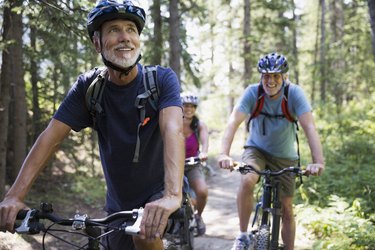
You might already know how to ride a bike — great! Maybe you learned as a kid, back when your two-wheeler was the only way you could explore the neighborhood on your own. Now that you're older, you know there's more to cycling than pedaling. There's navigating traffic, figuring out what equipment to use, and let's face it, crashing hurts a lot more.
Relax! At its core, cycling today isn't much different from when you were a kid. And the activity can help you lose weight, build endurance and even bring back the joy of those youthful golden days.
Sure, you can get a good workout by hopping on your bike in gym shorts and cross trainers, but if you want to get serious about the sport, ride stronger and explore wider territory, we've compiled everything you need to know to get started.
Read more: 11 Amazing Benefits of Cycling
You may think a bike fitting is overkill if you aren't riding a ton. Trust me, you need it. If your bike doesn't fit correctly, you're going to feel it in your butt, back and knees.
—Jim Rutberg, a cycling coach with Carmichael Training Systems and co-author of The Time-Crunched Cyclist
Start With the Right Bike and Cycling Gear
Obviously, the main thing you need when you get serious about cycling is the right bike. What's not so obvious? Which bike exactly that is. It isn't one specific model or brand. Nor is it the latest and greatest with all the bells and whistles. It could be the old 10-speed in your garage. Or it could be one from a second-hand bike shop.
What matters most is that the bicycle fits your body. There's a lot more to this than the old bike-seat-at-hip-height trick you learned in your indoor cycling classes. The tilt of your seat, height of the handlebars and how far forward you have to reach to grasp the pegs all affect where on your body you'll feel pressure. The best way to set up your bike for your individual needs is to get a professional bike fit.
"You may think a bike fitting is overkill if you aren't riding a ton," says Jim Rutberg, a cycling coach with Carmichael Training Systems and co-author of The Time-Crunched Cyclist. "Trust me, you need it. If your bike doesn't fit correctly, you're going to feel it in your butt, back and knees." Some cycling shops offer a free fitting with new bike purchases and most also have fit services available for older bikes.
Another little change that makes a big difference in terms of comfort is wearing cycling shorts that have padding in the crotch (called a chamois, which is pronounced "shammy"). The chamois reduces chafing and works in tandem with your bike seat's cushioning to relieve pressure on your sit bones. Road riders typically wear these in form-fitting shorts, but if spandex isn't your thing, there are plenty of looser options with chamois inside that work just as well.
Other helpful equipment:
- A helmet — it's foolish (and very unsafe) to ride without one
- Cycling gloves — the padded palms keep pressure off the nerves in your hands, which reduces the chance of your fingers going numb
- Glasses — for protection from the sun, wind and debris
- Spare inner tubes
- A multitool
- A hand pump or a CO2 cartridge system
Store these last three gadgets on the list in a saddlebag or tuck them in the pocket of your cycling jersey.
As for cycling shoes, most cyclists eventually switch from standard flat pedals to a clipless system, where you use a special shoe that attaches directly to the bike pedal. (NOTE: "Clipless" is a misleading name, because you actually clip the cleat at the bottom of the shoe into the pedal.)
If this sounds intimidating, fear not. It just takes a little practice to learn to use a clipless system. Try holding onto a wall while clipping and unclipping your shoes. Then practice your technique in a parking lot or on a quiet road. Once you get used to it, a clipless system will improve your efficiency and bike handling. You won't miss pushing pedals with tennis shoes.
Build a Better Beginner Biking Workout
Fitness on a bike is all about getting into a steady rhythm, meaning you need to consistently pedal, rather than pedal-coast, pedal-coast. To do that, you need to leave stoplights behind. Seek out long stretches of open road, ideally ones with a relatively low volume of traffic. Your local bike shop or cycling coalition can make recommendations about where to find these routes.
On the bike, work on mastering the balance between gear and cadence — how fast you pedal. "Find a pedal speed that's not so fast that that you're bouncing in the saddle," Rutberg says. "But not so slow that you're grinding in too hard of a gear."
You can check your pace by tracking your revolutions per minute. The standard speed is 80 to 90 times, counting one leg. If your pedal strokes are closer to 60 per minute, the gear you're in is likely too hard. Finding that sweet spot provides steady cardiovascular training without potential harm to your joints.
During your first few workouts, aim for an easy 30 to 45 minute ride. After your sessions, you may feel some soreness in your quads, glutes and calves. But don't be surprised if your neck and shoulders ache too, Rutberg says. The muscles of the neck and shoulders hold up your head and support the upper body, so they'll need time to strengthen along with your legs.
Tip
Change your hand position frequently to ease the stress on your shoulders and neck, Rutberg says. And be sure to ride with your shoulders relaxed and down, not hunched.
Then Increase Your Time, Distance and Speed
Once you get the hang of riding on the roads, cycling's low-impact nature means you can ride as much as your schedule and fitness level allow, says Rutberg. But it's better to gradually build up distance so that you'll increase the chance that you'll enjoy cycling and stick with it and decrease your risk of injury, soreness and fatigue.
Commit to a minimum of two weekday rides of 30 to 45 minutes plus a longer pedal on the weekends. You can safely add bursts of speed to your workout from the get-go. Try working in quick accelerations that last anywhere between 30 seconds to five minutes. These speed intervals add a powerful fitness boost and increase the number of calories you'll burn.
To accelerate, increase your cadence. When your pedal speed starts to feel too fast for the gear you're in, shift. You can maintain the cadence or repeat the process, depending on how hard you want to ride.
There are no hard-and-fast rules on interval times. You can try just holding the pace until you can't maintain it any longer. Or you can create your own workout structure, such as one minute hard, one minute easy or five minutes hard, five minutes easy, and follow that.
Another way to build cardiovascular fitness is to climb hills on your bike. Conquering an incline also injects strength work into your aerobic ride. Work speed bursts and climbing sessions into your midweek rides, but don't worry about them on your longer weekend rides, since the goal of those rides should be to increase the amount of time you spend in the saddle.
While riding is pretty easy on the joints, smart training rules still apply. Be sure to balance hard workouts — cycling or otherwise — with easy days, so your body can recover.
Stay on Track and on Pace
Getting fit is a great goal, but it might not always get you out the door. To give yourself extra motivation, set a goal for yourself by signing up for a charity ride — preferably at a distance that makes you a little nervous. Or, create a destination ride to the next town where's there's a great brunch spot or plan a long journey on a scenic road with a picnic stop included.
Part of the joy of cycling is ride with others. Try joining bike shop or club rides, where you'll meet people and explore new routes as a group. But don't get in over your head, says Rutberg. Some Saturday morning "world-champ" rides (as they're known in cycling parlance) can be aggressively paced and lead to bruised egos and discouragement for new riders. Look for outings tailored to newbies or no-drop rides, which means no one gets left behind.
Lastly, not every day is a perfect riding day. Rain, snow or other conditions might force you to take your workout inside. If so, indoor cycling classes can provide a group experience without the traffic or worries about keeping up. That camaraderie can be what you need to hit the saddle midweek, particularly on cold, dark days.
Read more: The 10 Best Stretches to Do Before Biking
Quick Tips for Smoother, Safer Cycling
When you're cycling on the road, you're in an incredibly vulnerable position. In fact, an October 2019 study published in the Journal of Oral and Maxillofacial Surgery found that traumatic brain injuries and broken facial bones increased among cyclists ages 55 to 64. So it's vital to follow safety precautions before and during your ride.
The study authors recommend "avoiding alcohol before cycling, wearing brightly colored or reflective clothing, using lights or reflectors at night and wearing helmets." In addition, here are a few other tips to keep you injury-free.
1. Shift just before you need to: It'll save your gears and your knees. Two key examples: During a climb before it gets too difficult and as you approach stop lights. If you're in a hard gear, it'll be tougher to start pedaling again.
2. Brake smart: Seems simple, but if you clinch the front brakes hard and fast, you just may toss yourself over the bars. Break with the back pads first, then add the front.
3. Eye the driver: "At the end of the day, cyclists are vulnerable, so ride defensively and predictably," says Rutberg. Indicate your intentions with hand signals, follow lights and signs as if you're in a car and lock eyes with drivers so there's not confusion about whether you're going or stopping.
4. Learn to fix a flat: Being stranded is no fun. Check with your local bike shop or REI for a basic bike maintenance class or ask a friend who rides to show you how.