With the prevalence of keto and Atkin's, more people are trying a low-carb, no-sugar diet to lose weight. If you've made the resolution to cut back on carbs, you might be racking your brain to create a grocery list full of foods with no carbs or sugar that will keep you energized throughout the day.
Read more: 6 Keto Diet Mistakes to Avoid at All Costs
Video of the Day
Video of the Day
Low-Carb, No-Sugar Diet
The idea behind diets like keto and Atkin's is that when you give up carbs, your body starts to burn fat for energy. This means you're going to lose weight — but with what long-term consequences?
The U.S. National Library of Medicine points out that carbohydrates are a source of energy and essential for proper body function. Many sources of carbohydrates are also sources of important vitamins and minerals that your body needs. All fruits and vegetables have some amount of carbohydrates, though some have very small amounts.
The bigger concern for people on low-carb diets should be the types of carbs they are consuming. Carbohydrates can be identified as complex or simple. Complex carbs are the starches and fibers found in plant products. Simple carbs are sugars, both the natural kind and the added kind.
Natural sugars include fructose in fruit and lactose in dairy, whereas added sugars are just what their name implies: Sugars added to processed foods that provide energy (calories) but no nutritional value.
Added sugars can lead to weight gain and other health problems, such as diabetes, so these are the carbohydrates that nutritionists recommend you avoid instead of nutrient-rich complex carbohydrates from whole food sources. Therefore, instead of aiming for a no-carb diet, try to plan a low-carb, no-sugar diet that includes some complex, fibrous carbs.
Choosing Foods Wisely
It can be difficult to find foods with no carbs or sugar. True no-carb options include animal products like meat, poultry, seafood and eggs. These can be great for weight loss because they are full of protein, which keeps you satiated and boosts your ability to burn calories. But by themselves, these foods lack the fiber and nutrients that you would find in plant products, which do contain some carbs. After all, you'd be hard-pressed to find no-carb vegetables!
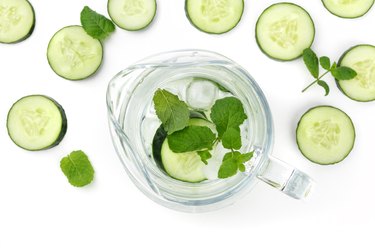
Some fruits and vegetables are extremely low in carbohydrates, however, especially leafy greens. These might not be strictly no-carb vegetables, but a 1-cup serving of spinach, for example, has 7 calories with only 1.1 grams carbohydrates and 0.1 gram sugar. Water-dense cucumber has slightly more: A half-cup serving of sliced cucumber has only 8 calories with 1.9 grams of carbohydrates and less than a gram of sugar.
Fruit gets its sweetness from natural sugars, but some fruits are less sweet than others. Avocado is one such example. A cup of sliced avocado has 234 calories with 12.5 grams of carbohydrates, 9.8 of which are fiber, and only 1 gram of sugar.
Avocado is also a good source of healthy fat, with 21 grams in that 1-cup serving. Fat helps slow the digestion of carbohydrates, thus lowering blood glucose levels. Protein does the same thing.
This is one of the reasons that nuts, which are packed with fats and protein, are good for people on low-carb diets — they help manage blood sugar, according to the Academy of Nutrition and Dietetics. People who are counting calories or watching their weight do have to be careful with nuts because they are so dense in calories.
Take peanut butter as an example of a low-carb snack. A 2-tablespoon serving of peanut butter has 188 calories and 7.7 grams of carbohydrates. That's more carbohydrates than the spinach and cucumber overall, but peanut butter actually has fewer carbohydrates per calorie.
Peanut butter's carbohydrates account for 14 percent of its calories, whereas cucumber's carbohydrates make up 83 percent and spinach's carbs make up 55 percent. Of peanut butter's 6.9 grams of carbohydrates, 2.6 grams are fiber and only 2.7 grams are sugar.
Just be careful of reduced-fat peanut butter because the fat is often replaced with added sugar to make up for the diminished taste and texture. A 2-tablespoon serving of reduced-fat peanut butter has 187 calories (almost the same as regular peanut butter) but has 12.8 grams of carbohydrates and 3.3 grams of sugar.
Avoiding Added Sugar
Although it's healthy to include some carbohydrates in your diet because of the other nutrients they provide, avoiding added sugar is considered good practice by nutritionists. The hard part is that added sugars are sneaky. Food manufacturers add them to all kinds of food — even foods you wouldn't expect.
Not all added sugars will be directly referred to as sugar. Next time you check a label, watch out for the following ingredients, which are all different versions of added sugar: high-fructose corn syrup, invert sugar, evaporated cane juice, agave nectar, dextrose, fructose, lactose and maltose.
The American Heart Association encourages men to limit their added sugar to 36 grams and women to limit theirs to 25 grams. Because each gram of sugar has 4 calories, and there are 4 grams of sugar in a teaspoon, you can see this measures out to a limit of 9 teaspoons (150 calories) for men and 6 teaspoons (100 calories) for women.
To put that in perspective, a small can of cola has 37 grams of sugar, more than anyone should consume in a day. That means there are approximately 155 calories and 9 teaspoons or sugar in that cola, but no nutritional value otherwise.
Compare that with a pint of strawberries (357 grams), which has 114 calories and only 17.5 grams of sugar. The strawberries are also loaded with fiber, vitamin C, magnesium, manganese, potassium and vitamin K. The strawberries have sugar for energy, but they also provide your body a lot of stuff it needs!
Read more: Diet Soda and Ketosis
If you undertake an eating plan composed entirely of foods with no carbs or sugar, you could lose weight, but it will likely take a toll on your body as you start to miss out on important vitamins and minerals.
Instead of swearing off carbs and sugars altogether, aim to eat nutrient-rich complex carbohydrates, avoid added sugars and pair your carbs with a source of protein and fat for slower digestion (and resolve to get some carbohydrates from fruits and vegetables, since there's no such thing as no-carb vegetables). These will help you in sustainable weight loss that will make you feel your best.
- American Academy of Family Physicians: “Low Calorie Diets”
- Harvard Health Publishing: “Going Low-Carb? Pick the Right Proteins”
- U.S. National Library of Medicine: “Counting Carbohydrates”
- U.S. National Library of Medicine: “Carbohydrates”
- MyFoodData: “Avocado”
- MyFoodData: “Cucumber”
- MyFoodData: “Spinach”
- Harvard Health Publishing: “Why — and How — You Should Steer Clear of Added Sugars”
- American Academy of Family Physicians: “Added Sugar: What You Need to Know”
- Academy of Nutrition and Dietetics: “Can My Child with Diabetes Eat Nuts?”
- MyFoodData: "Peanut Butter Smooth Reduced Fat”
- MyFoodData: "Peanut Butter (Smooth)"
- Mayo Clinic: “Why the Keto Diet Is More Hype than Help for Most People”
- American Heart Association: “Added Sugars”
- MyFoodData: “Strawberries”