






































To start the day off right and simplify the task of keeping your blood sugar level under control all day, begin the day with a balanced breakfast. If you have Type 2 diabetes, try to combine the right amount of carbohydrates, to help your blood sugar level stay within the target range, with some protein and healthy fats, to keep you full and satiated until the next meal.
Carbohydrate Intake at Breakfast
Look at your food labels or use a food database to determine the amount of carbohydrates present per serving of food you eat. The American Diabetes Association suggests, as a starting point, an intake of 45 to 60 g at breakfast, although some people with Type 2 diabetes can benefit from a lower carbohydrate intake. Check your blood sugar level 2 hours after eating; if it is higher than 180 mg/dL, cut back on carbohydrates until your blood sugar level stays on target.
Oatmeal
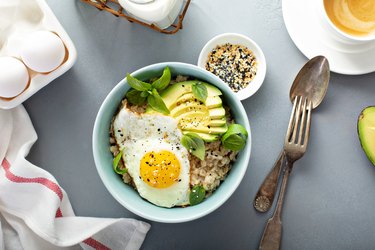
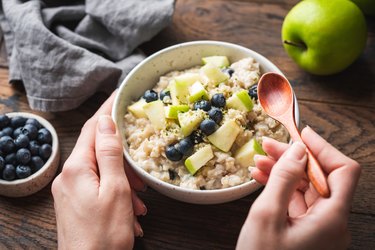
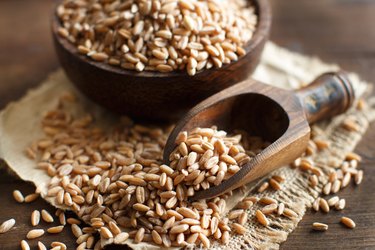
Oatmeal is a good way to start the day; its soluble fiber can help you improve both blood sugar and cholesterol levels. Choose larger flakes, such as old-fashioned oatmeal or steel-cut oats, because they take longer to digest and will leave you feeling full for a longer period of time. Each 1/3 cup of dry oat flakes provides 15 g of carbohydrates. If your carbohydrate budget is 45 g, you could prepare oatmeal with 1/2 cup of dry oat flakes, which contains about 25 g of carbohydrates, and add 1/3 cup of sugar-free yogurt and a small diced pear, which add, respectively, 5 g and 15 g of carbohydrates.
Toast
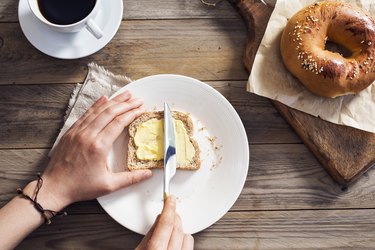
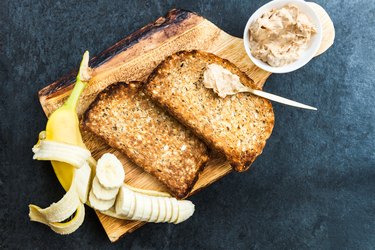
For an easy breakfast providing 45 g of carbohydrates, toast two slices of whole-grain, high-fiber bread; each contains 15 g of carbohydrates. Spread 2 tbsp. of natural peanut butter on your toast and serve with 1/2 of a medium banana. Natural peanut butter contains very few carbohydrates; half a banana provides 15 g of carbohydrates.
Fruit and Yogurt Parfait
For a refreshing and fruity breakfast, mix 2/3 cup of sugar-free yogurt with 1 cup of blueberries, a small diced apple and 1 oz. of raw almonds. Yogurt, blueberries and an apple each provides 15 g of carbohydrates; almonds are very low in carbohydrates, with less than 3 g per ounce.
Healthy Burrito
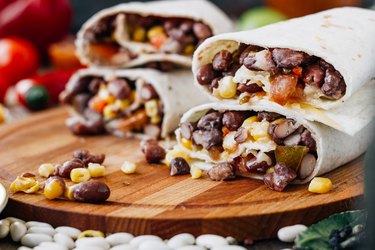
For breakfast on the go, make a burrito with a small, 6-inch, whole-grain tortilla. Add scrambled eggs, low-fat cheese and salsa to your taste; skip the rice. Bring a banana to complete your breakfast if you are still hungry. The tortilla and the banana provide a total of 45 g of carbohydrates, while the eggs and cheese are carbohydrate-free. Salsa usually contains less than 1 g of carbohydrate per tablespoon.
Smoked Salmon and Cream Cheese on Whole-Grain Crackers
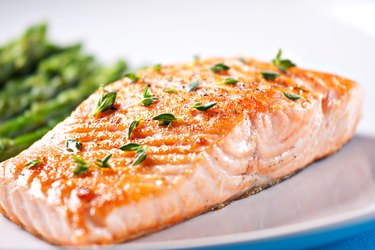
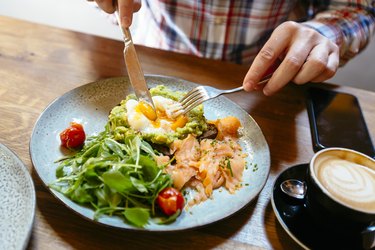
Create an elegant breakfast using whole-grain crackers; ensure they are made from only whole grains and confirm that each serving provides a minimum of 2 g of fiber. Four to six crackers usually contain 15 g of carbohydrates. You can have two servings of whole-grain crackers, about eight to 12 crackers, topped with cream cheese and smoked salmon; finish your breakfast with 1 1/2 cups of strawberries. The crackers and strawberries have 45 g of carbohydrates; salmon and cream cheese are carbohydrate-free.


