
Why Do Athletes Make Good Role Models?
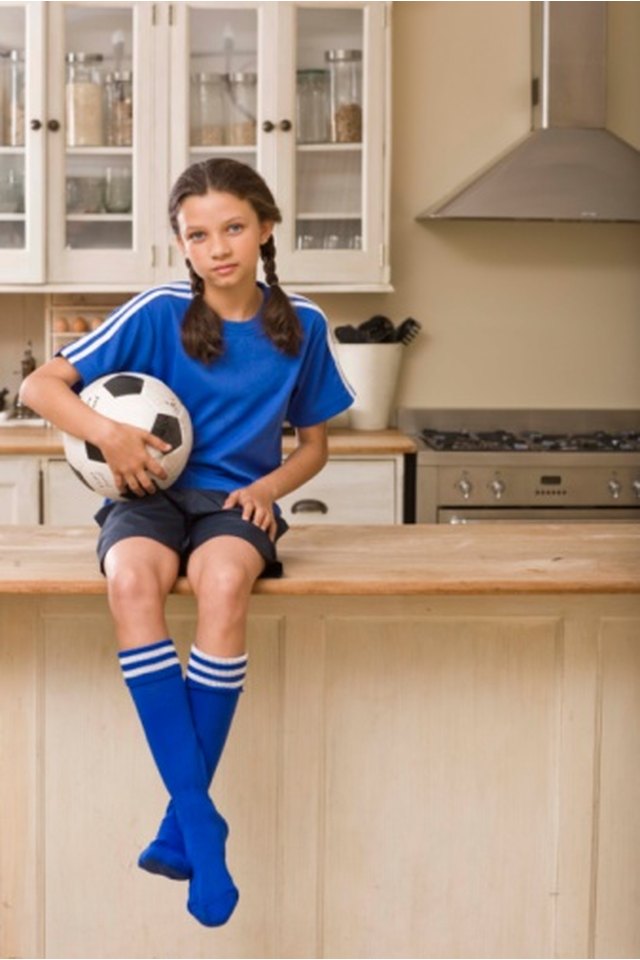
As many as 59 percent of adolescents can identify a role model in their lives, according to research published in the January 2011 issue of the "Journal of Adolescent Health." Of the adolescents with role models, those that looked to athletes were more likely to make positive health-related decisions. The fact is, not all athletes are positive role models. Unfortunately some athletes engage in negative behavior, but overall, the athletic lifestyle lends itself to a position of positive role modeling for adolescents.
Engaging in Physical Activity
To stay on top of their game, athletes have to engage in regular, vigorous activity. In a relatively sedentary culture where much of life revolves around TV shows and video games, athletes model the benefits of physical activity to children and adolescents in a very real way. Athletes make a living from being fit, healthy and strong. Just by hitting the field or the court, athletes give children the opportunity to see that physical activity has the ability to pay off.
Confidence
One of the reasons girls should play sports is for the boost in confidence they receive, according to the TeensHealth website. You can see this confidence in action when watching professional athletes. On the field and off the field, athletes embody a sense of confidence in themselves and their team. This sense of confidence is one of the reasons that athletes make good role models -- they show youth how important it is to believe in themselves and those around them.
Work Ethic
Athletes have to work hard to stay on top of their game. The time baseball players dedicate to the sport goes well beyond the two or three hour daily practice. They spend time stretching, watching tape and working on their swing. Then they hit the gym and lift weights or hit the field to work on their speed. They may spend six-to-eight hours a day just on baseball, plus the time traveling on buses and playing in doubleheaders on the weekends. Adolescents who see athletes as role models learn to mimic the work ethic that it takes to become a top athlete.
Education
Athletes learn early that if they want to play the game, they have to make the grades. Even as early as middle school athletics, a failing grade will prevent an athlete from being allowed to play. When youth look to high school, college or professional athletes as role models, they understand that those athletes had to make a commitment both on and off the field to excellence. High school athletes won't play if they don't make the grades. Colleges will only recruit athletes that can get accepted into their school, then athletes can only play if they pass their classes. And while some professional athletes get drafted straight out of high school, most still have to prove themselves as college athletes to get a look. It's a chain that requires at least some dedication to academics to succeed as a money-making athlete.
References
Writer Bio
Laura Williams has worked in recreation management since 2004. She holds a master's degree in exercise and sport science education from Texas State University, as well as a B.A. in exercise and sport science from the University of Mary Hardin-Baylor.