
Do Soccer Players Wear Cups?
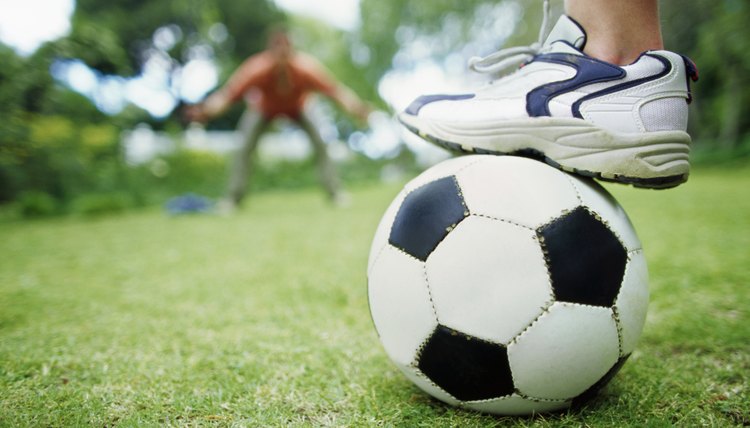
Wearing a cup while playing soccer, while not mandatory, is useful in avoiding possible injury related to getting hit with the ball or kicked in the pelvic area. Available in both soft and rigid styles, the comfort of the cup usually determines whether a soccer player wears it on a regular basis.
History of the Protective Cup
The initial need for cups can be traced back to Boston's paved streets and high-wheel bicycles in 1874, when the athletic supporter was developed. Through the years, there has been continued development and evolution of this piece of protective equipment. Players of various sports wear protective cups, including soccer players.
Different Cup Types for Different Sports
Soccer players may be more likely to wear a cup if it is comfortable and allows freedom of movement. Soft cups are better for lower-impact sports such as soccer, where contact is still part of the game. This type of cup is not as protective as the rigid plastic alternative, but it offers a measure of protection.
Don't Wear at Your Own Peril
A protective cup should be a staple in soccer. A kicked ball, or foot to an unprotected area, can create a high degree of discomfort. The potential for a testicular injury, although low risk, is also present. Testicular rupture is caused by a hard blow or crushing injury. The injury causes pain, swelling and extreme discomfort.
It's Your Choice
Even though the usefulness of the cup is well established, the use of protective cups in soccer is a matter of personal choice, rather than mandated sports gear. It is not recognized as going completely against the status quo if you go without. Players of other sports besides soccer -- including the National Football League -- use the cup less frequently than in the past.
References
Writer Bio
Kristi Stephens has been writing professionally since 2010. She holds certifications in athletic training, massage therapy, personal training and has a physical-education degree with concentrations in coaching and family life/human sexuality. Stephens is on the kinesiology faculty at a local community college and is employed as an athletic trainer/patient relations coordinator for a sports medicine physical therapy clinic.