
What Muscles Are Used in Throwing a Baseball?
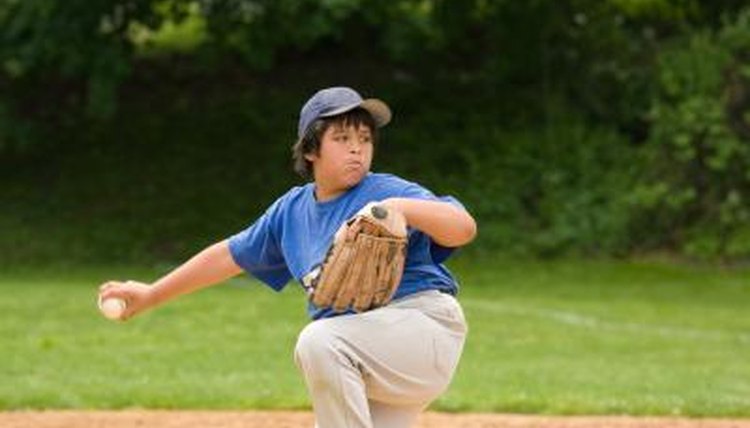
Though the entire body is engaged when throwing a baseball, the shoulder, arms, back and core are responsible for the majority of the movements. A combination of strength, speed and stability are needed to effectively rotate the body backward before switching direction and accelerating forward to release the ball with power and accuracy.
Sturdy Shoulders
The deltoids, the primary muscles of the shoulder, allow your shoulder to rotate back during the windup and cocking phase, and forward when accelerating and throwing the ball.
Strong Arms
Located on the back of the upper arm, the triceps – a three-headed muscle group – provides power when you are releasing the ball and pushing it forward.
Stable Back
The lats, or latissiumus dorsi, are large fan-like muscles located on either side of your back. The lats help your body to stabilize during the throwing motion while also providing power to the throw of the ball.
Balanced Core
Your core, consisting of your abs, lower back, glutes, pelvis and hips, helps you to remain stable during motion, such as when throwing a baseball. Therefore, your core helps you to stay balanced while transferring weight from one leg to the other and when going from a backward to forward rotation.
References
Writer Bio
Beth Rifkin has been writing health- and fitness-related articles since 2005. Her bylines include "Tennis Life," "Ms. Fitness," "Triathlon Magazine," "Inside Tennis" and others. She holds a Bachelor of Business Administration from Temple University.