
What Does an Outside Linebacker Do in Football? (with Video)
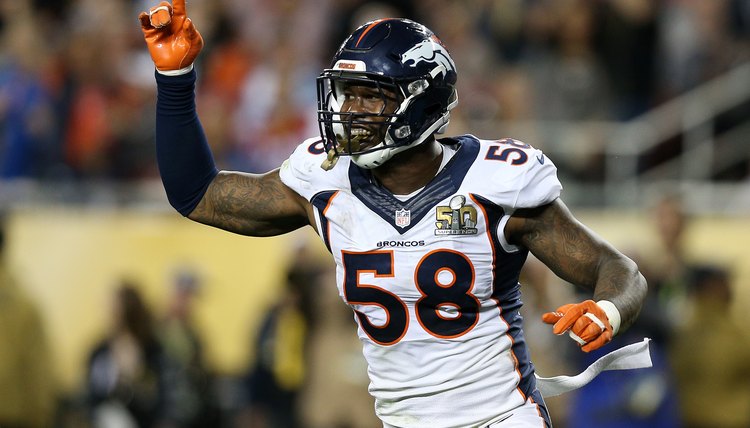
On and near the line of scrimmage in American Football can be a whirlwind and it can be hard to tell who plays where and does what. This is especially true for linebackers as there are two main types of linebacker football positions. One of these is the outside linebacker, which has important duties as they work with the defensive line and other linebackers to make plays.
Typically, the defensive unit of a football team has two main types of linebackers:
-
- Inside linebackers, also known as middle linebackers
-
- Outside linebackers, also signified as OLB
Most defensive schemes have two outside linebackers, designated as strong side and weak side, who are responsible for containing the outside areas of the opponent’s offensive formations. The outside linebackers’ specific responsibilities depend largely on the game situation and the opponent’s offensive formation. The inside linebacker is responsible for defending against running plays in the middle of the field and calling plays to the defensive backs, and other defensive positions.
What is a Strong Side Linebacker?
The outside linebacker designated as the strong side linebacker, or SAM linebacker, lines up on the side of the field that the offensive unit’s tight end lines up on or on the side that has the most offensive players. When a tight end is present, the strong side linebacker usually lines up directly across from him.
Some of the main responsibilities of the strong side linebacker include:
- Pursue the ball carrier, which often follows a tight end's block or one by the fullback
- Shed off blockers on the offensive line to get in the backfield and disrupt the offensive play or tackle the passer
- When the tight end is used as a receiving option for the offensive unit, the strong side linebacker needs to provide man-to-man pass coverage
What is a Weak Side Linebacker?
Of the three types of linebackers, the weak side linebacker usually is the fastest. The weak side linebacker lines up on the side of the field that has the fewest offensive players. This is why quickness and versatility is massive for Will Linebackers.
Some of the responsibilities of the weak side linebacker include:
- Use their speed to provide pass coverage on short pass plays that do not involve the tight end, mainly the slot receiver
- Pursue ball carriers from a longer distance than the other two linebackers, typically from the backside of the play, and become the tackler
- Effectively maneuver through traffic caused by offensive linemen and defensive linemen and locate the football
4-3 Formation
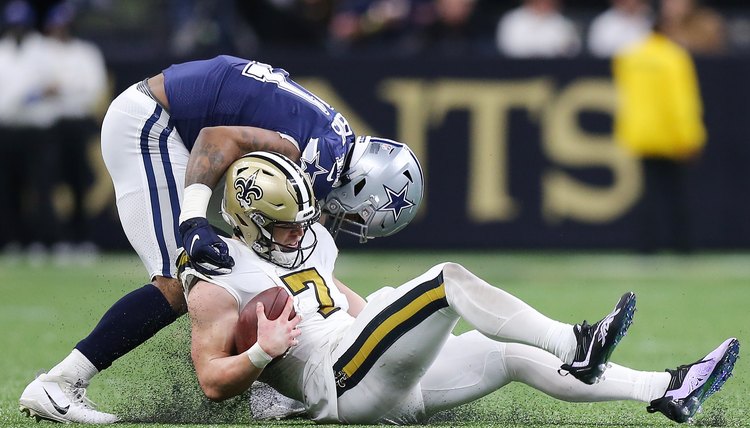
Two of the most commonly used defensive formations include the 4-3 and 3-4. In a 4-3 defensive formation, which includes four down linemen and three linebackers, the outside linebackers are expected to defend against passes and runs to their side of the field.
Man-to-man 4-3 situations call for the following:
-
- The outside linebackers cover zones close to the middle of the field, providing defense against both running and passing plays
-
- The strong side linebacker typically covers the tight end
-
- The weak side linebacker covers the first player to come out of the offensive backfield, usually a running back
3-4 Formation
Three down linemen and four linebackers, two inside and two outside, make up a 3-4 defensive formation. In this type of formation, defensive units typically use defensive ends at the outside linebacker positions in an attempt to defend against running plays more effectively.
From this formation, one of the outside linebackers acts as a defensive lineman by rushing the quarterback. This makes the 3-4 formation an effective way to keep the offense guessing about which players will be rushing and which will be defending against the pass and run. Some coaches like to change it up and have a cornerback or strong safety blitz from this formation.
Greatest Linebackers in NFL History
1. Lawrence Taylor
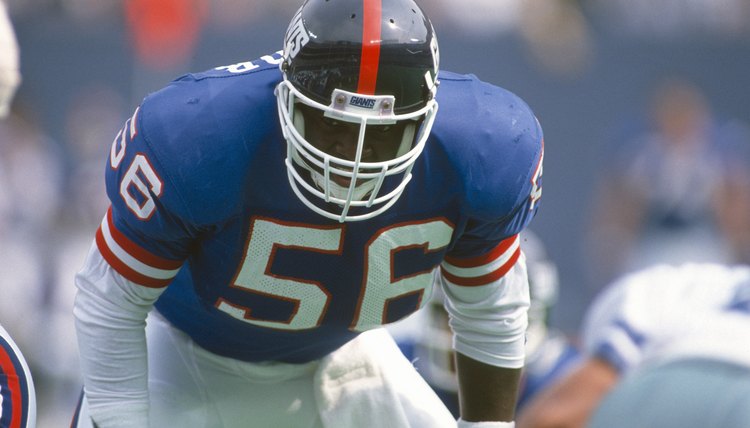
Lawrence Taylor instantly made a name for himself in the NFL when he put together one of the best rookie seasons of all time, totaling a career-high 133 tackles, 9.5 sacks, 8 passes defended, two forced fumbles, a fumble recovery, an interception, and being named First Team All-Pro. Taylor would go on to be named a First Team All-Pro for 8 consecutive years after his rookie season, and was the first defensive player to be named the NFL MVP since 1971 in the 1986 season.
2. Ray Lewis
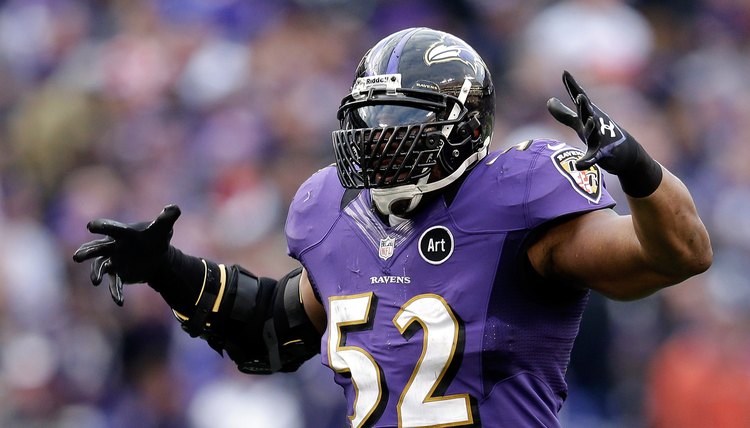
Ray Lewis was a force to be reckoned with on the football field, with toughness and intensity that no one could match during his time. Retiring as a two-time Super Bowl champion, Lewis is recognized as the only player in NFL history to record at least 40 career sacks and 30 career interceptions, and is second to only Jack Ham for career takeaways by a linebacker since the 1970 merger with 31 interceptions and 19 fumble recoveries for a total of 50.
3. Dick Butkus
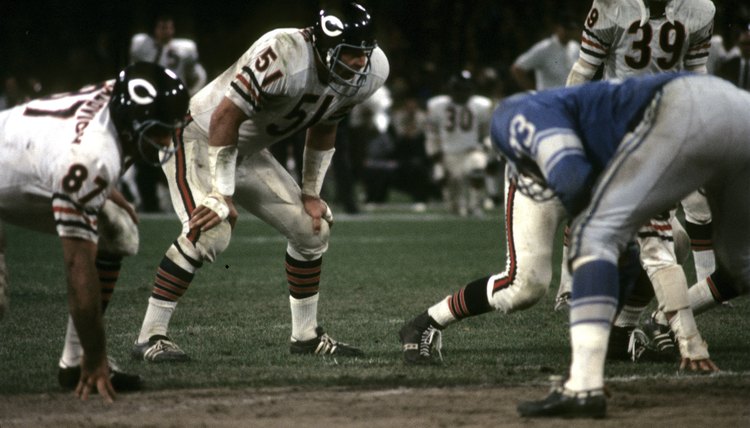
Dick Butkus once said, “When I went out on the field to warm up, I would manufacture things to make me mad. If someone on the other team was laughing, I’d pretend he was laughing at me or the Bears. It always worked for me.” That intensity helped Butkus earn First Team All-NFL honors as a rookie and be one of the best linebackers in each of the 9 seasons he played.
4. Derrick Thomas
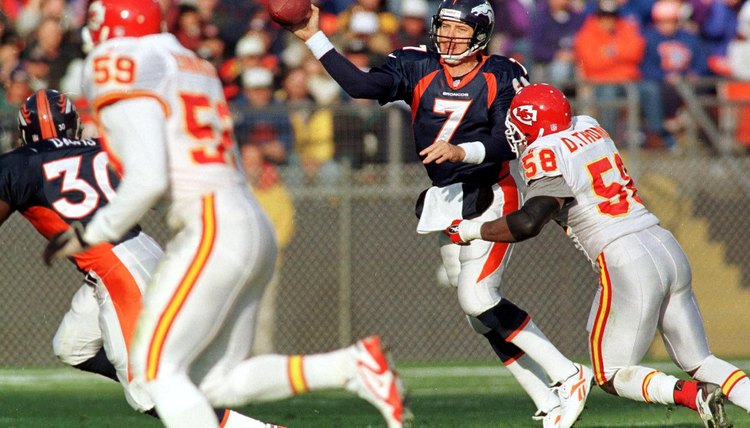
After being the best pass rusher in college football at Alabama, Thomas instantly continued his success with the Chiefs, totaling 10 sacks and being named the Defensive Rookie of the Year in his first NFL season. In his second season, Thomas lead the league with 20.5 sacks, including a game against the Seahawks in which he had 7, and would go on to be named First Team All-Pro. Thomas would continue to dominate during his time in the NFL until his life was tragically cut short by an automobile accident after the 1999 season.
5. Ted Hendricks
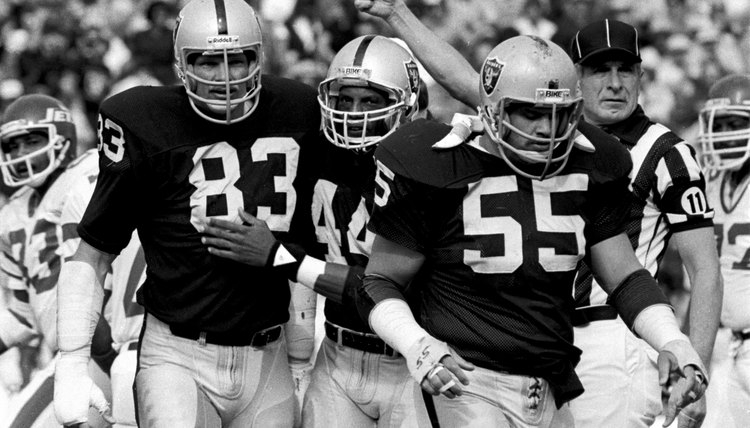
One of the biggest linebackers to ever play the game, the 6-7, 220 pound Hendricks was an instant disruption to opponents’ offensive games. Hendricks intercepted 26 passes throughout his career, returning them for a total of 332 yards and one touchdown. As durable as they come, Hendricks played in a total of 215 consecutive regular season games while also competing in eight Pro Bowls, seven AFC Championship games, and four Super Bowls.
6. Derrick Brooks
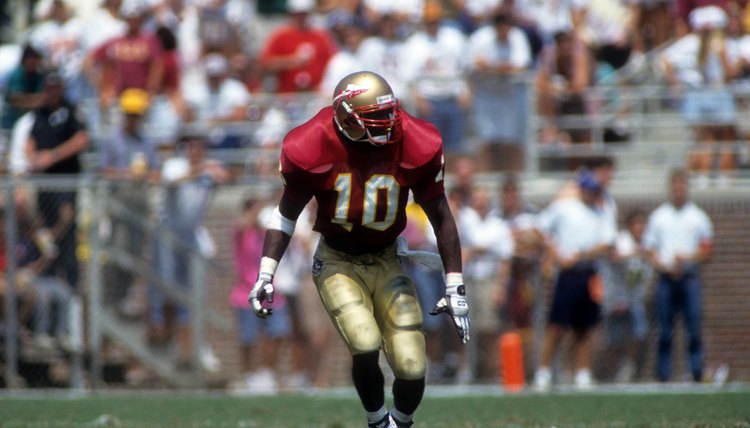
One of the biggest linebackers to ever play the game, the 6-7, 220 pound Hendricks was an instant disruption to opponents’ offensive games. Hendricks intercepted 26 passes throughout his career, returning them for a total of 332 yards and one touchdown. As durable as they come, Hendricks played in a total of 215 consecutive regular season games while also competing in eight Pro Bowls, seven AFC Championship games, and four Super Bowls.
7. Mike Singletary
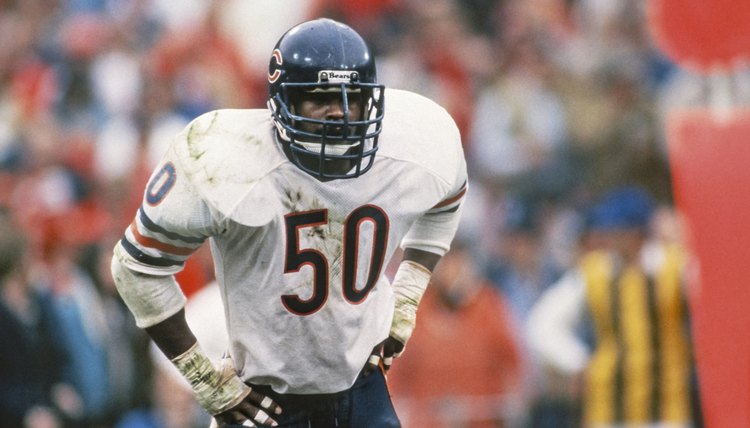
Mike Singletary was one of the main leaders of the legendary 1985 Chicago Bears defense, a unit that is often considered one of the best in NFL history. Missing just two games throughout his entire career, Singletary brought a toughness and an edge to the NFL that not many players were able to do, helping him be selected to a Bears’ record 10 Pro Bowls and being named All-Pro eight times.
8. Jack Lambert
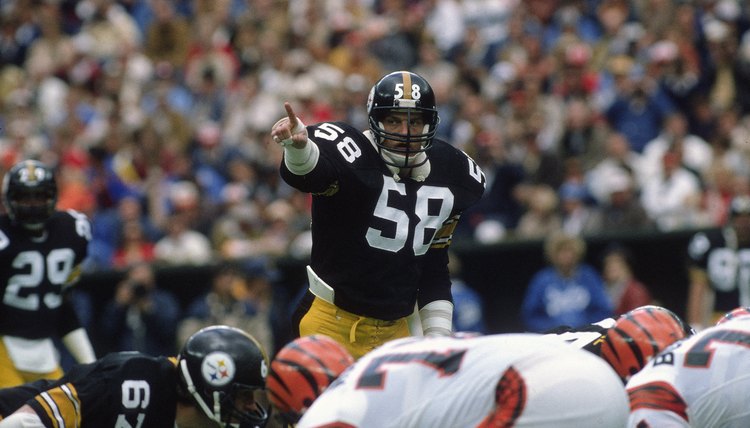
After being named NFL Defensive Rookie of the Year in 1974, Lambert would become a huge piece of the Steelers’ dynasty in the back half of the 1970s. One of the biggest plays of Lambert’s career was a late fourth quarter interception to seal Pittsburgh’s Super Bowl XIV win over the Los Angeles Rams.
9. Jack Ham
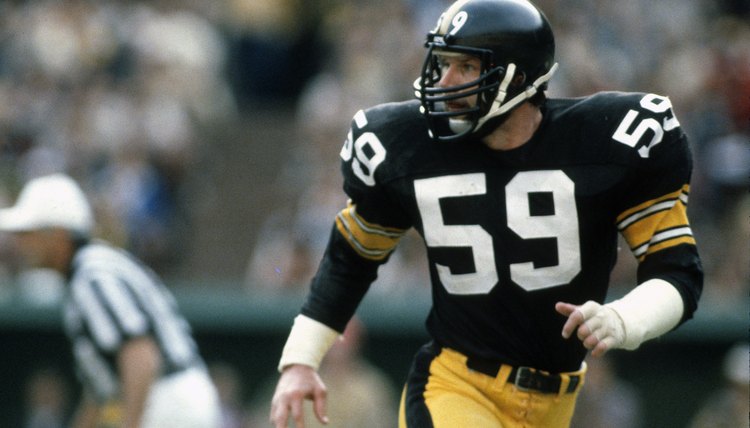
Jack Ham made an immediate impact on the Pittsburgh Steelers’ defense, becoming a huge part of the team’s dominant defenses during the Super Bowl years. Named a Pro Bowler eight years in a row, Ham would finish his career with 21 fumble recoveries, 32 interceptions and 7 All-Pro selections through 12 years in the NFL.
10. Junior Seau
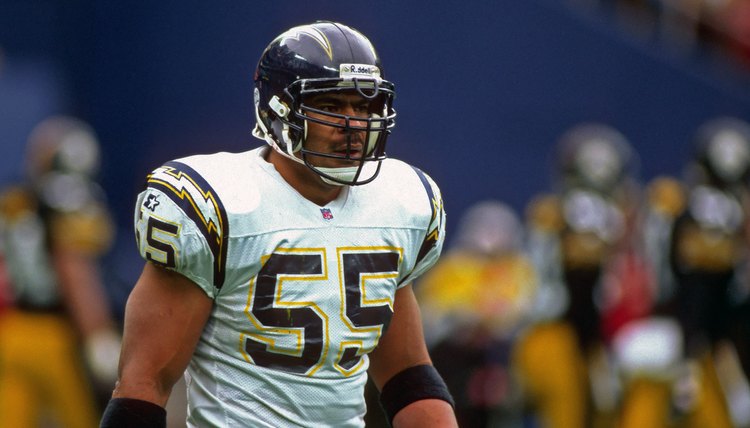
Junior Seau’s incredible career is highlighted by the perseverance and longevity to play 20 seasons in the NFL at an extremely high level. Playing in 268 career games, Seau recorded 10 or more tackles in a regular season game 64 times, totaled 56.5 career sacks, and intercepted 18 passes, returning them for a total of 238 yards.
Writer Bio
Blaise is a Freshman at the University of Missouri, studying Journalism at the world-renowned J school. He is the host of the Fast Five Podcast with his Childhood friend Sam Sinclair and interns with the Sports AI platform Pine Sports. He is a huge fan of the Kansas City Chiefs and the St Louis. Cardinals and hopes to cover them professionally in his near future.