Collagen has a reputation for keeping skin taut and youthful — after all, it's the most bountiful protein in your body.
Collagen is found in your skin, yes, but also in your muscles, bones, tendons, organs, ligaments, blood vessels, intestinal lining and other connective tissues, per the Cleveland Clinic. That's also why the best sources of collagen are animal products.
Video of the Day
Video of the Day
As you age, your collagen naturally decreases, which contributes to wrinkles and crepey skin, stiffer tendons and ligaments, shrinking or weakening muscles, joint pain or osteoarthritis from worn cartilage and even gastrointestinal problems as your digestive tract lining thins.
Besides aging, the top reason for too little collagen is a poor diet. But you can get this powerful protein from collagen-rich foods and from foods that build collagen. Collagen production requires the following nutrients:
- vitamin C
- zinc
- copper
- protein
Eating foods rich in these nutrients can help maintain your collagen levels, per the Cleveland Clinic. So try these collagen-rich foods for skin, joints and hair and foods that will help your body increase collagen production naturally.
Collagen Foods vs. Supplements
Collagen supplements are safe and convenient, but you might be better off getting this protein from food. That's because food sources of collagen contain other nutrients, such as zinc or copper, that can help bolster collagen production in the body. Collagen absorption may also vary by source.
1. Bone Broth

Whether you buy it in the grocery store or make it yourself, bone broth draws the collagen out of beef, chicken or fish bones, resulting in a savory liquid you can drink or use in other dishes.
That said, bone broth might not provide a consistently reliable source of amino acids needed to make collagen compared to collagen supplements, per a May 2019 study in the International Journal of Sports Nutrition and Exercise Metabolism.
These key amino acids' availability is likely what contributes to the effectiveness of collagen production, but the study showed there was large variability in the amino acid content of bone broth across recipes.
Still, many people find sipping on bone broth to be a soothing ritual — so if you love it, there's no harm in trying it to increase collagen naturally.
2. Chicken
Chicken is the source of several collagen supplements, but besides being one of the best sources of collagen, it also provides the protein (and therefore, the amino acids) your body needs to create collagen on its own.
Chicken breast has 55 grams of protein per 6 ounces cooked. It also provides 15 percent of the daily value (DV) for collagen-building zinc and 8 percent DV for copper. Try the poultry in these low-calorie chicken recipes.
3. Beef
Like chicken, beef is the source of many collagen supplements but eating the meat can also help your body produce collagen on its own.
Beef steak is rich in protein with 48 grams per 6 ounces cooked. It also provides an impressive 114 percent of the DV for zinc, a mineral your body needs to produce collagen. Try it in these healthy stew meat recipes that aren't stew.
4. Seafood
Marine collagen is made from the scales of fish — and while you won't be chowing down on scales for dinner, fish and shellfish can still support your body's natural collagen production.
Coho salmon has 40 grams of protein per 6 ounces cooked, plus 13 percent of the DV for collagen-building copper (try these tasty salmon recipes). And just three oysters provide 256 percent of your zinc DV and 194 percent of your copper DV.
5. Chickpeas
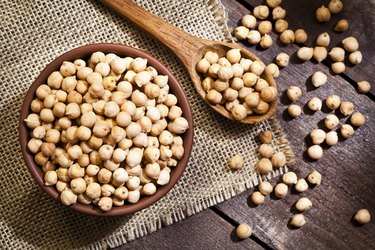
Legumes are a good way to increase collagen naturally, but chickpeas (garbanzo beans) are a particularly good source of copper with 64 percent of the DV per cup cooked. They also provide 23 percent of the DV for zinc, plus 15 grams of protein.
It can be difficult to find collagen-rich vegetarian food, but chickpeas are a great way to naturally support your body's production with essential nutrients. Try them in these high-protein chickpea recipes.
6. Eggs
Proline is one of the primary amino acids needed for collagen production, per a September 2020 report in StatPearls. And one large egg has 256 milligrams of proline and 6.3 grams of protein.
Try the kitchen staple in these nutritious egg recipes.
7. Milk
Dairy milk offers 8 grams of protein per 8-ounce glass as well as 8 percent of the DV for zinc and 7 percent of the DV for copper.
If you use a plant-based milk alternative, check the nutrition label to see if it contains any collagen-supporting minerals. If you don't drink dairy milk, your best bet for protein is to choose soy milk or pea milk.
8. Red Bell Peppers
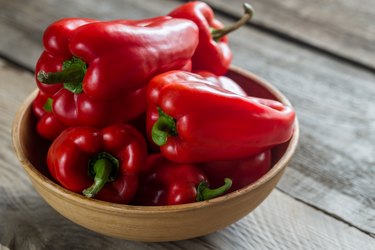
Another great source of collagen-building nutrients, sweet red bell peppers provide 169 percent of the DV for vitamin C each.
Vitamin C regulates the synthesis of collagen, but the amount of vitamin C in your skin — along with your body's production of collagen — naturally declines with age, per Oregon State University. That's why it's important to get enough C along with collagen.
Red peppers also have 21 percent of the DV for vitamin A, which helps to maintain your skeletal and soft tissue, mucus membranes and skin, per the U.S. National Library of Medicine.
9. Citrus Fruits
Oranges are famously rich in vitamin C, with 109 percent of the DV in one fruit (try them in these immune-supporting orange recipes).
One clementine provides 40 percent of your vitamin C DV while a half grapefruit has 63 percent of your DV.
Tip
As for other fruits, bananas offer 13 percent of the DV of vitamin C and 12 percent of the DV for copper. So while bananas don’t have collagen themselves, they can provide a decent amount of nutrients that help build collagen in your body.
10. Broccoli
Vegetables are not high in collagen, but produce like broccoli can help your body produce more of the protein. Broccoli offers 90 percent of the DV for vitamin C per cup raw, plus small amounts of copper and zinc.
11. Walnuts
Walnuts provide 50 percent of the DV for collagen-building copper per ounce raw. They also have some zinc and are a plant-based source of protein.
Beyond helping your skin look youthful, nuts may help you live longer. People between the ages of 55 and 69 who ate about a handful of tree nuts (like walnuts) or peanuts every day were observed to have a lower risk of dying from major causes such as respiratory disease, cancer, diabetes or heart disease than those who did not, per a May 2015 study in the International Journal of Epidemiology.
12. Brown Rice
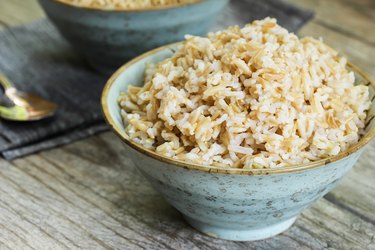
Brown rice helps you get more collagen-building minerals: It has 24 percent of the DV for copper and 13 percent of the DV for zinc per cup cooked.
In general, whole grains like brown rice are a better option than refined grains, which are stripped of many valuable nutrients (fiber, B vitamins, iron, copper, zinc, magnesium, antioxidants and phytochemicals) during processing, per the Harvard T.H. Chan School of Public Health.
Related Reading
Why Limiting Sugar Is So Important
Consider added sugar collagen's foe.
Glucose and fructose — two of the most common types of sugar — link the amino acids in collagen and elastin (another protein found in our skin) and create harmful compounds called advanced glycation end products or AGEs, according to a July-August 2010 report in Clinics in Dermatology.
AGEs damage collagen and contribute to inflammation.
What's more, ultraviolet damage from the sun also contributes to AGE production and collagen loss, so don't forget your sunscreen!



- Cleveland Clinic: "The Best Way You Can Get More Collagen"
- International Journal of Sport Nutrition and Exercise Metabolism: "Bone Broth Unlikely to Provide Reliable Concentrations of Collagen Precursors Compared With Supplemental Sources of Collagen Used in Collagen Research"
- MyFoodData: "Lean Chicken Breast (Cooked)"
- MyFoodData: "Skirt Steak"
- MyFoodData: "Cooked Coho Salmon (Wild)"
- MyFoodData: "Chickpeas (Garbanzo Beans) (Cooked)"
- MyFoodData: "Egg Whites (Raw)"
- StatPearls: "Biochemistry, Collagen Synthesis"
- MyFoodData: "Whole Milk"
- MyFoodData: "Oranges"
- Oregon State University Linus Pauling Institute Micronutrient Information Center: "Vitamin C and Skin Health"
- MyFoodData: "Bananas"
- MyFoodData: "Sweet Red Bell Peppers"
- U.S. National Library of Medicine: "Vitamin A"
- MyFoodData: "Broccoli"
- MyFoodData: "Walnuts"
- International Journal of Epidemiology: "Relationship of tree nut, peanut and peanut butter intake with total and cause-specific mortality: a cohort study and meta-analysis"
- MyFoodData: "Brown Rice"
- Harvard T.H. Chan School of Public Health: "Whole Grains"