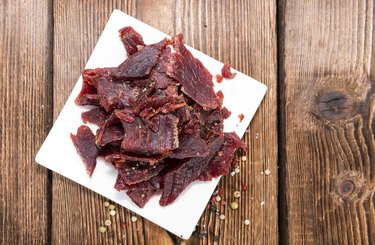
Eating too much beef jerky may lead to a slew of side effects, such as rapid weight gain and increased risk of heart disease. But it may also prevent you from eating other foods with adequate amounts of important nutrients you won't get from beef jerky.
Beef jerky nutrition is diverse, supplying protein, iron and vitamin B12, for example. However, there are also some unhealthy nutrients found in it, and too much beef jerky in your diet can be detrimental to your health in a variety of ways.
Video of the Day
Video of the Day
Protein, Fat and Carbohydrates
An ounce of beef jerky has 9.41 grams of protein, according to USDA FoodData Central. The recommended dietary allowance of protein is 0.8 grams of protein per kilogram of body weight, according to Harvard Health. A dietary reference intakes calculator can help you to determine how much protein you need every day.
The protein will be digested in the stomach and intestines, where it will be broken down into amino acids. These amino acids are very important in the body as they are used to build muscle tissue, enzymes, hormones and neurotransmitters, and they are also important to a whole host of bodily functions.
According to USDA FoodData Central, an ounce of beef jerky contains 3.12 grams of carbohydrates, 2.55 grams of which are sugars and 0.5 grams of which consist of dietary fiber. Some of that carbohydrate content is contributed by the flavorings added to beef jerky. Since you will be getting less than 5 grams of carbohydrates from an ounce of beef jerky, it is considered a low-carbohydrate snack.
The body certainly needs fat in the diet in order to function properly. Fat supports the proper functioning of your brain and reduces inflammation in different parts of the body, among its many functions. One ounce of beef jerky has 7.26 grams of total fat.
Cholesterol in Beef Jerky
USDA FoodData Central indicates that 1 ounce of beef jerky contains 13.6 milligrams of cholesterol. While cholesterol in the food used to be considered bad for you and was thought to contribute to the amount of plaque buildup in your arteries, there is evidence that the cholesterol you consume in your food may not have such drastic effects on your heart health or even cholesterol levels in your blood, noted by the Harvard T.H. Chan School of Public Health.
According to the American Heart Association, your liver makes all of the cholesterol your body needs. Any extra comes from your diet. All foods that are made from animals and animal products (meat, poultry and full fat dairy products) contribute to your cholesterol levels. These foods are almost always high in fats as well, which cause your liver to create more cholesterol than it should be. Eating too much beef jerky may raise your cholesterol levels.
Zinc in Beef Jerky
An ounce of beef jerky will give you 2.3 milligrams of zinc, according to USDA FoodData Central. According to the National Institutes of Health Office of Dietary Supplements, adult women need 8 milligrams of zinc per day and adult men need 11 milligrams of zinc per day. It looks like beef jerky nutrition is actually a good source of zinc. However, if you are eating too much beef jerky, you might not get the amount of zinc you need every day.
Zinc is an important mineral that is crucial to many of your bodily functions. It is useful in the process of cell division as well as your immune system support. Symptoms of zinc deficiency include slow wound healing and the loss of taste and smell. Pregnant people need 11 milligrams of zinc per day and breastfeeding women need 12 milligrams of zinc per day to help the baby grow and develop properly.
Sodium in Beef Jerky
You will get 1,785 milligrams of sodium from an ounce of beef jerky, according to the USDA FoodData Central. Sodium is well known for its ability to increase fluid retention, which spikes your blood pressure and also puts undue stress on your heart. The recommended daily limit of sodium is 2,300 milligrams, according to the Centers for Disease Control and Prevention.
The situation is even stricter if you have a condition like diabetes, high blood pressure or kidney disease or even if you just want to reduce your risk of heart disease. In that case, you should limit your sodium consumption to 1,500 milligrams a day, according to the American Heart Association. This amount is ideal for most adults, and even less may be better.
Eating too much beef jerky could result in consuming far too much sodium and that could result in the above-mentioned health problems. The American Heart Association states that Americans eat too much sodium as it is, so reducing your intake by 1,000 milligrams is good for you.
Read more: Is Beef Jerky a Healthy Source of Protein?
Beef Jerky Side Effects
Rapid Calorie Gain: For every ounce of beef jerky you consume, you will be gaining about 116 calories. Too many beef jerky calories without enough exercise almost inevitably leads to weight gain.
You need to consume about 3,500 extra calories to gain a pound of fat, so it will take about 30 ounces of beef jerky to gain a pound, provided you don't reduce the beef jerky calories you consume or lower the calories from your other foods and don't increase the amount of physical activity in which you partake.
Elevated Cholesterol Levels: Another potential side effect of too much of a beef jerky diet might be elevated amounts of cholesterol in your blood. A 1-ounce serving of beef jerky contains about 14 milligrams of cholesterol and 3.076 grams of total saturated fat.
Meanwhile, a diet that is healthy for the heart should have no more than 22 grams of saturated fat for every 2,000 calories. That said, as mentioned earlier, there is research suggesting that dietary cholesterol might not have as significant an impact on blood cholesterol levels as previously thought.
High Sodium Intake: You get about 506 milligrams of sodium for every ounce of beef jerky you consume, according to the USDA FoodData Central. That means that you could potentially have increased blood pressure from eating too much beef jerky due to all the sodium you'll be consuming. This increases your risk of heart disease, kidney disease and stroke.
Read more: How to Make Healthy, Low Sodium Beef Jerky
Nutrient Deficiencies and Beef Jerky
You won't have space for other foods. If you eat too much beef jerky, you're probably not getting enough of other foods with the nutrients your body needs to function properly. You will miss out on important nutrients like vitamins, fiber, and unsaturated fats.
Choosing beef jerky over vegetables or fruits, for example, means you're missing out on vitamin C, vitamin A and dietary fiber. Getting your protein from beef jerky instead of sources like canned tuna or smoked salmon means you miss out on getting long-chain omega-3 fatty acids.
These fatty acids will reduce your risk of getting heart disease. Beef jerky nutrition should therefore not be your main source of protein but should be incorporated into an overall healthy diet.
- USDA FoodData Central: " Snacks, Beef Jerky, Chopped and Formed"
- Harvard Health Publishing: "How Much Protein Do You Need Every Day?"
- Harvard T.H. Chan School of Public Health: "Cholesterol"
- National Institutes of Health Office of Dietary Supplements: "Zinc"
- Centers for Disease Control and Prevention: "Sodium and Food"
- American Heart Association: "How Much Sodium Should I Eat per Day?"
- American Heart Association: "Control Your Cholesterol"
Was this article helpful?
150 Characters Max
0/150
Thank you for sharing!
Thank you for your feedback!