Causes of Swollen Lower Legs and Feet
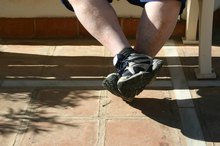
Swelling that affects both lower legs and feet usually indicates a systemic condition rather than a localized problem, such as an injury or skin infection. Swollen lower legs and feet signal leakage of fluid from your circulation into the soft tissues, a condition known as peripheral edema. This type of swelling can occur due to something as simple as standing for a long time or might signal a problem with your heart, kidneys or liver.
If you are experiencing serious medical symptoms, seek emergency treatment immediately.
Harmless Causes
- Birth control pills
- Hormone replacement therapy
- Corticosteroids, such as:
- amlodipine (Norvasc)
- felodipine (Plendil)
- nifedipine (Procardia)
Heart Conditions
Causes of a Swollen Ankle With No Pain
Learn More
Conditions that reduce the heart's pumping ability often lead to pooling of blood in the lower legs and feet due to the effects of gravity. As a result of increased pressure caused by this pooling, fluid leaks into the soft tissues of the lower legs and feet. Congestive heart failure is a leading heart condition associated with peripheral edema, typically accompanied by shortness of breath with physical exertion. Inflammation of the sac surrounding the heart, or pericarditis, can also cause swelling of the lower legs and feet. Heart muscle conditions called cardiomyopathies can provoke this symptom as well.
- Conditions that reduce the heart's pumping ability often lead to pooling of blood in the lower legs and feet due to the effects of gravity.
Kidney Disease
Your kidneys maintain salt and water balance in your body 5. Diseases that damage the kidneys and/or disrupt kidney function often lead to abnormal salt and water retention with associated edema. The swelling might involve the face and hands as well as the lower legs and feet. Many kidney diseases can lead to edema 6. Some develop relatively quickly whereas others evolve slowly over many years, such as diabetic kidney disease.
Liver Disease
What Causes Feet to Swell?
Learn More
Liver diseases that severely reduce normal function lead to an array of changes in the body that can result in edema of the lower legs and feet 7. Fluid might also accumulate in the abdomen, a condition called ascites. Factors that contribute to edema with severe liver disease include reduced production of proteins and increased pressure in the veins that drain into the liver, or portal hypertension. Cirrhosis of the liver, in which the organ becomes severely scarred over several years, is a leading cause of liver-related edema. In the US, alcoholic hepatitis, chronic viral hepatitis and nonalcoholic fatty liver disease are the most common causes of cirrhosis.
- Liver diseases that severely reduce normal function lead to an array of changes in the body that can result in edema of the lower legs and feet 7.
- Factors that contribute to edema with severe liver disease include reduced production of proteins and increased pressure in the veins that drain into the liver, or portal hypertension.
Protein Malnutrition
- Anorexia or bulimia
- Inflammatory bowel disease
- Celiac disease
- Gastric bypass surgery
- Acute pancreatitis and pancreatic cancer :
Other Causes
- Damaged valves in the leg veins, or venous insufficiency
- Abnormal or damaged lymph vessels in the legs or pelvis
- Blood clot in a deep vein of the abdomen or pelvis
- Abdominal or pelvic tumor
- Obstructive sleep apnea
- Underactive thyroid gland, or hypothyroidism :
- Shortness of breath or difficulty breathing
- Chest pain or pressure
- Moderate to severe abdominal bloating
- Dizziness, lightheadedness or fainting
- Fever and/or chills :
Related Articles
Causes of a Swollen Ankle With No Pain
Learn More

What Causes Feet to Swell?
Learn More
What Are the Causes of Water Retention in Men?
Learn More

How to Get Rid of Excess Water Weight From Too Much Salt
Learn More

Calcium Channel Blockers and Swelling Feet
Learn More
Raised Leg Exercises to Reduce Leg Swelling in the Elderly
Learn More
Causes of Poor Circulation in Feet & Hands
Learn More

Causes of Right Calf Swelling
Learn More
What Are the Treatments for Edema in Leg?
Learn More

Causes of Bilateral Lower Leg Pain
Learn More
References
- Merck Manual Professional Version: Lower-Extremity Edema During Late Pregnancy
- General Internal Medicine Consult, 2nd Edition; Geoffrey S. Cislo, et al.
- American Family Physician: Cirrhosis: Diagnosis, Management, and Prevention
- Manual of Family Practice, 2nd Edition; Robert B. Taylor
- American Family Physician: Edema: Diagnosis and Management
- Journal of the American Board of Family Medicine: Approach to Leg Edema of Unclear Etiology
- Adukauskiene D, Bivainyte A, Radaviciūte E. Cerebral edema and its treatment. Medicina (Kaunas). 2007;43(2):170-6.
- Cleveland Clinic. Edema.
- Ely, JW, Osheroff JA, Chamblis ML, et al. Approach to Leg Edema of Unclear Etiology. J Am Board Fam Med March 2006, 19 (2) 148-160; DOI: 10.3122/jabfm.19.2.148
- Familydoctor.org. Edema.
- Mayo Clinic. Pulmonary edema.
- Medline Plus. Edema.
- Medline Plus. Pulmonary Edema.
- National Eye Institute. Facts About Macular Edema.
- NCBI Bookshelf. Causes and signs of edema.
- Porter D. What is Macular Edema?
Writer Bio
Dr. Tina M. St. John owns and operates a health communications and consulting firm. She is also an accomplished medical writer and editor, and was formerly a senior medical officer with the U.S. Centers for Disease Control and Prevention. St. John holds an M.D. from Emory University School of Medicine.