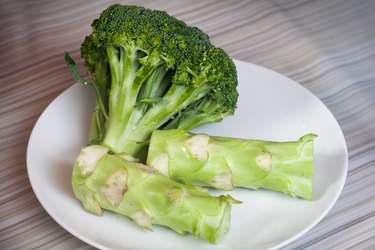
When you get a bunch of broccoli, your instinct may be to toss the stems, and keep the flowers. But did you know that the stem contains just as many nutrients as the whole broccoli? It's replete with vitamin C, E, K and more.
Tip
Broccoli stems contain a number of essential vitamins and nutrients, and can be used in recipes such as stir fry or pesto.
Video of the Day
All About Broccoli
Broccoli is a staple vegetable in countries across the globe, produced during Roman times and introduced to the U.S. in the colonial era, says HealthyEating.org. It was developed from wild cabbage, a vegetable to which broccoli is related. According to Colorado State University, broccoli is part of the mustard family of plants, and is closely related with brussel sprouts, cabbage, cauliflower and kale.
Video of the Day
There are two types of broccoli: sprouting broccoli and heading broccoli. Heading broccoli, the type of broccoli you're likely familiar with, is common in the U.S. and has a cluster of green flower buds sprouting from a stalk, also called the stem. Sprouting broccoli is similar to cauliflower in that it forms a dense white curd. You can also find sprouting broccoli with purple flower buds.
In terms of how broccoli can be consumed, it can either be cooked or eaten raw, and is a popular health food in the United States. In fact, the U.S. is the third largest producer of broccoli in the world. It's harvested by hand and, as a cool-season vegetable, is often grown in the spring or fall. You can count on broccoli, the flowers and stems, to contain a number of healthy nutrients.
Read more: 3 Things Eating Cauliflower Can Do To Your Body
Broccoli Stem Nutrition
The broccoli stem, also referred to as the broccoli stalk, is occasionally discarded, as it's thought to be a superfluous part of the broccoli, with little flavor or nutritional value. However, the stem contains much of the same nutrients as the broccoli flower: vitamin A, vitamin C, fiber, potassium and folate.
According to the HealthyEating.org, it also contains sulforophane, a sulfur-containing compound being studied for its anti-cancer properties. Moreover, it contains B1, B2, iron, magnesium, zinc, potassium and fiber.
If you're wondering just how much of each nutrient broccoli contains: one cup of cooked broccoli contains as much vitamin C as an orange and 245 percent of your daily vitamin K requirement, says Colorado State University. Vitamins C, E and lutein found in broccoli are antioxidants, which means they're anti-inflammatory and prevent damage from free radicals, says Colorado State University.
The California Department of Public Health recommends about 2 ½ to 5 cups of fruits and vegetables per day for children between the ages of five and 12, and 3 ½ to 6 ½ for teens and adults 13 and up. Next time you think about doing away with broccoli stems, remember just how many nutrients they contain.
Read more: The 18 Most Nutritious Vegetables
Broccoli Stem Recipes
The James Beard Foundation suggests a broccoli stem vinaigrette recipe with 1 cup of minced broccoli stems, 1 minced hot pepper, 2 cloves of garlic, juice and zest of two lemons, 1 1/2 Tablespoons grain mustard, 1/4 cup olive oil and salt and pepper to taste. In a large bowl mix the stems, pepper and garlic, then add the remaining ingredients.
You can also add broccoli stems to salads, eat them raw with a dip or use them to make vegetable stock — a nutrition booster for soups and noodles.
HealthyEating.org recommends roasting broccoli — stems and all — placing them on a metal sheet lined with aluminum foil and sprayed with cooking spray. You can top the broccoli with salt and Parmesan cheese, then heat the broccoli at 450 degrees for 15 minutes.
Other broccoli stem dishes include broccoli stem pesto, which you can make by blending broccoli stems with basil and cilantro, then adding goat cheese. You can then serve it on bread or mix it in with rice or quinoa.