
The condition we know as herpes is caused by the herpes simplex virus (HSV), and there are actually two different strains.
"HSV1 is more prevalent than HSV2 and typically appears above the waist, as cold sores or fever blisters, whereas HSV2 usually results in genital infections," says Cheri Frey, MD, assistant clinical professor of dermatology at Howard University. "Aside from that, the symptoms and frequency of outbreaks are the same."
Video of the Day
Video of the Day
She also points out that HSV1 can manifest on other parts of the body — for example, a cold sore can spread from the mouth to the genitals via oral sex.
Although being diagnosed with herpes can come as a blow, it's reassuring to know you're not alone. According to a February 2018 report from the Centers for Disease Control and Prevention (CDC), nearly half of people ages 14 to 49 have HSV1 and 12 percent have HSV2. "There is such a stigma around cold sores, but it is so prevalent — I'd like people to feel more comfortable about it," Dr. Frey says. "And remember that it is not always sexually transmitted — a lot of people were exposed as a child from a parent."
Even if you've made peace with your herpes diagnosis, it's never fun to deal with an outbreak. So what should you do when your HSV flares up? Because there's no cure, you can't get rid of herpes altogether. Still, these home remedies might help ease some of the symptoms.
1. Check Your Vitamin Levels
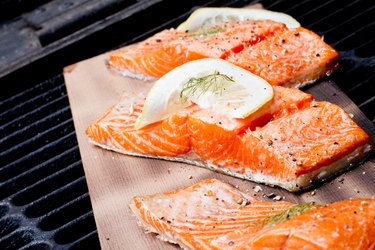
A healthy diet can buoy your body's ability to defend against the herpes virus. "If you are deficient in certain vitamins and nutrients, you will see issues with your immune system," Dr. Frey says.
An essential one is vitamin D: "It's important to make sure your vitamin D levels are intact," Dr. Frey says. A May 2021 study in SAGE Open Medicine found that vitamin D has anti-microbial and anti-inflammatory properties, which helps regulate the immune response. Yet an August 2016 study in The American Journal of Clinical Nutrition reported that up to 18 percent of people were vitamin D deficient. And keep in mind that for people living in the northern hemisphere, D plummets during the winter.
Another biggie is vitamin C. "It is an antioxidant, and building up your antioxidants is key to helping your immune system function properly," Dr. Frey says. A November 2017 study in Nutrients also points out that vitamin C supports the immune system.
Other potentially helpful nutrients include vitamin E (an antioxidant that can enhance immune function, according to an April 2019 study in IUBMB Life), folic acid, iron and zinc, an element with antiviral activity that is essential to maintaining a healthy immune system and keeping inflammation in check, per an April 2015 study in Autoimmunity Reviews.
Just be sure to talk to your doctor before popping a supplement; they can advise you on how much to take and how long to take it for. "Some vitamins, including D and E, are fat-soluble," Dr. Frey says. "So you don't want to overload your body with those."
Fat-soluble vitamins can build up in your tissue, with potentially toxic effects. Dr. Frey also points out that high levels of zinc can interfere with copper absorption. Bottom line: It's safest to check with a medical professional. Or better yet, get your vitamins and nutrients from whole foods.

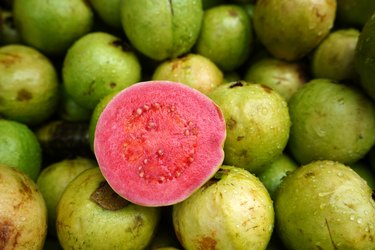


2. Get More Lysine (and Avoid Foods High in Arginine)
The amino acid lysine can help stave off outbreaks. "The herpes virus needs arginine, which is another amino acid, in order to replicate," Dr. Frey says. "And lysine competes with arginine."
In other words, by loading up on lysine, you can suppress your arginine supply, thus lowering your risk. A June 2017 study in Integrative Medicine suggests that lysine supplementation can improve herpes outcomes.
"Take one 1,000-milligram tablet of lysine per day at the first sign of an outbreak," Dr. Frey says. Continue taking a daily lysine pill for a couple of days and up to one week. Don't take it for longer than a week unless directed to do so by your doctor.
"You can also eat plenty of eggs and potatoes, which are high in lysine," Dr. Frey says. "If you are getting frequent outbreaks, consider starving yourself of foods high in arginine, such as peanuts and rice."
3. Dab on Honey
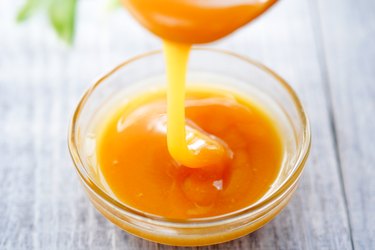
Honey can provide sweet relief from herpes blisters. "There is a lot of research showing that Manuka honey or medical-grade honey has antimicrobial activity, so it will help prevent bacterial infections [which are sometimes associated with herpes sores]," Dr. Frey says. "There is also evidence that honey has antiviral activity and can help wounds heal."
Dr. Frey notes that multiple case studies have shown that when people applied honey to herpes sores, they healed faster. And in an April 2019 study in BMJ Open, those who applied medical-grade honey to blisters five times a day beginning within the first 72 hours of an outbreak had the same healing time as those who'd applied antiviral cream.
4. Smooth on Lemon Balm
Gliding a cream or lip balm containing lemon balm extract onto your sore might speed up healing.
"Lemon balm has antiviral activity and can help prevent HSV from getting into our cells," Dr. Frey says. "Research supports its use as a topical product."
5. Ice the Area
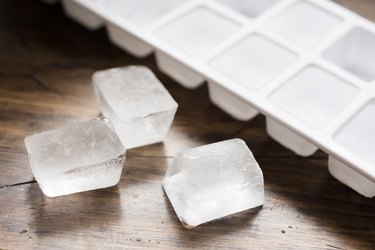
Help herpes chill out.
"Put an ice cube on your sore for five minutes a few times a day to reduce inflammation," Dr. Frey says. "Be sure to cover the ice with a cloth; don't put it directly on the skin."
6. Swipe on an SPF Lip Balm
If you get cold sores, make sunscreen-infused lip balm your BFF.
"A sunburn or exposure to UV radiation triggers the inflammation that can lead to herpes — and since your lips don't contain much melanin, they are not well protected from UV rays," Dr. Frey says. "You can reduce your chances of having an outbreak by continuously reapplying lip balm with SPF, especially during the winter, when the sun reflects off the snow."
She likes EltaMD UV Lip Balm Broad-Spectrum SPF 36 ($11.50, EltaMD.com) and Paula's Choice Lipscreen SPF 50 ($10, PaulasChoice.com).
7. Mask Up
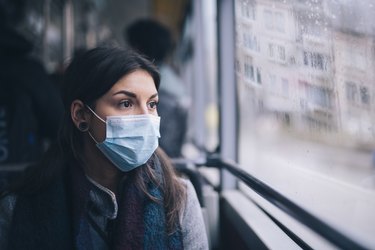
Turns out your trusty COVID mask can help ward off cold sores too! To keep your skin clear, consider keeping your mask on outdoors during the winter.
"Trauma from wind and cold can induce inflammation that leads to herpes outbreaks," Dr. Frey says. "Wearing protective clothing outside, such as a mask or scarf, is a great plan."
8. Step Into an Epsom Salt Bath
Epsom salts aren't just for sore muscles. "Salt is good for wounds, including herpes lesions, because it can help keep the area clean and clear of bacteria," Dr. Frey says. This reduces the risk of contracting a superinfection, caused by bacteria entering the open sore.
"That said, Epsom salts won't hasten the resolution of a herpes outbreak," Dr. Frey says. It's not a cure-all, but more of a helpful tool in your arsenal.
9. Apply Aloe Vera
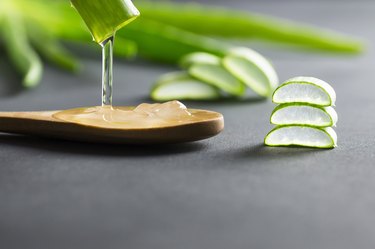
Could patting on a bit of cooling aloe vera soothe genital herpes? "There is some data suggesting that aloe has potential antiviral properties, although the research is not as robust as I would like to see and is mainly based on small case studies," Dr. Frey says. "It won't hurt to try — but it might not help."
Rub it on two to three times a day at the first sign of an outbreak.
What About Baking Soda?
Take a hard pass on this home remedy.
"Baking soda tends to dry out the area, which isn't optimal for healing and can lead to scarring," Dr. Frey says.
What About Herbs?
Echinacea, licorice and St. John's wort have all been touted as holistic herpes cures, but there's no evidence they actually work.
"I'm not convinced that an herb you ingest orally will make its way to the surface of your skin," Dr. Frey says. "What's more, if you are taking another type of medication, you need to be careful of St. John's wort. It interacts with a lot of different medicines so it's not something you should take willy-nilly."
What About Oils?
A variety of oils are also commonly hailed for healing herpes. Here's the scoop:
Although tea tree oil can be helpful for dandruff and athlete's foot, it won't keep herpes in check. "There is evidence that tea tree oil has antifungal activity, but it doesn't perform well as an antiviral," Dr. Frey says.
Neem oil is another that people turn to. "It might potentially be effective," Dr. Frey says. "There are a few small studies showing antiviral activity, but the evidence is not robust."
Dr. Frey says fish oil supplements won't help, and although massaging olive oil into a sore can moisturize the area, it won't help herpes heal faster.
Finally, while taking a vitamin E supplement might be beneficial, squeezing vitamin E oil onto a sore isn't going to do much. "Topical vitamin E won't rid you of the virus or shorten the course," Dr. Frey says. "But it might help heal the wound and soothe the cracking and pain associated with HSV by keeping the area moist."
The Best Way to Treat a Herpes Outbreak
When it comes to heading off the herp, timing is everything. "Prodrome refers to the early symptoms of herpes — stinging, tingling, burning, itching — before an eruption occurs," Dr. Frey says. "Hop on treatment as soon as you notice the prodrome."
The medicine that works most quickly and efficiently is a short course of prescription oral antivirals, which stop the herpes virus from replicating. "If you take oral antivirals before you see anything on the skin, we can sometimes stop blisters from forming in the first place, or at least considerably shorten the length of time it takes to resolve," Dr. Frey says. "Even hours are critical — the faster you get the medicine in your system, the better your chances of preventing the outbreak or speeding up recovery."
Herpes and Your Immune System

The strength of your immune system plays an important role in your ability to fight off HSV infection. "The herpes virus hides in your nerve cells, and when your immunity is lowered, the virus comes out of your nerves and starts to replicate," Dr. Frey says. "The viral replication causes your immune system to set off a full-blown attack; swelling and blistering are a result of your immune system's inflammatory response."
Although you can't be immune to herpes, it's possible to be infected without experiencing symptoms. "There are some lucky people who have been exposed and yet never have an outbreak because their immune system is really good," Dr. Frey says. "A lot of that has to do with genetics."
Meanwhile, other folks' immune systems aren't so great at recognizing HSV. "Although you can't change that, you can make sure your immune system has everything it needs to mount a response against the herpes virus," Dr. Frey says.
The more efficiently your immune system is working, the higher the chances that herpes will stay dormant. "These are some ways to make sure your immune system is functioning optimally," Dr. Frey says. To keep yours in tip-top condition, she suggests eating a nutritious diet, getting enough sleep, exercising, avoiding stress and doing your best to remain healthy.
Illnesses such as COVID-19 also take a toll on your immunity — when your body is busy trying to fight off another virus, it's not as well equipped to stave off herpes, which can trigger an outbreak. "But luckily, herpes will not reduce or weaken your immune system," Dr. Frey says.
How Far Away Is a Cure for Herpes?
Unfortunately, it's not on the near horizon. "Research funding tends to go towards issues that are life-threatening, rather than conditions you can live with, like herpes," Dr. Frey says. "So we are a ways away from finding a cure."
When to See Your Doctor About Herpes
Although home remedies can be effective to a certain degree, symptoms are often easier to manage under professional care. "If you get frequent outbreaks, talk to your doctor or dermatologist about taking preventative medication," Dr. Frey says.
And if you have a bun in the oven, be sure to inform your OB of your herpes diagnosis. "Babies don't have immunity for at least six months," Dr. Frey says. "Some HSV infections can be transmitted to an infant and cause meningitis."
- CDC: "Prevalence of Herpes Simplex Virus Type 1 and Type 2 in Persons Aged 14–49: United States, 2015–2016"
- SAGE Open Medicine: "Vitamin D regulation of the immune system and its implications for COVID-19: A mini review "
- American Journal of Clinical Nutrition : "The vitamin D status of the US population from 1988 to 2010 using standardized serum concentrations of 25-hydroxyvitamin D shows recent modest increases
- Nutrients: " Vitamin C and Immune Function "
- IUMBM Life: "Regulatory role of vitamin E in the immune system and inflammation"
- Autoimmunity Reviews. : "Zinc and its role in immunity and inflammation"
- Integrative Medicine : "Lysine for Herpes Simplex Prophylaxis: A Review of the Evidence"
- BMJ Open: "Kanuka honey versus aciclovir for the topical treatment of herpes simplex labialis: a randomised controlled trial"
Is this an emergency? If you are experiencing serious medical symptoms, please see the National Library of Medicine’s list of signs you need emergency medical attention or call 911.