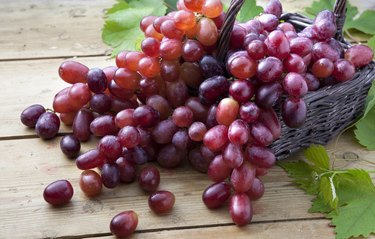
Grapes have been cultivated for thousands of years and they are technically classified as botanical berries.
Red grapes not only make for a healthful snack on their own, but they also make a tasty addition to smoothies, salads and desserts.
Video of the Day
Video of the Day
Related Reading
Red Grapes Nutrition
The nutritional content for red grapes (and red seedless grapes) is what you'd expect from a sweet fruit.
Red grapes are relatively low in calories and are fat- and cholesterol-free. A 1-cup serving (151 grams) of red grapes has:
- 104 calories
- 0 g fat
- 27 g carbs
- 1.4 g fiber
- 23.4 g sugar
- 1 g protein
Some people wonder, do grapes have protein? With only 1 gram per cup, grapes are low in protein. The calories in grapes mostly come from sugar (a type of carb).
Minerals and Vitamins in Grapes
One cup of red grapes also offers:
- Vitamin C: 5% of the Daily Value (DV)
- Vitamin K: 18% DV
- Thiamine: 9% DV
- Riboflavin: 8% DV
- Vitamin B6: 8% DV
- Potassium: 6% DV
- Magnesium: 3% DV
Tip
The USDA recommends that adults eat 2 cups of fruit every day. A cup of most sliced or chopped raw fruits fulfills half of this requirement, including 1 cup of whole grapes — equivalent to about 32 whole grapes. Both the red and green varieties are low in fat, high in fiber and a source of essential vitamins.
Health Benefits of Grapes
We can attribute the health benefits of eating grapes to their vitamin and mineral content.
Seedless or not, red grapes are a source of vitamin C: One serving contains 4.8 milligrams of vitamin C, which is about 5 percent DV, based on a 2,000-calorie diet.
Grapes are high in vitamin K, a fat-soluble vitamin that is stored in your body's fat tissues and liver. Your body needs adequate vitamin K to build strong bones and to synthesize several of the proteins required for blood coagulation. If your diet lacks foods rich in vitamin K, you may be more likely to develop osteoporosis or bleed too much when injured, according to the National Institutes of Health (NIH).
Although vitamin K deficiency is rare, people taking antibiotics may experience a mild deficiency, which can lead to excessive bleeding. Each 1-cup serving of red grapes contains 18 percent of the DV.
Other vitamins in grapes include B vitamins such as vitamin B6, riboflavin and thiamine. Your body needs B vitamins to make energy from the food you eat and form red blood cells, according to the U.S. National Library of Medicine.
Red grapes also contain small amounts of vitamin E, vitamin A and beta-carotene. These nutrients help your body processes function properly, and many vitamins, such as vitamin A, have antioxidant properties.
Red grapes are also rich in several minerals. One serving contains 288 milligrams of potassium, 10.6 milligrams of magnesium and 0.5 milligrams of iron. This means that a single serving has 6 percent DV of potassium, 3 percent DV of magnesium and 3 percent DV of iron. Red grapes also contain small amounts of calcium, zinc and selenium.
Red Grapes and Resveratrol
Another benefit of eating grapes: Red grapes contain resveratrol, which is a polyphenol antioxidant that seems to have anti-inflammatory properties. This antioxidant is concentrated in the skins of red grapes (not green grapes).
A 1-cup serving of red grapes contains about 0.24 to 1.25 milligrams of resveratrol, per Oregon State University.
Preliminary studies link resveratrol to the prevention and/or treatment of cancer, heart disease and neurodegenerative diseases.
How to Pick the Sweetest Grapes
To get the most flavorful red grapes with the highest concentrations of antioxidants and nutrients, always pick those that are fully ripe, which look plump and free of wrinkles. They should be firmly attached to a healthy stem and not leaking any juice.
The primary way to predict sweetness of grapes is via color. Red grapes should be deep red in color for most sweetness, although sweetness also varies according to species. Red grape varieties known for sweetness include emperor, cardinal, monukka and globe.
If you buy some red grapes from the grocer and find they are not sweet enough for your palate, let them ripen a day or two more on the vine. Unlike some other fruits, grapes will not ripen any further once removed from the vine.
Which Grapes Are Sweeter?
A February 2018 study in Food Chemistry assessed the taste of six different grape varieties and found that people sensed Black Muscat grapes taste the sweetest. This red grape variety tends to be more oval than round in shape and, because of its sweetness, is often used as the base of dessert wines.
Red grapes aren't the only sweet contender. Cotton candy grapes, which are a type of green grape, are known to be intensely sweet (hence their name), and they have a bit more sugar compared to standard red (or concord) grapes.
- USDA National Nutrient Database: Red Grapes
- Linus Pauling Institute; Resveratrol; Jane Higdon; March 2005
- Food Chemistry: "Chemical composition, bioactive compounds, and volatiles of six table grape varieties"
- Integrated Pest Management: "Grapes: A Brief History"
- NIH: Vitamin K
- U.S. National Library of Medicine: B vitamins
- USDA:Americans Still Can Meet Fruit and Vegetable Dietary Guidelines for $2.10-$2.60 per Day