
Do You Wear Shoes During the Swimming Portion of the Triathlon?
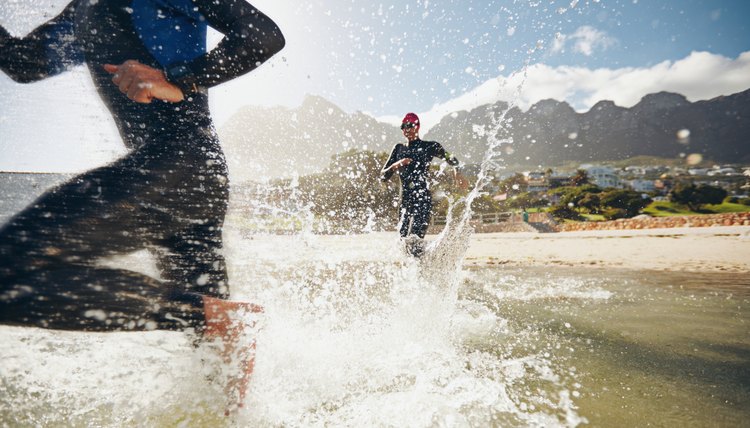
A triathlon traditionally starts with the swim portion of the race and is followed by the bike and the run segments. Although most athletes change shoes during the transitions to bike and run, they usually go barefoot for the swim.
Reduce Drag
To improve your time and stay ahead of the pack while swimming, it’s important to reduce drag. Thus, shoes can impair your race performance -- the least amount of extra weight and fabric you carry while swimming, the better.
Rinse Your Feet
After the swim, most triathletes develop a system to wash off any loose gravel, dirt or sand from their feet before putting on their shoes. Otherwise, these small pieces are likely to create some havoc on the bike and even more during the run. Place a square Tupperware container or bucket filled with water in your transition area to clean your feet, or set aside a towel for this purpose.
Swim Socks
In some conditions, neoprene swim socks with ankles that tuck underneath your wetsuit are an option. If the water is excessively cold on race day or if there is rocky surface between the swim and bike transition, wearing swim socks may be worth the lost time. You can find neoprene swim socks at most triathlon and swimming stores. Be sure to look for something that will fit as snugly as possible to reduce drag.
Swim-Bike Transition
If you decide to wear swim socks, you can speed up your transition time by lubricating your feet before putting the socks on, which will help reduce friction. There are some products specifically designed for this purpose, but oil and cooking sprays often work just as well. In addition, it helps to put the socks on before your wetsuit. That way, during transition, you will be able to remove your wetsuit first and create maximum dexterity for removing the socks.
References
- Triathlon Science; edited by Joe Friel, Jim Vance
- Reuters, "Triathlons Grow In Popularity; Participation Reaches All-Time High." July 23, 2013
- Kropelnicki, J. Swim Drills for Triathletes.
- Morell, N. 4 Swimming Drills to Perfect Your Stroke.
- USA Triathlon. USA Triathlon Annual Membership Report — 2015 Update. 2015.
Writer Bio
Based in San Diego, California, Jill Blessing has been writing since 1997. Her work has been published in "Triathlete" magazine, "CMYK" magazine, "Kansas City Homes & Gardens" magazine and "The Columbia Missourian." She holds a bachelor's degree in journalism from the University of Missouri.