The Health Benefits of Brussels Sprouts

The Health Benefits of Brussels Sprouts
Photo Credit brussel sprouts image by Jale Evsen Duran from Fotolia.com

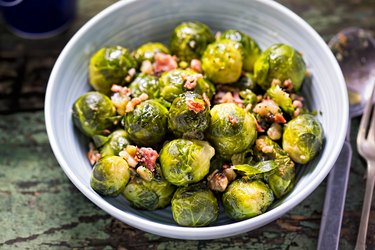
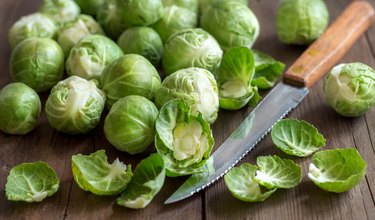
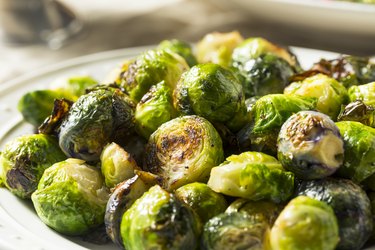
The brussels sprout is a cruciferous vegetable related to the cabbage. Removing the outer leaves reveals a compact, leafy vegetable that provides beneficial nutrients in each sweet and nutty layer. Saute brussels sprouts to caramelize and enhance the sweet side, or steam for a more direct approach. Cooking this vegetable carefully is essential. Overcooked brussels sprouts taste bitter and emit a powerfully unpleasant scent.

Protein

A 3.5-oz. serving of brussels sprouts provides 3.4 g of protein, or 7 percent of the 50 g daily value. Vegetables often contain small amounts of protein, while meat and legumes provide the foundation. Brussels sprouts are an exception. The amount of protein they provide is about twice the value found in most vegetables. Protein is important for rebuilding damaged skin tissue and producing enzymes that transform food to energy.

Fiber

A 3.5-oz. serving of brussels sprouts provides 3.8 g fiber, or 15 percent of the 25 g daily value. Fiber is lacking in the diets of most Americans. According to the Colorado State University Extension Service, the average American consumes only 14 g of fiber each day. Fiber is important for the support of regular waste elimination.

Vitamin C

A 3.5-oz. serving of brussels sprouts provides 85 mg of vitamin C, or 142 percent of the 60 mg daily value. Vitamin C in the diet comes primarily from fruits and vegetables. The intake of fruits and vegetables by most Americans is low compared to the five to nine servings daily the U.S. Department of Agriculture recommends. Including vitamin C-rich foods is important because it synthesizes collagen necessary for skin and blood vessel repair.

Lutein and Zeaxanthin

The lutein and zeaxanthin content in 3.5 oz. of brussels sprouts is 1.6 mg. Paul S. Bernstein, in an article published in the August 2009 "Acta Horticulturae," recommends taking 6 to 10 mg of lutein daily for the prevention of age-related macular degeneration, the principal cause of blindness in the United States.

References

Article reviewed by Elizabeth Ahders Last updated on: Mar 30, 2011

Must see: Photo Galleries

Member Comments