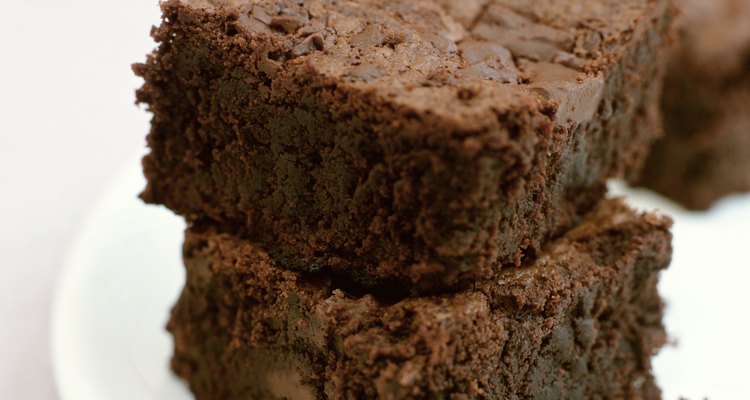
Brownie mixes cut preparation time by providing most of the ingredients in one package. Most mixes only need you to add eggs, water, and a liquid fat, which is usually vegetable oil. Vegetable oil has a mild flavor that doesn't come on too strong in the brownies, although you can use other types of oil.
Vegetable Oil Basics
Vegetable oil comes from many different types of grains and plants, including corn, safflower, sunflower, canola, soybean and peanut. Products labeled "vegetable oil" are made from blends of different oils and are generally have a very slight taste and clear to slightly less yellow than pure corn oil. Vegetable oil is well suited for use in cake and brownie mixes, as it imparts no flavor of its own to the final product.
Olive Oils
Olive oils vary from the strong, fruity taste of extra virgin oil to the neutral, mild flavor of pure olive oil and light olive oil varieties. The lightest types are made by straining the oils until no solids are left and most of the acidity has been removed. Pure or light olive oil can be used in brownie mixes without affecting their flavor. Use the same amount of light olive oil as you would any other type of vegetable oil.
Fats in Baking
All fats, solid or liquid, play an important role in baking. When flour is combined with liquids, gluten is produced, and it's what gives the dough in yeast breads its characteristic elastic quality. In other baked goods adding fats, including vegetable oil, interferes with the formation of gluten, which develops as strands in the dough. The word "shortening" comes from the action fats take in coating flour molecules so they produce shorter gluten strands and more finely grained texture in baked goods such as brownies.
Brownie Mix Ingredients
Packaged brownie mixes are a combination of ingredients that include flour, sugar, cocoa powder, baking soda, salt, flavorings and stabilizers. They also contain a small amount of vegetable oil, often in the form of soybean oil, and stirring in the amount of oil called for in the package directions adds moisture to the batter, producing a tender texture.
Related Articles
Common Food Emulsifiers

Psyllium Husk & Gluten
Ingredients in Wheat Thins
Can I Substitute Olive Oil for ...
Ingredients of Bar Soap
Can You Substitute Whole-Wheat Pastry ...
Does Cake Flour Contain Baking Soda & ...

What Kind of Flour to Use for Cupcakes?

How to Make Homemade Liquid Rouge

The Manufacturing Process of Cosmetics

Can You Substitute Whole Wheat Pastry ...
Does It Matter if I Substitute Baking ...
Can You Make Dumplings With Corn Starch?
Cake Emulsifier Substitute
Can You Substitute Yogurt for ...
What Kind of Flour Do You Use for a ...
What Is Glycerine Used For?

Calories In Maltesers
What Is the Difference Between Cake ...

Gluten- and Wheat-Free Fiber Supplements
References
Writer Bio
Rachel Lovejoy has been writing professionally since 1990 and currently writes a weekly column entitled "From the Urban Wilderness" for the Journal Tribune in Biddeford, Maine, as well as short novellas for Amazon Kindle. Lovejoy graduated from the University of Southern Maine in 1996 with a Bachelor of Arts in English.
Photo Credits
ITStock Free/Polka Dot/Getty Images