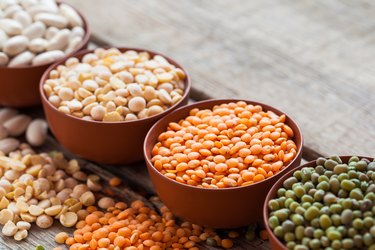
Iron is an essential trace mineral — one that's needed only in small amounts, but it plays a major role in how the body works and how you feel. Without adequate iron, the body can't make red blood cells to carry oxygen, and you may feel more tired than usual, frequently dizzy or out of breath. If your doctor finds that your iron is low, she may recommend adding extra iron either from food or a supplement. Most brands are good-quality and comparable to each other, and your doctor can help you pick the right type and dosage.
Tip
Iron supplements can be found in multivitamins, iron pills and iron-rich food.
Video of the Day
Iron Supplements for Women
The National Institutes of Health's recommended dietary allowance of iron for menstruating adult women is 18 milligrams per day. If you eat a balanced diet, and especially some meat or seafood, it's fairly easy to get enough iron from your diet. Taking a multivitamin with minerals can give you added insurance that you're meeting your iron needs, and most over-the-counter women's multivitamins contain the recommended 18 milligrams of iron. According to ConsumerLab, a company that tests vitamins for quality, there are some quality differences among multivitamin brands, but in general, products sold by vitamin chains offer good quality, and those sold under some big box store brand names provide similar quality but at a lower price.
Video of the Day
Iron Supplements for Anemia
Iron deficiency can lead to anemia, or lowered amount of red blood cells. If you're iron-deficient, your doctor may recommend taking an iron supplement for anemia. They can come in various forms, including ferrous sulfate, ferrous gluconate or ferric citrate, each of which contains varying amounts of elemental iron, so make sure you compare the total amount of elemental iron when choosing a supplement. For some people, taking more than 45 milligrams of iron can cause gastrointestinal side effects like nausea and constipation. If you experience any uncomfortable side effects, ask your doctor if you should change the type of supplement you're taking, or consider a slow-release formula, which may be gentler on your GI system.
Iron Food Sources
Before you consider taking any supplemental iron pills, be sure you are getting plenty of iron from your diet. Foods like meats and seafood are good sources, and they are especially well absorbed by the body. Fortified breakfast cereals, legumes, tofu, leafy greens and and dark chocolate are other good sources of iron. If you need to get additional iron in your diet, try to eat some of these foods at each meal.
Vitamin C Iron Booster
Vitamin C improves the absorption of iron in your body. When taking your iron supplement or eating any iron-rich foods, drink a glass of orange or grapefruit juice, or include vitamin C-rich foods like tomatoes, strawberries or pineapples with your meal to absorb more iron. Be aware also that certain compounds in coffee and tea, as well as calcium supplements, can interfere with iron absorption. It's best to not take an iron supplement with coffee, tea or milk, and if your regimen includes both a calcium and iron supplement, take them at opposite times of the day.