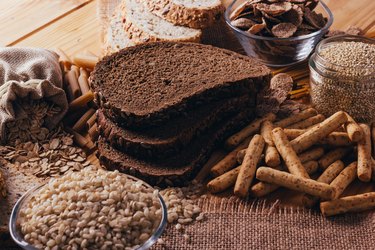
Our bodies rely on carbohydrates for energy. The body uses carbohydrates — which are found in plant-based foods — as its main source of fuel for all activities.
Plain and simple: We need carbs to function.
Video of the Day
Video of the Day
Protein, carbohydrates and fats are the three macronutrients. Protein and carbs contain 4 calories per gram, and fat contains 9, according to the USDA. Each macronutrient serves a separate role in the body.
Types of Carbohydrates
There are four types of carbohydrates:
- Simple carbohydrates: Simple carbohydrates are very quickly and easily digested, raising blood sugar rapidly. Examples of simple carbs are lactose, sucrose, fructose and glucose. These sugars are found in products like candy, soda, table sugar, corn syrup and honey. The Harvard T.H. Chan School of Public Health warns that these types of carbohydrates can contribute to weight gain or an inability to lose weight, heart disease and diabetes.
- Complex carbohydrates: Complex carbohydrates are those that digest at a slower rate and only gradually raise blood sugar. These are found in foods such as lentils, whole grains, brown rice, spinach, broccoli and apples. The importance of carbohydrates of this type is that they contain many vitamins, minerals and nutrients. Choosing complex carbs over simple is ideal. Unprocessed or minimally processed vegetables, fruits, whole grains and beans are healthy choices.
- Starches: Starches produced by plants, called polysaccharides, are made up of many glucose molecules. Examples of starchy foods are potatoes, chickpeas, wheat and pasta. Fiber is a non-digestible type of carbohydrates.
- Fiber: There are two types of fiber: soluble and insoluble. Soluble fiber is helpful in lowering low-density lipoprotein (LDL), which is cholesterol that is undesirable in high amounts in the body. Insoluble fiber absorbs water in the intestines, helping to soften the stool for easy bowel movements. Insoluble fiber is found in seeds, vegetable skins, brown rice, vegetables and brans.
Carbohydrates to Limit: Sugars
Sugars are also referred to as simple carbohydrates. They occur naturally in fruits and milk and are also added to many foods in the form of cane sugar, honey and maple syrup. They also appear as refined carbohydrates, as with white bread, white pasta, desserts and many cereals.
Although these foods technically offer carbs, they're not quality carbs. They have much less nutrition than whole complex carbs, leading to possible weight gain, diabetes and heart disease.
The Health Benefits of Carbohydrates
While carbs are often the first foods to get cut when individuals begin a weight loss plan, this isn't necessarily the right choice to make.
So how important are carbs and why do we need carbohydrates in our diet? The National Library of Medicine (NLM) explains that carbohydrates play a role in glucose and insulin metabolism, as well as cholesterol and triglyceride metabolism and fermentation.
When carbohydrates are digested, they break down into glucose to be either used as energy or stored in the liver and muscles for future use.
Here are four the reasons why carbohydrates are important and why we need carbs in our diets:
1. More Energy
Carbs do a lot for the body.
Part of the importance of carbs is that they are your body's preferred energy source.
Once the sugars and starches in carbohydrates are broken down and absorbed, they enter your bloodstream, which is then called blood glucose, per the Mayo Clinic. This glucose in the blood stimulates the pancreas to secrete insulin. Insulin tells the body to either absorb the glucose to use as energy or to store it.
This process, as explained in the November 2014 issue of Advances in Nutrition, is significant because this glucose is used as the main energy source for the brain, red blood cells and the central nervous system. Your body needs glucose to have the energy to do everything from breathing to weight training.
In addition, your brain needs glucose to function properly. If you don't take in enough carbohydrates, you can become weak, lethargic and unable to focus on even simple tasks.
2. Weight Control
Carbs are often blamed for weight gain, but the truth is that they are crucial for healthy weight control.
You should eat 14 grams of fiber for every 1,000 calories that you consume each day, per the Academy of Nutrition and Dietetics (AND). The only sources of fiber are foods rich in carbohydrates, so it's nearly impossible to get enough dietary fiber on a low-carb diet.
Fiber-rich foods add bulk to your diet, making you feel full more quickly and satisfying your appetite for longer. High-fiber foods are generally low in calories as well, so getting enough fiber can help you lose weight.
3. Heart Health
Dietary fiber prevents cholesterol from accumulating in your arteries and creating dangerous blockages that can lead to a heart attack or stroke, per the Academy of Nutrition and Dietetics.
Eating whole-grain foods, such as fresh fruit, vegetables, whole wheat, oats, bran and quinoa, gives you valuable fiber that can protect your heart and keep you feeling your best.
Avoid simple carbohydrates, such as cakes, cookies, products made with white flour and processed foods, which are generally low in fiber and often high in fat and added sugar.
4. Improved Digestion
Getting enough fiber-rich carbohydrates can help prevent digestive problems, such as constipation and indigestion, per the Academy of Nutrition and Dietetics.
Insoluble fiber, the type of fiber that doesn't break down during digestion, is also known as roughage. It pushes other food along your digestive tract, speeding up the digestive process. It also adds bulk to your stool, making it easier to pass bowel movements. Without a sufficient intake of carbohydrates, you may not get enough fiber to keep your digestive system regular.
How Many Carbs Per Day?
The Dietary Guidelines for Americans recommends 45 to 65 percent of daily calories come from carbohydrates. Filling most of your plate with carbohydrates is ideal.
Using the Healthy Eating Plate from the Harvard T.H. Chan School of Public Health, half of your plate should consist of vegetables and fruit and a quarter of your plate should be complex carbohydrates. Do not neglect the importance of protein: Be sure to fill a quarter of your plate with protein such as lean meats, low-fat dairy, fish, beans and nuts.
Eating enough fiber is important in reducing the risk of coronary heart disease, strokes and digestive issues. Fiber also helps prevent constipation and helps to keep you feeling full, per the NLM. It also plays a role in balancing gut bacteria as it acts as a prebiotic.
What Is the AMDR Recommendation for Carbohydrates?
While the Institute of Medicine (IOM) has not identified a maximum upper limit for maximum carbohydrate intake at which adverse health effects occur, the Acceptable Macronutrient Distribution Range (AMDR) value provides a percentage that allows sufficient intake of other nutrients.
For most adults, carbohydrates should account for 45 to 65 percent of your total calories, per the IOM, as outlined in the 2020 edition of Present Knowledge in Nutrition.
If you wish to lose weight or have a sedentary lifestyle, you will want to eat your carbs at the lower end of the scale, near 45 percent. Athletes and active individuals do fine near the higher end.
For reference, the ADMR for fat is 20 to 35 percent of total calories, and the ADMR for protein is 10 to 35 percent, per the USDA.
The Downsides of Carbs
While carbohydrates provide many health benefits, there are downsides associated with eating too many, too few or the wrong kinds of carbs.
When you start to focus on healthful carbohydrates, including complex carbs, starches and fiber, you may also start to reduce the amount of simple carbohydrates you consume — which is ultimately a good thing.
While some people think carb-withdrawal headaches come from cutting carbs in general, the symptoms usually arise when you're eating the wrong kind of carbs.
Low blood sugar, or hypoglycemia, can lead to migraine or a carb headache, as the Migraine Trust explains. There are several conditions that can effect our blood-glucose levels. Symptoms of hypoglycemia include headache, migraine, confusion, nausea, sweating, faintness and hypothermia.
Eating a high-sugar meal can cause reactive hypoglycemia, in which the sudden rise in blood-glucose from the sugary food triggers an over-production of insulin, which in turn makes the blood-glucose levels fall too low.
If your headaches or migraines appear to be triggered or exacerbated by low blood-glucose levels, you should be able to keep them under control, per the Migraine Trust. To avoid sugar-related headaches, try to keep your glucose levels stable.
You can keep glucose levels stable by eating smaller frequent meals, every three to four hours. Both the quantity and quality of your food matter; if you wait too long between meals, you may be so hungry that you eat very quickly and end up consuming too much food.
Inflammation
Carbohydrates can have both positive and negative effects on inflammation, per the Linus Pauling Institute (LPI). The carbohydrate source is what will make the difference here, as sugar can cause inflammation, per Harvard Health Publishing.
Low-glycemic carbs, including barley, oats and brown rice, fresh fruits and vegetables and unsweetened dairy products, such as low-fat milk and yogurt, have a mild impact on your blood sugar levels and can help reduce inflammation, according to the LPI.
Sticking to low-glycemic and complex carbohydrates while limiting your refined carb and sugar intake may help protect your body against inflammation, as Piedmont Healthcare explains. Below, find an anti-inflammatory carbs list.
Anti-Inflammatory Carbs
1. Yogurt
Yogurt— a fermented dairy product that contains live bacterial cultures — seems to be worth including in an anti-inflammatory diet. Low-fat yogurt helps bolster the lining of the intestines, which can prevent inflammatory cytokines in the gut from entering the bloodstream after high-calorie or high-fat meals, per a June 2018 study in the Journal of Nutrition.
It's important to read labels before digging in to any old yogurt. Sweetened yogurt can be high in sugar, so you'll want to stick with the unsweetened kind.
2. Dark, Leafy Greens
In general, vegetables are a great pick to promote a healthy diet. Leafy greens, in particular, are believed to fight inflammation because they contain lutein, a chemical that researchers suspect helps fight chronic inflammation in the body.
In a July 2017 study in Atherosclerosis, researchers found that treating the cells with lutein lowered their inflammatory activity. While more research is needed on the anti-inflammatory powers of lutein, in the meantime, adding more greens to your meals will, at the very least, provide you with fiber and other important vitamins and minerals.
3. Whole Grains and Fiber-Rich Foods
High-fiber foods like whole grains, including brown rice and whole-wheat bread and pasta, ward off inflammation because they feed beneficial bacteria living in the gut and help rid the body of unhealthy cholesterol.
Eating a fiber-rich diet can also help you lose weight or maintain a healthy weight, which can also stave off inflammation.
- National Library of Medicine: "Physiology, Carbohydrates"
- The Mayo Clinic: "Carbohydrates: How Carbs Fit Into a Healthy Diet"
- Advances in Nutrition: "Carbohydrates"
- Harvard Health: "Carbohydrates"
- U.S. Department of Health and Human Services: "Dietary Guidelines for Americans"
- Harvard Health: "Healthy Eating Plate"
- USDA: "How Many Calories are in One Gram of Fat, Carbohydrate or Protein?"
- The Migraine Trust: "Hypoglycemia"
- Linus Pauling Institute: "Glycemic Index and Glycemic Load"
- Piedmont Healthcare: "Antiinflammatory diet"
- Present Knowledge in Nutrition: "Chapter 3 - Carbohydrates"
- USDA: "Dietary Reference Intakes: Macronutrients"
- Harvard Health Publishing: "The sweet danger of sugar"
- Atherosclerosis: "Lutein exerts anti-inflammatory effects in patients with coronary artery disease"
- Journal of Nutrition: "Premeal Low-Fat Yogurt Consumption Reduces Postprandial Inflammation and Markers of Endotoxin Exposure in Healthy Premenopausal Women in a Randomized Controlled Trial"