
Muscles Involved in Barbell Shrugs
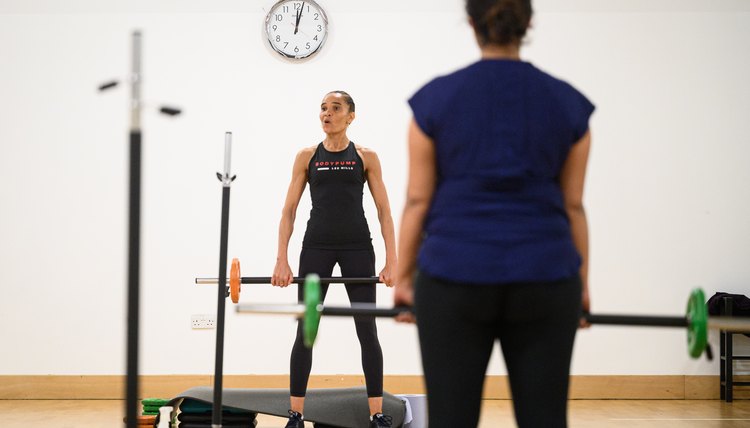
Although often included in a shoulder workout, barbell shrugs, like dumbbell shrugs or bench press, build muscle in the upper back and other upper body muscles. Understanding muscle function and proper execution of the exercise helps you best incorporate it into your strength-training routine. Many bodybuilding experts swear by this exercise as a way to get bigger traps and one of the best back exercises. When performing the shrug, take specific precautions and perfect your form to maximize results.
What is a Barbell Shrug?
To perform the barbell shoulder shrug exercise, stand and grab a barbell with an overhand grip similar to one used during deadlift. In the starting position, allow the barbell to hang in front of your body with your arms shoulder width and elbows extended. Keep your gaze forward. Draw your navel in toward your spine to contract your abdominals. With the bar as close to your body as possible, exhale and draw your shoulders up toward your ears. The slope of the shoulders should remain horizontal. Pause at the top momentarily and release the shrug. Repeat for the desired number of sets and repetitions with proper form in order to maximize muscle mass growth.
What muscles are used in Barbell Shrugs?
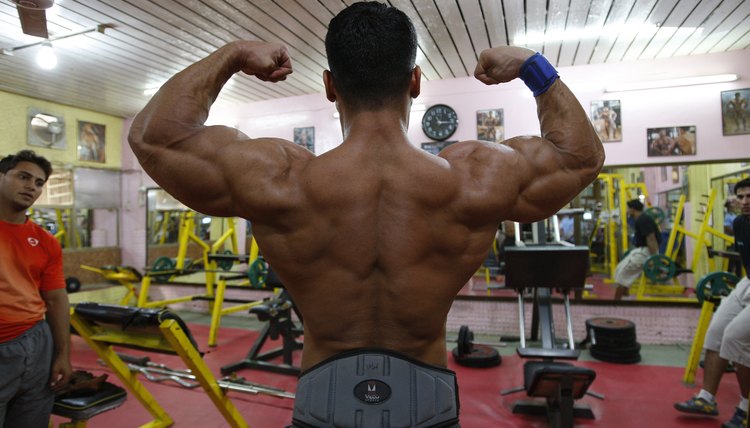
The primary muscle groups activated by the barbell shrug are the trapezius, or traps, and rhomboids.The trapezius muscles gets their name from their trapezoid shape, and they run down the upper region of the spinal cord from the base of the skull to the middle and lower back. The muscle is responsible for upward shrugging, drawing the shoulder blades together and pulling the shoulder blades down, the Fitstep website explains.
The rhomboid major and minor are other muscles of the back that connect the shoulders to the spinal column. The shrug also causes the activation of secondary muscles including the biceps, flexors, deltoids, levator scapulae and the three muscles of the abs: rectus abdominis, transversus abdominis and obliques. It also tests the grip strength when using the barbell.
Safety tips for Barbell Shrugs
Avoid rotating the shoulders forward or back and bending the elbows while shrugging upward. Keeping your back straight is important as bending or arching compromises the effectiveness of the move and may cause back injury. Remember to shrug upward during your full range of motion rather than roll the shoulders back. Beginners should remember to reserve wrist neutrality, advises the American Council on Exercise; bending may cause irritation at the wrist joint.
What are some Shrug Variations?
Instead of a barbell, you may use dumbbells to perform a shoulder shrug. Hold the dumbbells along the sides of your body, with the heads of the weights facing the front of the room. Another alternative is behind-the-back shoulder shrugs, in which you hold the bar behind you with an overhand grip. You will flex your elbows slightly during this exercise as you hold the bar just above your glutes, to activate the lower traps and rhomboids from a different angle. You can also use a Smith Machine to do a Smith Machine Shrug or even use a trap bar or hex bar. Pull-ups have a similar range of motion to shrugs and fosters similar areas of muscle growth.
Best strategy for Barbell Shrugs
Use weights heavy enough to fatigue you in just eight to 12 reps or repetitions to build strength. Incorporate shrugs on days you target the muscles of the shoulder. Make them part of a workout that also includes machine military presses, dumbbell lateral raises, upright rows and dumbbell front raises, to work the shoulders from multiple angles and maximize development.
References
Writer Bio
Andrea Cespedes is a professionally trained chef who has focused studies in nutrition. With more than 20 years of experience in the fitness industry, she coaches cycling and running and teaches Pilates and yoga. She is an American Council on Exercise-certified personal trainer, RYT-200 and has degrees from Princeton and Columbia University.