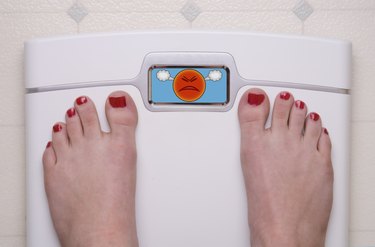
Although weight loss occurs when you reduce your calorie intake and burn more calories, creating too large of a deficit can actually backfire. Your weight loss stalls, you burn muscle rather than fat and you end up a few pounds heavier. Under fueling is tempting, as it seems like a quick ticket to weight loss, but it's counterproductive. Be patient when it comes to losing weight, and stick to a safe, sustainable loss rate of 1 to 2 pounds per week. For some people, this rate is too aggressive and 1/2 pound per week is more doable.
Extreme Calorie Deficits Backfire
Video of the Day
Cutting too many calories from your eating plan makes it difficult to sustain your diet. Even if you initially lose weight with a restrictive plan, you might not be able to maintain it. When you burn out at the gym and go back to eating the way you did before your "diet," you end up fatter than when you started.
Video of the Day
Dipping to fewer than 1,200 calories a day usually leads to losing lean muscle mass, which is important for revving your metabolism, and this loss puts you at risk of nutrient deficiencies. You'll also find that without adequate fuel, exercise is that much more difficult. You may find yourself skipping sessions or putting in minimal effort when you do hit the gym. When you lose muscle mass, your body uses lean tissue for fuel, and when combined with the lagging effort you put forth when you work out, you end up with a greater percentage of body fat and a softer looking physique, despite your deprivation.
Your Body Rebels Against Too Few Calories
Incurring small deficits of 250 to 500 calories, or even incurring deficits of 1,000 calories for larger, more active people, will encourage your body to use stored fat for energy so you will lose weight. When the deficit is too great, however, your body feels like it is starving and your metabolism slows down to "save" you from this drastic condition.
Your body holds onto its fat stores to protect you, in cases of perceived starvation, so it reduces the number of calories used to produce hormones, to fuel small movements and even to maintain muscle -- which takes more energy to fuel than fat. You lose less fat when you go on a diet of 900 calories or fewer than you do when you simply reduce calories by a moderate amount. At the beginning of very low-calorie plans or with all-out fasts, you may notice a lower number on your scale, but what you've lost is mostly water weight.
Your body's reaction to taking in too few calories is to reduce thyroid and sex hormone production and to increase stress hormone production such as cortisol. A study published in a 2010 issue of Psychosomatic Medicine showed that maintaining a low-calorie diet is a true physiological and biological stressor. Weight gain and body fat storage are more likely when cortisol levels are high, and thyroid and testosterone levels are low.
The Type of Exercise Is Important for Weight Loss
A certain amount of cardiovascular exercise is important to help you burn calories and strengthen your heart and respiratory system. Too much, however, can become drudgery -- physiologically. When you consistently work at a steady pace, your body adapts to that workload, and becomes more efficient so you will then burn fewer calories for your effort.
Steady-state cardio, such as slogging along at a steady jog for an hour, is less effective in burning fat than shorter interval sessions that involve alternating all-out intensity bursts with low-intensity bursts, demonstrated a paper published in a 2011 issue of the Journal of Obesity. You can burn a substantial number of calories in a 30-minute session that includes 10 one-minute, all-out sprints, for example, and experience other physiological benefits such as improved fat-burning capacity and glucose tolerance, which helps regulate insulin levels to reduce blood sugar swings and fat storage.
When you exert too much energy in a workout, you may feel depleted later in the day, and you won't burn as many calories with everyday activities. Ask yourself if your exercise routine has you delegating your household chores to others, parking closer to your destination or choosing the elevator over the stairs, for example. These small activities may seem minor, but the calories add up. You may actually be burning fewer calories overall because of your formal exercise routine.
Strength Training for Weight Loss Success
If you're skipping the weights to complete hours of training on the elliptical, you may also be sabotaging your weight loss and you might even gain weight. Weight training when you've moderately reduced your calorie intake helps you retain lean muscle. Your body's composition becomes healthier, because you've got a greater ratio of lean muscle to fat, and you burn calories more efficiently, since muscle is more metabolically active.
Strength-training for more than an hour at a time is counterproductive, however. Address all the major muscle groups at least twice weekly, with a set of eight to 12 repetitions that push you to failure. You may raise the number of sets to three or six, depending on your goals, but you must rest each muscle group at least 48 hours between sessions to allow for muscle growth and repair.
Resetting Your Weight Loss
Lightening up on your weight-loss efforts can bring better results in the long term. Instead of severely cutting calories, consider maintaining a 250-calorie deficit per day. This yields a loss of about 1/2 pound per week, but you can eat more at meals and can afford an occasional treat so you don't feel deprived and you'll still have energy to perform more intense workouts.
If your diet and exercise routine correlates with poor sleep, chronic fatigue and frequent illness, in addition to not losing weight or if you gain extra pounds, it's time to make changes. Fuel up on vegetables, fruits, whole grains, lean proteins, low-fat dairy and unsaturated fats at meals. If it's been hours since your last meal, have a small snack before your workout to promote energy -- a banana with peanut butter or a cup of yogurt, for example. After a tough session that lasts an hour or longer, replenish with a combination of protein and carbs to help you recover and build muscle, especially if your next meal is several hours away. Appropriate post-exercise snacks that support weight loss include whey protein mixed with milk and berries, one half of a turkey sandwich on whole-wheat bread or a hard-boiled egg with an apple.
- Oxygen Women's Fitness: Are You Underfueling?
- Shape: Ask the Diet Doctor: How Many Calories Should I Eat to Lose Weight?
- Ask the Dietitian: Overweight and Weight Loss
- Chris Kresser: Are You an Under-Eater? 8 Signs You’re Not Eating Enough
- Journal of Obesity: High-Intensity Intermittent Exercise and Fat Loss
- Go Ask Alice: Weightlifting 5 Hours Per Day — Too Much?
- Psychosomatic Medicine: Low-Calorie Dieting Increases Cortisol