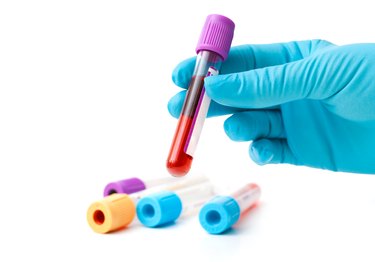
Your body uses vitamin D for maintaining healthy bones and effectively absorbing calcium. Not having enough vitamin D in your system may raise your risk of osteoporosis, bone malformations, cancer, inflammation and suppressed immunity. A simple blood test can give you accurate results and help you determine if your vitamin D levels are in the healthy range.
The Test
Video of the Day
Your body has different forms of vitamin D. The National Institutes of Health reports that the 25-hydroxy vitamin D test is the most accurate measuring tool for determining whether you have enough vitamin D in your system. According to the Institute of Medicine, the optimum range of 25-hydroxy vitamin D in the blood is 20 to 50 nanograms per milliliter, abbreviated ng/mL. Less than 20 ng/mL is inadequate, but more than 50 ng/mL may also put your health at risk. Discuss your results with your doctor if you have any concerns about your vitamin D level.
Video of the Day
Good Nutrition
The Institute of Medicine recommends 600 international units, or IU, per day of dietary vitamin D for adults through age 70 and 800 IU per day thereafter. You can get vitamin D three ways: sun exposure, the food you eat and supplements. Sun exposure can be problematic because of the associated risk of skin cancer. Vitamin D-fortified, low-fat milk and dairy products, tuna, salmon and eggs are good sources of this important nutrient.
Is this an emergency? If you are experiencing serious medical symptoms, please see the National Library of Medicine’s list of signs you need emergency medical attention or call 911.