
How to Select Shoes for Flag Football
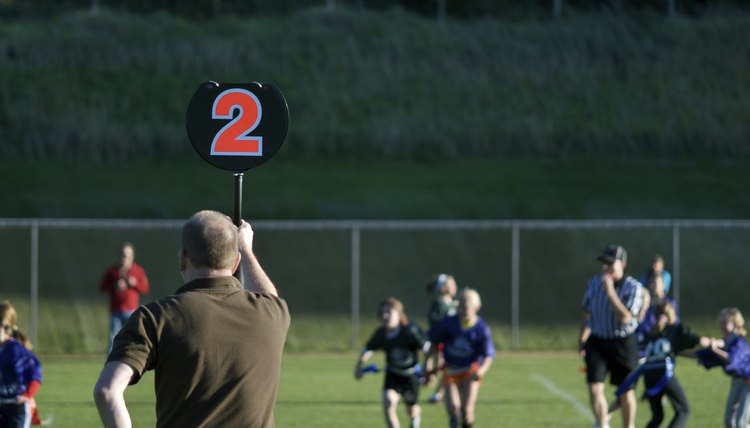
League rules, safety, personal preference and budget are the top considerations when selecting shoes for flag football. With the proper shoes, you can reduce the risk of injury and enhance your game.
League Rules
Each flag football league has its own rules for game play, uniforms, gear and equipment. Review your league's rules for footwear specifications to learn whether to buy cleats or tennis shoes. While some leagues prohibit the use of cleats of any kind, others require them or outlaw specific types, such as metal or detachable cleats.
Traction Considerations
Flag football requires quick feet as players work to pull or defend a flag. As defenders approach a ball carrier, they must use short, choppy steps for a successful flag pull. Likewise, ball carriers might need to pivot, change direction or side-step a defender. For optimum performance and safety, use tennis shoes or short cleats that provide traction without digging into the turf and causing ankle or knee injuries.
Shoe Types
Choose from high-top, midcut or low-cut football shoes made with leather or synthetic materials. High-top shoes offer the most ankle support of the three, while midcut and low-cut shoes provide greater maneuverability. Leather shoes are more expensive typically, but they're also more durable -- particularly those with mesh uppers -- than synthetics.
References
Writer Bio
Karen Spaeder began her editorial career at Entrepreneur magazine. True to the entrepreneurial spirit, she works at a startup digital marketing firm, blogs at karenspaeder.com, teaches yoga and runs her own organic beauty business. Spaeder holds degrees in English and certifications in yoga, karate and early childhood education.