
What Is the Inner Box on a Soccer Field?
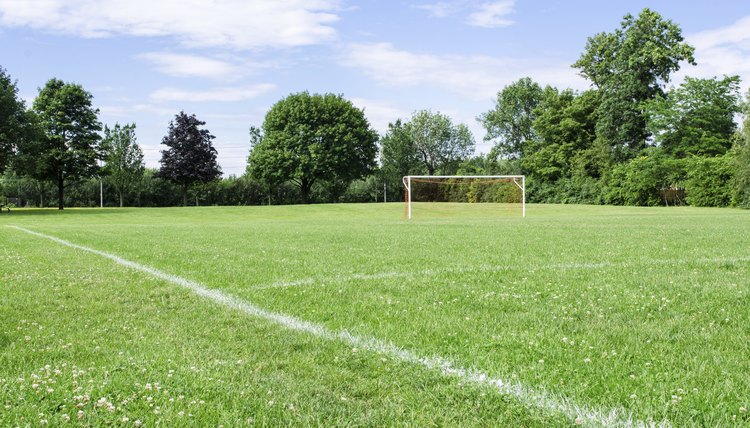
Soccer fields feature two distinct boxes in front of the net. The large box is the penalty area -- a critical area where the defending team can be penalized with a penalty kick for certain fouls. A foul in the small inner box -- the goal area -- won't affect penalties, but will change the way that play is restarted in the area.
How It Measures Up
The goal area measures 6-by- 20 yards in front of the goal. It runs the length of the goal line, extending 6 yards to either side of the goal posts, as measured from the inside edge of the posts. From this point, the area extends 6 yards onto the field -- which is why it's also known as the 6-yard box. Those lines are connected at the end by a 20-yard line that completes the box.
What It's All About
The ball can be placed anywhere within the box for a goal kick. If the defenders get a free kick here, they can play the ball from anywhere within the box. That's an exception to the norm where a free kick is played from the spot where the infraction occurred. If the offensive team is awarded an indirect free kick in the goal area, it's taken on the 20-yard line of the area on the side opposite the goal. The kicker has to line up parallel from the spot of the foul.
References
Writer Bio
A. McDougall is an editor, writer and athlete. McDougall is a marathon coach certified by the North American Academy for Sport Fitness Professionals and an American College of Sports Medicine certified personal trainer. McDougall has edited and written for several national magazines.