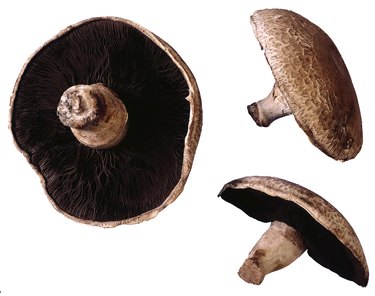
Portobello mushrooms are mature cremini mushrooms that have an intense flavor and a meaty texture. These mushrooms provide a number of essential nutrients but don't contain many calories, making them a nutritious addition to any diet. This is especially true if you use them in place of meat, which is higher in fat, cholesterol and calories.
Low-Energy-Density Food
Video of the Day
Portobello mushrooms are a good source of fiber, with 11 percent of the daily value, and they contain a lot of water, making them low in energy density. Foods that are low in energy density, which means they don't contain many calories per gram, can help you lose weight or maintain a healthy weight. You can eat a large volume of these foods without consuming very many calories. For example, a whole cup of sliced, grilled portobello mushrooms has only 35 calories. Use low-energy-density foods in place of foods that are higher in energy density, such as fatty foods or foods that are high in sugar, for the best weight-loss results.
Video of the Day
B-Vitamin Benefits
A 1-cup serving of sliced, cooked portobello mushrooms contains 15 percent of the daily value for pantothenic acid; 29 percent of the DV for riboflavin; 38 percent of the DV for niacin; and 6 percent of the DV each for folate and thiamine. These B vitamins are essential for a healthy metabolism and nervous system, and help to keep your liver, skin, eyes and hair healthy.
Mineral Makeup
Portobello mushrooms are rich in minerals. Each serving provides 15 percent of the DV for potassium, 16 percent of the DV for phosphorus, 24 percent of the DV for copper and 38 percent of the DV for selenium. Potassium helps with nerve and muscle function and counteracts the effects of sodium on your blood pressure. Phosphorus is necessary for forming strong bones, DNA and red blood cells, and copper is important for keeping your immune system, nerves and blood vessels healthy. Selenium is an antioxidant that helps form DNA.
Use as Part of a Healthy Diet
Adding mushrooms to your diet can help increase your fiber intake, and lower your risk for heart disease, high cholesterol and digestive conditions, such as constipation and hemorrhoids. Grill portobello mushroom caps and eat them like hamburgers; chop them up and use them to replace part of the meat in meat sauces; or add them to pizzas, soups or fajitas. Roast or braise mushrooms for a flavorful side dish. Just be sure to remove the black gills or your food will turn a gray color, which may not be too appealing.
- Health-Alicious-Ness: Nutrition Facts Comparison Tool
- Fine Cooking: Portobello Mushrooms
- Academy of Nutrition and Dietetics: Mushrooms: Taste of the Earth
- University of Maryland Medical Center: Vitamin B2 (Riboflavin)
- Office of Dietary Supplements: Selenium
- Linus Pauling Institute: Phosphorus
- Colorado State University Extension: Potassium
- MedlinePlus: Copper in Diet
- University of Arizona Extension: Dietary Fiber
- Centers for Disease Control and Prevention: Low-Energy-Dense Foods and Weight Management: Cutting Calories While Controlling Hunger