
Exercises for the Stomach Apron (with Video)
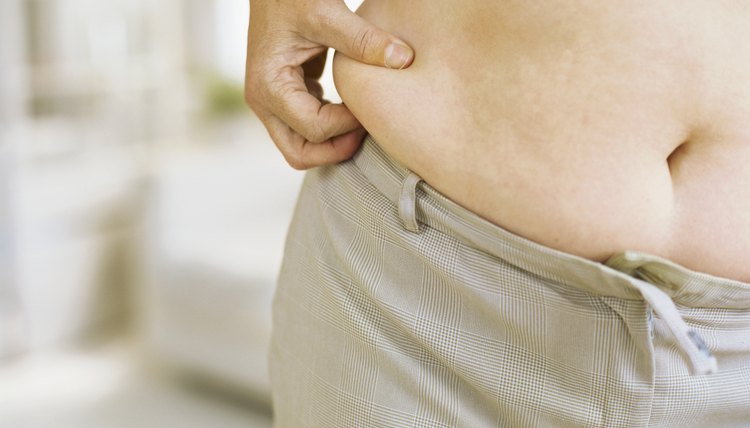
Apron belly, hanging belly, or mother’s apron is a fold of excess skin that forms under the lower belly after excess weight gain. This fold of skin is an unsightly overhang and an embarrassing condition to suffer through, and is often the result of pregnancy related diastasis recti. It can also be an indicator of poor physical health which can lead to issues like heart disease or general obesity. Getting rid of this flap of skin often requires surgery like a panniculectomy or a tummy tuck. However, tightening up your abs and belly may help to tighten the skin and help you lose your stomach apron. Here are some weight loss strength training exercises and cardio techniques to help lose belly fat and tone those abdominal muscles.
How to do the Plank?

Stockbyte/Stockbyte/Getty Images
The plank exercise is an ab exercise that looks easy but isn’t. It works your abdominal area and stomach muscles efficiently and helps tighten up loose skin and trim body fat. Get down on all fours on the ground. Keep your legs pushed all the way back and keep your toes pointed down. Your forearms should be under your chest. Breathe a few moments before beginning. This will get oxygen through your body, which is important during exercise. Carefully push your upper body off the ground, putting much of your weight in your forearms. Keep your back parallel to the ground and distribute your weight evenly between your forearms and toes. The position should feel natural and shouldn’t be a strain. Hold for at least 30 seconds and then lower. Repeat if you feel you can. You will eventually be able to hold this position much longer, but 30 seconds is a good start for this fat burning ab workout.
How to do the lunge Twist?

Stockbyte/Stockbyte/Getty Images
The lunge twist is one of the best exercises to tone your abdominal fat and lose some body weight. Start by standing with your feet about hip-width apart. Keep your knees bent and your elbows bent and by your hips. The angle should be about 90 degrees. Lunge your right foot forward. Bend your left down as you lunge. Your left leg should be at about a 45 degree angle to the ground. Making sure you keep your back straight, twist your upper body and arms to the right. Hold the pose for 10 seconds. Move back to center and push off your right foot to stand back up. Repeat this exercise 16 times on your right and then do it 16 times on your left. This exercise only has to be done once a day to lose layers of fat. You can also do this exercise with dumbbells or a kettlebell to increase the difficulty.
How to do crunches?

Stockbyte/Stockbyte/Getty Images
Crunches are an exercise that tones your abs quickly. Start by lying on your back. Your knees should be bent while your feet are flat on the ground. Put a blanket or mat underneath your body for comfort and a pillow under your head. Breathe in slowly and put your hands behind your head. As you breathe, lift your upper body about 30 degrees of the ground while bringing your knees to your chest. Pull up as far as you can, and don’t be embarrassed if you can’t lift all the way up. You will eventually. Hold this pose for three seconds and lower. Pause for a second or two before lifting again. Around 15 reps should be enough for one day.
How to do the burpee squat?
This aerobic exercise combines the classic push-up with the glute crusher known as the squat. You start this wellness cardio exercise by beginning in a pushup position. Complete the push up and jump to your feet. Then from this position bend your knees until your waistline is even with your knees. Then drop back into a pushup position. Do three sets of ten reps as a regular exercise for your workout routine.
Writer Bio
Eric Benac began writing professionally in 2001. After working as an editor at Alpena Community College in Michigan and receiving his Associate of Journalism, he received a Bachelor of Science in English and a Master of Arts in writing from Northern Michigan University in Marquette.