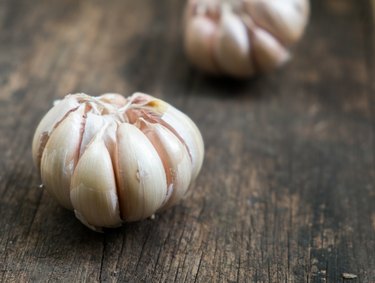
The health advantages of garlic may differ according to how it is processed before you take it. According to MedlinePlus, the active ingredient in fresh garlic cloves that gives the herb its distinctive smell when crushed, is reduced when it is aged or fermented for use in powders or supplements. Research suggests, however, that there may be advantages to aged garlic for certain conditions. Always consult your physician prior to taking a garlic supplement.
Garlic's Active Ingredient
Video of the Day
Garlic has antioxidant properties, and it has been used traditionally as an antimicrobial agent, according to the University of Maryland Medical Center. This suggests that garlic can help treat wounds and antibiotic-resistant infections, stabilize free radicals and even help to prevent cancer cells from growing. Allicin, which is released when fresh garlic is crushed, is thought to be the active ingredient in garlic extract, but it is also reduced during the aging process, according to MedlinePlus. This is necessary, however, because the body does not effectively absorb allicin unless it is broken down into compounds the body can use, states the University of Maryland Medical Center. Consult your doctor prior to replacing or supplementing your medication with garlic.
Video of the Day
Aged Garlic Attributes
Aged garlic preparations may aid in reducing blood pressure and the side effects of chemotherapy, as well as increasing overall immune system function, states the University of Maryland Medical Center. In 2010, a study reported in "Maturitas" found that aged garlic extract helped to lower blood pressure in patients who were taking prescription drugs but had uncontrolled hypertension. The study results suggest that aged garlic extract may even increase the effects of prescription drugs for this condition. Talk to your doctor before adding aged garlic to your medicine regimen.
The Virtues of Fresh Garlic
Fresh garlic can be used to flavor your food, and it may also prevent your chances of developing cancer. The University of Maryland Medical Center states that fresh garlic, when added to the diet with fresh vegetables and fruit, may reduce the chances of developing colon cancer. Other research has suggested that consuming large quantities of the herb may help to fight intestinal parasites, although research is still limited regarding this effect in humans. Furthermore, studies conflict on whether fresh garlic can help to kill ulcer-causing bacteria. Other research confirms that applying garlic to fungal skin conditions can improve symptoms.
Conflicting Cholesterol Evidence
Few studies have actually compared the efficacy of fresh garlic versus aged garlic extract for specific conditions. In 2007, a study published in the "Archives of Internal Medicine" determined that neither fresh nor aged garlic supplements had statistically significant effects on moderately high cholesterol levels after six months. Prior to that, a 2001 study reported in the "Journal of Nutrition" stated that aged garlic extract supplements did in fact lower cholesterol in subjects. Talk to your doctor before taking any kind of garlic supplement.
- University of Maryland Medical Center; Garlic; Steven D. Ehrlich, NMD; November 2008
- "Maturitas"; Aged Garlic Extract Lowers Blood Pressure in Patients with Treated but Uncontrolled Hypertension: A Randomized Controlled Trial; K. Ried, et al.; October 2010
- MedlinePlus; Garlic; November 2010
- "Journal of Nutrition"; Antioxidant Health Effects of Aged Garlic Extract; C. Borek; March 2001
- "Archives of Internal Medicine"; Effect of Raw Garlic vs. Commercial Garlic Supplements on Plasma Lipid Concentrations in Adults with Moderate Hypercholesterolemia: A Randomized Clinical Trial; C.D. Gardner, et al.; February 2007
- "Journal of Nutrition"; Cholesterol-Lowering Effect of Garlic Extracts and Organosulfur Compounds: Human and Animal Studies; Y.Y. Yeh and L. Liu; March 2001
Is this an emergency? If you are experiencing serious medical symptoms, please see the National Library of Medicine’s list of signs you need emergency medical attention or call 911.