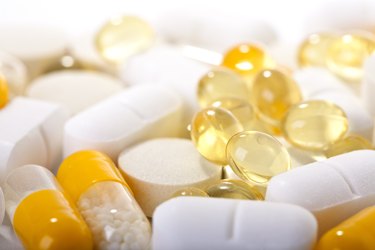
Your body maintains a delicate balance with your blood to ensure you have enough blood and that it is not too thick or too thin. Over time, excess cholesterol or clotting factors in your blood can make your blood thicker and more likely to clot -- an occurrence that can lead to a heart attack or stroke. While your physician may prescribe medications to thin the blood, certain vitamins also have been shown to have blood-thinning effects.
Vitamin E
Video of the Day
Vitamin E has been linked with reducing the likelihood of developing blood clots in the body, according to Dr. Michael Lam, a physician writing on his personal health and wellness website. While the recommended daily intake of vitamin E is 400 IU per day, doses to help thin the blood may range from 400 to 1,600 IU per day. However, you should only take amounts of vitamin E that exceed recommendations under your physician's supervision. This is because excess vitamin E can prevent your body from metabolizing vitamin K, which is needed for blood clotting. If you take too much vitamin E, you may bleed too easily, which can be potentially life-threatening.
Video of the Day
Vitamin B3
Also known as niacin, vitamin B3 is a vitamin that helps to boost circulation and remove cholesterol from your blood. Your physician may recommend taking niacin if you have been diagnosed with atherosclerosis or hardening of the arteries. This is because niacin can help to thin the blood when it removes cholesterol, making it less thick. However, niacin can have harmful effects when taking blood thinners because it can increase their effects on the body.
Vitamin C
While further studies must be conducted on the blood-thinning effects of vitamin C, people who have low vitamin C levels in their bodies are at higher risk for cardiac symptoms like high blood pressure and atherosclerosis, according to the University of Maryland Medical Center. Like vitamin B3, vitamin C may have benefits in removing excess cholesterol from the blood to help make it thinner and lower blood pressure.
Drug Interactions
One of the major concerns about taking vitamin supplements that thin the blood is the potential for drug interactions. If you are taking blood thinners like Coumadin, the added vitamin intake could have a negative effect on your body because blood thinners are prescribed to help your blood return to its normal consistency. Taking blood thinners and blood-thinning supplements could thin the blood too much, resulting in easy bleeding. Talk to your physician about potential drug interactions and the supplements you are currently taking to ensure you will not experience a harmful interaction.
- DrLam.com; Blood Thinners and Nutritional Supplement; Dr. Michael Lam; 2009
- University of Maryland Medical Center; Vitamin B3 (Niacin); Steven D. Ehrlich, NMD; 2011
- Walgreens; Blood Thinner Interactions; 2011
- University of Maryland Medical Center; Vitamin C (Ascorbic Acid); Steven D. Ehrlich, NMD; June 2009 June 2009
- CBS News; Vitamin E May Lower Blood Clot Risk; Michelle Peltier; Feburary 2009
Is this an emergency? If you are experiencing serious medical symptoms, please see the National Library of Medicine’s list of signs you need emergency medical attention or call 911.