
What Is a 50-50 Ball in Basketball?
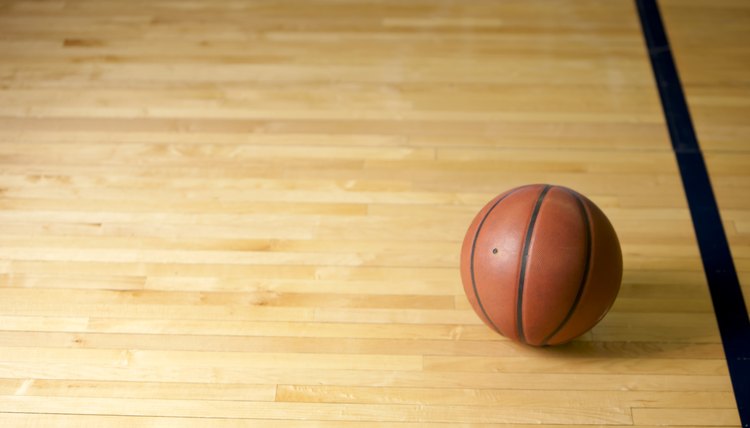
While spectacular shooting and deft passing may lead the highlight shows most nights, coaches implore their players to hustle and play hard from start to finish in every basketball game. This manifests itself in hustle plays when a rebound or a loose ball could go to either team. These close plays are 50-50 balls in basketball and the top teams find a way to win most of these battles.
Rebounding
Every time a missed shot is taken in basketball, the resulting rebound is seemingly a 50-50 ball. Neither team can control the way a ball bounces off the rim or backboard, so your team often has an equal chance to gain possession. If you position yourself correctly you improve your odds of grabbing a rebound. If you win the rebounding battle you often have the best chance of winning a majority of your games. If you gain a significant number of offensive rebounds, in particular, you'll take charge of most games.
Effort
Sometimes it takes extraordinary effort to win a 50-50 ball. For example, you may anticipate the way a player you're guarding will dribble, allowing you to knock the ball away. If your opponent holds his ground he'll likely recover the ball. But if you dive after the loose ball, you have a better chance of recovering it and creating a turnover. This win on a 50-50 ball will give your team a chance to score on the offensive end.
Loose Ball Drill
Prepare yourself to battle for 50-50 balls by running drills in practice. Divide your team into two groups with equal numbers of forwards, centers and guards. Give the biggest player on each team the number 1, the second-biggest the number 2, and so on. Have each player kneel on the sideline with their backs to the court. Have a coach or another player place a ball on the court, equidistant between the two groups, then have him call out a number from 1 through 5. The appropriately-numbered players run onto the court and battle for the ball. The winning player then drives to the hoop while the other player defends. Continue the drill until every player has had several turns.
Momentum
Teams that win a significant number of 50-50 balls in a short time gain momentum. If you set an example by hustling after a loose ball, your teammates often will try to do the same. And it can serve as a negative factor for opponents. If they are losing the battle for 50-50 balls, it can drain momentum and energy and lead to fatigue. When your team surges and your opponent gets tired, momentum changes and your team can take charge, increasing your chances for victory.
References
Writer Bio
Steve Silverman is an award-winning writer, covering sports since 1980. Silverman authored The Minnesota Vikings: The Good, The Bad and The Ugly and Who's Better, Who's Best in Football -- The Top 60 Players of All-Time, among others, and placed in the Pro Football Writers of America awards three times. Silverman holds a Master of Science in journalism from the Medill School of Journalism.