Glycemic Index for Grains
Most foods that contain carbohydrates have a rank on the glycemic index, or GI. Low glycemic-index foods have scores of less than 55, while moderate foods rate at 55 to 70. These foods are often minimally processed and keep your blood sugar steady. High-GI foods have an index over 70 and are usually ones you want to avoid, because they can spike your blood sugar quickly. Grains in their natural state are low on the scale. But once they’re processed, their score can quickly surge.
Plain Grains
No matter which type of grain you start with during cooking, they’re all low on the scale. Whole-wheat kernels rate at approximately 30. Rye kernels are about the same. Buckwheat falls at 49, although buckwheat groats have a rank of just 45. Adding pearled barley to soup or enjoying it as a hot side should help keep your blood sugar level for a while, because it has a very low GI of just 28. You can enjoy bulgur wheat the same way, although its ranking is slightly higher at 48.
Bread Products
Glycemic Index of Bagels
Learn More
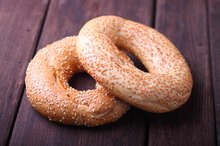
That plain white bagel may be your usual go-to food in the mornings, but you might want to think again. It has a glycemic index of 72. Instead, pick up a loaf of coarse grain-based barley bread, which has a score of less than 40. Rye or pumpernickel bread ranges from 41 to 55 on the GI. Wheat bread is in the middle of the index. Coarse wheat bread is at 52, while cracked wheat bread has a rank of 58; multigrain bread falls right in between those two. Gluten-free, white and rice breads are often high on the scale, with index ratings of 69 to 80.
Cold and Hot Cereals
Bran-based cold cereals range from roughly 30 to 51 on the glycemic index, making them ideal foods for stabilizing your blood sugar. Avoid most flakes, rice crisps and sugar-coated cereals. They usually have a GI of at least 70. If you’re more of a hot-cereal person, opt for quick oats, which rank at around 55. Rolled-oat porridge has a glycemic index of around 50. Instant oatmeal has a score as high as 83.
Other Grain Foods
Fruits & Veggies With a High Glycemic Index
Learn More
Some types of white pasta rank as high as 58, but whole meal pasta can be as low as 32. Or if you’re making rice, pick brown rice over white -- a difference of 50 vs. 89 on the scale, respectively. Or select parboiled or converted rice. This type of rice appears white, but it's pressure-steamed during processing to make the dark outer husks fall of. You’re left with a nutrient-dense type of rice that rates only 38 on the index. Although technically a seed, not a grain, quinoa is a low-GI food you can enjoy as a steamy side. Quinoa’s score is 53 on the index.
Related Articles
Glycemic Index of Bagels
Learn More
Fruits & Veggies With a High Glycemic Index
Learn More

Glycemic Load Food List
Learn More

List of Foods With Fast Carbs
Learn More
Low Glycemic Vegetables and Fruits
Learn More
Amaranth & the Glycemic Index
Learn More
The Essential Guide to the Glycemic Index and Gluten Free Living
Learn More
List of Grains With Low GI
Learn More

Wheat Germ and Glycemic Index
Learn More
Low-Glycemic Foods List
Learn More
References
Writer Bio
Melodie Anne Coffman specializes in overall wellness, with particular interests in women's health and personal defense. She holds a master's degree in food science and human nutrition and is a certified instructor through the NRA. Coffman is pursuing her personal trainer certification in 2015.