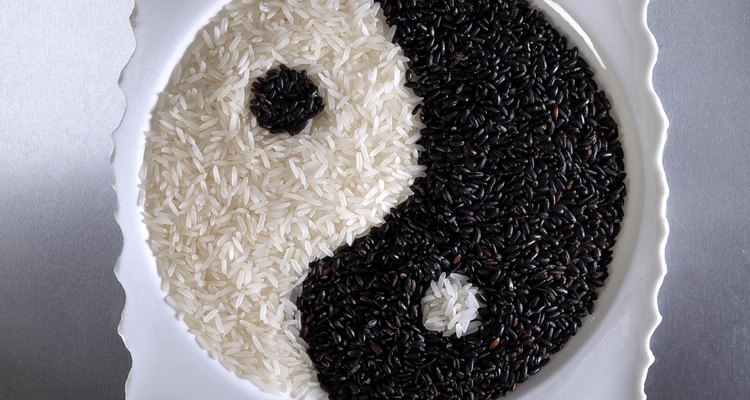
View Stock/View Stock/Getty Images
The yin yang concept applies to all things, including food. In Chinese medicine, yin or yang food treats energy imbalances and provides ordinary nutrition. Diets stronger in yang energy contribute to sexual health in men, while yin diets support the sexual energies of women. The Chinese Five Elements system classifies food according to five flavors that mark the two fundamental energies of yin and yang in their different stages. Flavor only serves as an indicator; many foods earn yin or yang classifications for other reasons.
Yang Foods
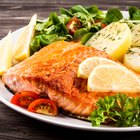
Foods high in yang energy support the health of the kidneys and increase sexual power. The proper balance of yang keeps the mind alert and the body strong and healthy. Foods strong in the yang force include beef, shrimp, kidneys and liver. According to Cornell University, the cooking method also affects the yang quality of the food. Yang increases with deep-frying, roasting or stir-frying.
Yin Foods
Yin foods moisten the skin, strengthen the blood and semen, and promote the generation and flow of all fluids necessary for the body to function properly. Examples of yin foods include millet, milk, beets and bananas. Boiling, poaching and steaming increase yin in foods. White foods often provide strong sources of yin. Tofu and many white root vegetables contain abundant yin force.
Wood Element
Sourness indicates a food rich in wood energy, the explosive or young yang form of the male force. Sour foods and herbs restrict the loss of fluids from the body. Sour or astringent fruits, such as mangoes, cherries and pineapples, provide wood energy.
Fire Element
Foods rich in the fire element of yang energy taste bitter and dry out or harden the body. Fiery foods show a tonic effect on the sexual organs. Examples of these yang foods include mustard greens, buckwheat and Korean ginseng.
Earth Element
The sweet taste of earth foods marks them as important regulators of bodily functions and overall stimulants to the body and mind. Earth foods include sugar and alcohol, as well as sweet melons.
Metal Element
Yang foods of the metal type increase the body's resistance to colds and the flu, ease troubled breathing and release tension. Obvious types of pungent or spicy metal-element foods include chili peppers and horseradish.
Water Element
The salty character of water foods contributes to rest, recovery from illness and the storage of energy in the body. These extremely yin foods include salty soups, oysters, clams and other shellfish.
Related Articles
Aphrodisiac Foods List
Symptoms of Food Poisoning With Oysters
What Vegetables Have Citric Acid?
The Pitta Dosha Diet

Metal Detox & Acne
Foods That Are Natural Antibiotics
What Foods Provide Calcium D-Glucarate?
Meat & Cheese Diet
How to Detox From Diet Coke

Nutrition Information on Blueberries

Traditional Korean Colors

Vitamins for Mental Alertness
What Fruits Are Considered Aphrodisiacs?

Strontium-Rich Foods

What Kind of Beer Do I Pair With Greek ...
Uses of Saltpeter in Food
What Vitamins Help the Liver?

The Nutrition of 15-Bean Soup
Love Sick Symptoms
Food Sources of Phosphatidylcholine
References
- "Chinese Tonic Herbs"; Ron Teeguarden; 1985
- Caring.com: Yin, Yang and Aging
- Traditional Chinese Medicine: Food Therapy
Resources
Writer Bio
James Young began writing in 1969 as a military journalist combat correspondent in Vietnam. Young's articles have been published in "Tai Chi Magazine," "Seattle Post-Intelligencer," Sonar 4 ezine, "Stars & Stripes" and "Fine Woodworking." He has worked as a foundryman, woodturner, electronics technician, herb farmer and woodcarver. Young graduated from North Seattle Community College with an associate degree in applied science and electronic technology.
Photo Credits
View Stock/View Stock/Getty Images