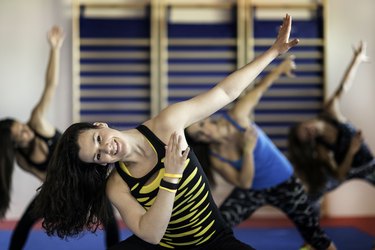
Zumba brings the party to your workout — but you can also use Zumba for weight loss. On average, you burn almost 370 calories per class, determined a September 2012 study sponsored by the American Council on Exercise, which helps you create a caloric deficit to lose a few extra pounds.
How often you shake and shimmy to accomplish your goals depends on how much weight you have to lose and whether or not you're willing to take other measures to speed the process along.
Video of the Day
Video of the Day
Tip
Although you won't see Zumba results in 10 days, participating in a Zumba class can burn almost 370 calories.
Read more: The Best Zumba Exercise Videos
Zumba Benefits and Calorie Burning
Weight loss is a complex metabolic process, but it usually boils down to the equation of calories in versus calories out. If you take in fewer calories than you burn, your body shifts to burning stored fat and you lose weight. On average, this deficit needs to equal about 3,500 calories to lose a pound, according to Mayo Clinic.
The exact number of calories you burn in Zumba varies by your size and intensity, but if you guesstimate weight loss according to the 370-per-class number determined by ACE, it'd take nearly 10 classes per week for you to lose a pound in seven days —provided you're eating just enough to maintain your weight right now. Regardless of how much you love the Samba and Rhumba, that's a lot of dancing.
Cut your class attendance to just five days per week, and you can drop about 1/2-pound per week. This may not be the speed at which you'd like to see the pounds peel off, but it's slow, steady and sustainable. After just six months, that could add up to 12 pounds down.
Pick Up the Pace
To lose weight a little more rapidly, it helps to make some dietary changes along with your Zumba commitment. A study published by Obesity in August 2012 that followed more than 400 post-menopausal women confirmed that diet and exercise combined led to the most impactful weight loss after 1 year.
Along with shaking it in the fitness studio five times per week, adjust your eating habits to cut out simple, refined carbohydrates, including white bread and pasta and added sugars to help create a calorie deficit. Drink more water to help you feel fuller, as recommended by Mayo Clinic.
Follow guidelines set up by the USDA. Load up your plate with lean proteins — think chicken breast, tuna and flank steak — whole grains, fresh vegetables and healthy fats found in olive oil, avocados and nuts. Stick to moderate portion sizes, such as protein the size of your palm and a 1/2 cup of grains. Snack on fresh fruit, raw nuts and low-fat dairy.
Pass up dessert, fancy coffee drinks and your nightly glass of wine. This helps you save calories so you create a larger deficit and lose weight more quickly. Plus, this healthy diet gives you all the energy you need to really get the most out of your fitness dance sessions.
Read more: Zumba Workout Benefits
- Mayo Clinic: "Counting Calories: Get Back to Weight-Loss Basics"
- American Council on Exercise: "Zumba Fitness: Sure It's Fun But Is It Effective?"
- Obesity: "Effect of Diet and Exercise, Alone or Combined, on Weight and Body Composition in Overweight-to-Obese Post-Menopausal Women"
- USDA ChooseMyPlate: "Homepage"
- Mayo Clinic: "Weight Loss: Feel Fuller on Less Calories"
- Zumba Fitness: Exhilarate