Can Children Eat Dark Chocolate?
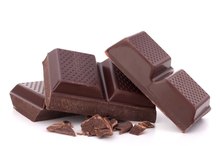
Adding a little cocoa to your child’s cup of milk or sprinkling a little bit on a piece of fruit may encourage your child to eat healthy foods he may not want to eat. Chocolate can be part of a healthy and balanced. Chocolate, specifically dark chocolate, has become a hot topic recently as studies are showing some health benefits. However, even dark chocolate can be high in calories, so children -- and adults! -- should consume it in moderation.
Health Benefits
The University of Michigan Health System explains that dark chocolate may have beneficial effects on heart health by lowering blood pressure, reducing LDL cholesterol and maintaining healthy blood vessels. Chocolate contains flavonoids that have been shown to improve cardiovascular health. These benefits affect children the same as they do adults, although most studies are performed using adults.
Studies with Children
How Much Chocolate Is Safe When You Are Pregnant?
Learn More
The ancient Mayans and Aztecs used cocoa for many medicinal purposes, including constipation and diarrhea. Recent studies involving children have shown that chocolate may be beneficial in preventing these two conditions. A study in the journal “Pediatrics” found that children given cocoa husk, which is very high in fiber, were more likely to be relieved of constipation than those given placebo. The amount of fiber in the husk may be the cause of the result, not the amount of cocoa. Another study in “The Journal of Pediatrics” showed that the flavonoids in cocoa limit the release of fluids that cause diarrhea. Diarrhea can lead to dehydration, a serious health problem for small children.
- The ancient Mayans and Aztecs used cocoa for many medicinal purposes, including constipation and diarrhea.
- Another study in “The Journal of Pediatrics” showed that the flavonoids in cocoa limit the release of fluids that cause diarrhea.
Caffeine
A dark chocolate candy bar contains about the same amount of caffeine as a 12 oz cola drink, or about 30 mg. Caffeine is a drug that stimulates the central nervous system and can lead to sleeplessness, headaches, nervousness, upset stomach and other symptoms. The United States doesn’t have a recommendation for the amount of caffeine that is safe for children; however, limiting the amount of caffeine you give your child is wise.
Considerations
The Safe Amount of Flaxseed Oil for Children
Learn More
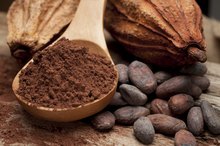
The health benefits of chocolate are found in cocoa, which is bitter, and most children wouldn’t eat it. To make it more palatable, fat and sugar is added which increases the calories and decreases the health benefits. Childhood obesity is a serious concern in the United States. Dark chocolate can be part of a healthy diet for your child if you allow her to consume it in small portions as a special treat on occasion. Choose dark chocolate with at least 65 percent cocoa for a healthier choice.
- The health benefits of chocolate are found in cocoa, which is bitter, and most children wouldn’t eat it.
Related Articles

How Much Chocolate Is Safe When You Are Pregnant?
Learn More
The Safe Amount of Flaxseed Oil for Children
Learn More

Healthy Goody Bags for Kid's Parties
Learn More

Heath Benefits of Semi-Sweet Chocolate Chips
Learn More

Carob Chips Nutritional Information
Learn More
Nutritional Information for One Ounce of Dark Chocolate
Learn More

Chocolate's Influence on Hyperactivity in Children
Learn More
Raw Cacao Nutrition Information
Learn More

Can Energy Drinks Cause Kidney Stones?
Learn More
Nutrition Information for Nabisco Honey Maid Graham Crackers
Learn More
References
- Journal of Nutrition: A Cultural History of the Medicinal and Ritual Use of Chocolate
- Pediatrics: A controlled, randomized, double-blind trial to evaluate the effect of a supplement of cocoa husk that is rich in dietary fiber on colonic transit in constipated pediatric patients
- The Journal of Nutrition: Cocoa-Related Flavonoids Inhibit CFTR-Mediated Chloride Transport across T84 Human Colon Epithelia
- Center for Science in the Public Interest: Caffeine Content of Food and Drugs
- Katz DL, Doughty K, Ali A. Cocoa and chocolate in human health and disease. Antioxid Redox Signal. 2011;15(10):2779–2811. doi:10.1089/ars.2010.3697
- Hooper L, Kay C, Abdelhamid A, et al. Effects of chocolate, cocoa, and flavan-3-ols on cardiovascular health: a systematic review and meta-analysis of randomized trials. Am J Clin Nutr. 2012;95(3):740–751. doi:10.3945/ajcn.111.023457
- Ried K, Fakler P, Stocks NP. Effect of cocoa on blood pressure. Cochrane Database Syst Rev. 2017;4(4):CD008893. doi:10.1002/14651858.CD008893.pub3
- Janszky I, Mukamal KJ, Ljung R, Ahnve S, Ahlbom A, Hallqvist J. Chocolate consumption and mortality following a first acute myocardial infarction: the Stockholm Heart Epidemiology Program. J Intern Med. 2009;266(3):248–257. doi:10.1111/j.1365-2796.2009.02088.x
- Scholey A, Owen L. Effects of chocolate on cognitive function and mood: a systematic review. Nutr Rev. 2013;71(10):665–681. doi:10.1111/nure.12065
- Kuebler U, Arpagaus A, Meister RE, et al. Dark chocolate attenuates intracellular pro-inflammatory reactivity to acute psychosocial stress in men: A randomized controlled trial. Brain Behav Immun. 2016;57:200–208. doi:10.1016/j.bbi.2016.04.006
- Cimini A, Gentile R, D'Angelo B, et al. Cocoa powder triggers neuroprotective and preventive effects in a human Alzheimer's disease model by modulating BDNF signaling pathway. J Cell Biochem. 2013;114(10):2209–2220. doi:10.1002/jcb.24548
- Magnesium. Fact Sheet for Consumers. National Institutes of Health. Updated March 24, 2020
- Chocolate, sweet or dark. USDA FoodData Central. Updated 4/1/2020
- Chocolate, sweet or dark. USDA FoodData Central. April 1, 2020
- Coffee, brewed. USDA FoodData Central. April 1, 2020
- Chen LW, Wu Y, Neelakantan N, Chong MF, Pan A, van Dam RM. Maternal caffeine intake during pregnancy is associated with risk of low birth weight: a systematic review and dose-response meta-analysis. BMC Med. 2014;12:174. doi:10.1186/s12916-014-0174-6
- Latif R. Maternal and fetal effects of chocolate consumption during pregnancy: a systematic review. J Matern Fetal Neonatal Med. 2019;32(17):2915–2927. doi:10.1080/14767058.2018.1449200
- Hage FG, Iskandrian AE. The effect of caffeine on adenosine myocardial perfusion imaging: Time to reassess?. J Nucl Cardiol. 2012;19(3):415–419. doi:10.1007/s12350-012-9519-8
- Sisti JS, Hankinson SE, Caporaso NE, et al. Caffeine, coffee, and tea intake and urinary estrogens and estrogen metabolites in premenopausal women. Cancer Epidemiol Biomarkers Prev. 2015;24(8):1174–1183. doi:10.1158/1055-9965.EPI-15-0246
- Beer CP. Caffeine: The forgotten variable. Int J Psychiatry Clin Pract. 2001;5(4):231–236. doi:10.1080/13651500152732991
- Broderick PJ, Benjamin AB, Dennis LW. Caffeine and psychiatric medication interactions: a review. J Okla State Med Assoc. 2005;98(8):380–384.
- Ramos S, Martín MA, Goya L. Effects of cocoa antioxidants in type 2 diabetes mellitus. Antioxidants (Basel). 2017;6(4):84. doi:10.3390/antiox6040084
- Vlachojannis J, Erne P, Zimmermann B, Chrubasik-Hausmann S. The impact of cocoa flavanols on cardiovascular health. Phytother Res. 2016;30(10):1641–1657. doi:10.1002/ptr.5665
Writer Bio
Kristin Mortensen began writing newspaper articles in 1992 for The Sierra Vista Herald. She has also been a registered dietitian since 1991, and has worked for hospitals, clinics and Women, Infants and Children (WIC) programs. Mortensen has a bachelor of science in dietetics from Brigham Young University.